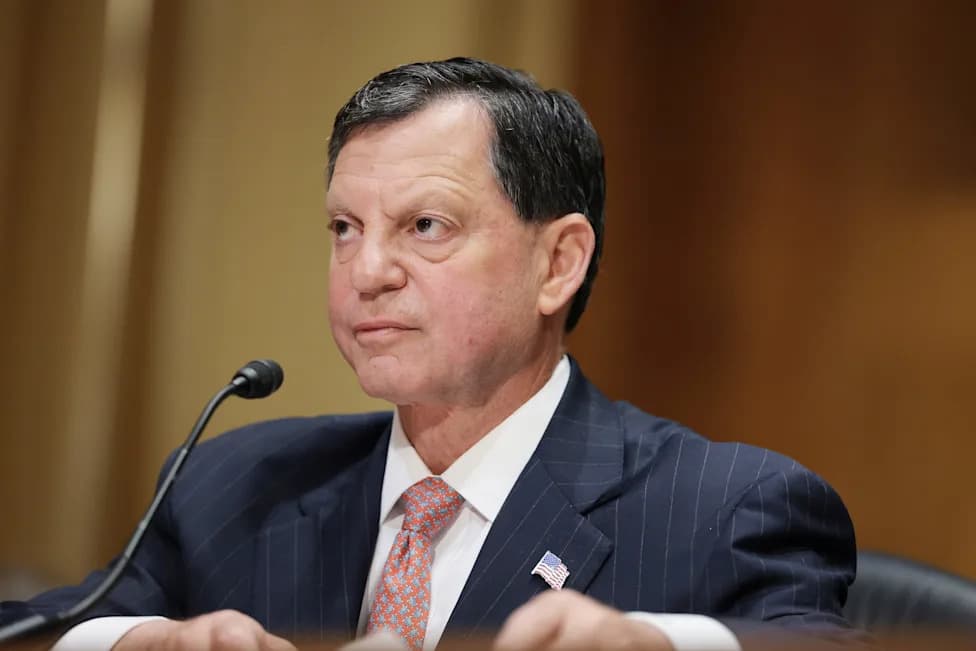
Former Social Security commissioner Martin O’Malley urged lifting or raising the payroll-taxable earnings cap so wealthier Americans contribute more and benefits can be preserved. Trustees project the Social Security trust fund could be exhausted in late 2032, which would trigger about a 22% cut in benefits if Congress does not act. A Peterson Foundation poll finds 96% of voters want candidates to explain plans to prevent automatic benefit cuts; policymakers are debating options including raising the taxable cap, increasing payroll taxes, raising the retirement age, or capping benefits for high earners.
Ex-SSA Chief Urges Raising Payroll-Tax Cap So Wealthy Pay More To Avert 22% Social Security Cut
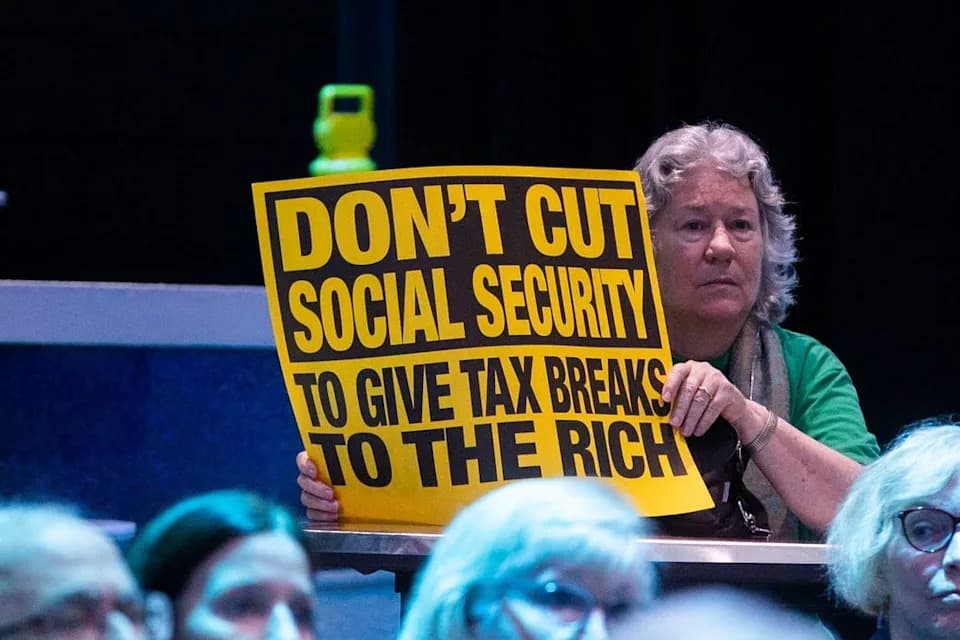
People listen during a town hall on Social Security hosted by the Leon County Democrats with former Commissioner of Social Security Administration Martin O'Malley speaking May 9, 2025. Mishalynn Brown/Tallahassee Democrat / USA TODAY NETWORK via Imagn Images
Former Social Security Administration Commissioner Martin O’Malley urged lawmakers to raise or eliminate the cap on earnings subject to the Social Security payroll tax so higher earners contribute more to the program and benefits are preserved.
Under current law, only the first $184,500 of a worker’s earnings are subject to the 6.2% Social Security payroll tax in 2026; income above that amount is exempt. The Social Security Trustees’ latest report projects the retirement trust fund will be exhausted in the final three months of 2032 if Congress takes no action — a depletion that would force an immediate, across-the-board cut in benefits of about 22%.
In an interview on NewsNation’s The Hill, O’Malley said lawmakers should focus on asking higher-income Americans to pay more instead of cutting benefits. He noted that only a small share of Americans benefit from the current cap and that many view it as unfair that very high earners escape payroll taxes on income above the cap.
“Most Americans think it is unfair that wealthy people don’t pay the same tax rate as a custodian in a school or a teacher,”
Policymakers and analysts have proposed a range of options to close the shortfall and avoid benefit cuts, including:
- Raising or eliminating the taxable earnings cap (2026 cap: $184,500).
- Increasing the payroll tax rate (the 12.4% payroll tax is typically split 6.2% each by employee and employer).
- Raising the full retirement age for maximum benefits, as was done after the 1983 reforms that eventually moved the full retirement age to 67.
- Capping benefits for very high earners (for example, proposals that would limit annual benefits for couples).
For 16 years the retirement program has paid out more than it has collected in payroll taxes, drawing down trust fund reserves to cover the shortfall. Last year trustees projected exhaustion in 2033; that estimate was revised to late 2032 after tax changes in recent legislation.
If Congress allows the trust fund to be depleted, Social Security would be limited to paying out what current payroll-tax receipts provide. The Committee for a Responsible Budget, a nonprofit watchdog, estimates the average beneficiary could lose roughly $500 per month under that scenario.
Advocates and analysts are pressing lawmakers to act now. Myechia Minter-Jordan, CEO of AARP, called the trustees’ projection a “wake-up call” and urged Congress to protect benefits for retirees who have paid into the system throughout their working lives. Margaret Spellings of the Bipartisan Policy Center warned that senators elected in 2026 will be the ones in office when insolvency arrives unless Congress moves.
Public pressure appears strong. The Peterson Foundation’s late-May poll, conducted by Global Strategy Group and North Star Opinion Research, found 96% of voters nationwide want candidates to clearly explain plans to prevent automatic Social Security benefit cuts — a view shared across parties and age groups.
Stephen Nuñez of the Roosevelt Institute wrote that lawmakers could have enacted reforms earlier at lower cost and that many technical options remain to close the long-term shortfall. The central political question, he and others say, is who will bear the cost of those fixes.
Reporting: Medora Lee, USA TODAY. Contact: [email protected].
Help us improve.