Researchers from the University of Texas and Stanford traced widespread GNSS disruptions across Europe to Cosmos 2546, a Russian Tundra satellite, with incidents concentrated during weekday hours. The findings highlight Moscow’s shift to low‑cost, deniable electronic tactics that probe NATO’s expanded northern perimeter. Those attacks have prompted both military deployments and civil investments in redundancy, exposing a paradox: cheap aggression drives costly resilience that ultimately blunts such tactics.
Russia’s GPS Gambit: How Cheap Electronic Attacks Are Forcing Costly NATO Resilience
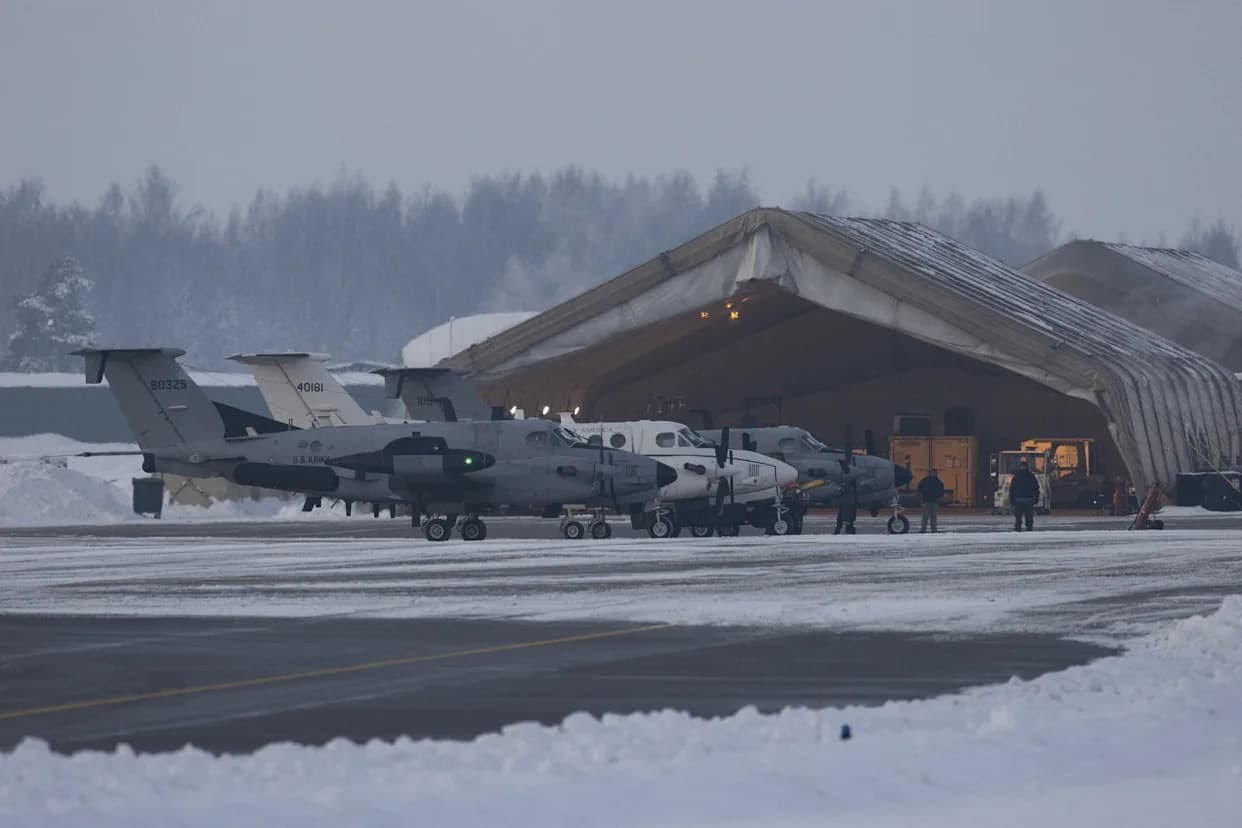
American US Army surveillance military planes RC12 and C12, in Siauliai military base near belarus and Kaliningrad (Russia), in Lithuania on December 15, 2022. Photo by Raphael Lafargue/Abaca/Sipa USA(Sipa via AP Images)
Since Russia launched its full‑scale invasion of Ukraine in 2022, GPS and GNSS disruptions across the Baltic corridor have become a persistent problem, degrading navigation for thousands of ships and aircraft. Western capitals initially blamed Kaliningrad — the heavily militarized Russian exclave between Poland and Lithuania — where electronic‑warfare units and arrays of signal‑spoofing antennas are known to operate.
New research challenges that geographic assumption. In a preprint published on June 2, researchers from the University of Texas and Stanford analyzed raw receiver data and found interference spanning from Iceland to Italy — a footprint far too wide for any terrestrial transmitter. By comparing signals recorded in Amsterdam and Trondheim, the team triangulated the source to within five meters and identified it as Cosmos 2546, a Russian satellite in the Tundra constellation intended to monitor missile launches. The incidents clustered during weekday business hours, suggesting deliberate human control rather than accidental interference.
"I lean toward calling it a periodic test of a capability that would be very damaging if it was deployed in anger," said Todd Humphreys, one of the lead researchers, in an interview with the science channel Veritasium.
Strategic Context: Low‑Cost, High‑Impact Tools
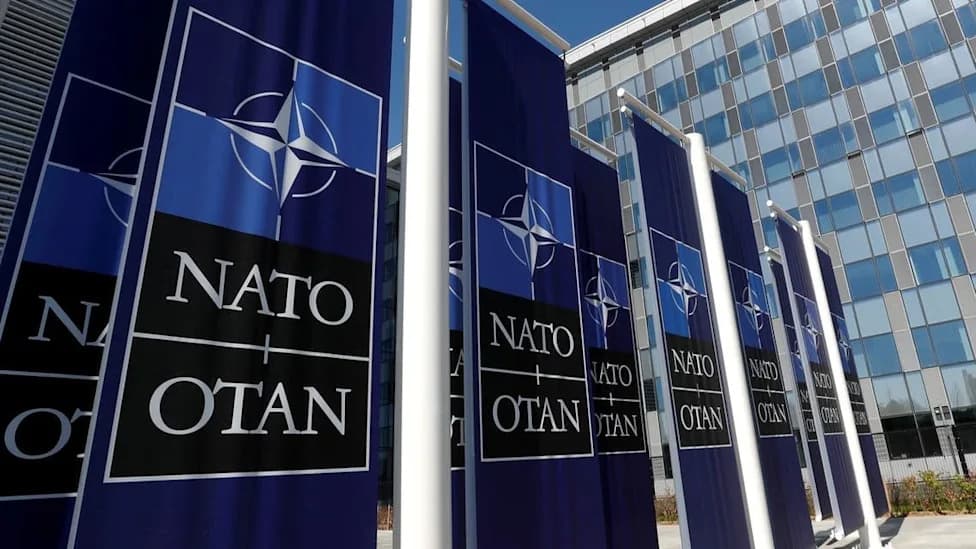
The episode illustrates a broader Kremlin shift toward low‑cost, deniable measures — jamming, spoofing, surveillance and sabotage — that can probe European vulnerabilities without the expense or escalation risk of conventional warfare. GNSS interference is an economical lever that responds to NATO’s northward expansion and increased Western military presence in the Baltic and Arctic littorals.
Military and Civil Responses
The fallout has accelerated military and civil resilience actions across the region. Within days of the GNSS study, Finland announced on June 4 that its eastern border with Russia would remain closed indefinitely. Two days later NATO declared the operational start of Forward Land Forces Finland, initially led by a roughly 600‑strong Swedish battlegroup that can scale to 1,200, with contributions expected from the U.K., France, Italy and Denmark. NATO’s BALTOPS exercise began in early June with renewed emphasis on maritime security and infrastructure protection; Russia replied with Baltic naval drills on June 8–9.
Civil authorities have also sounded the alarm. A joint Baltic–Nordic report found that Russian GNSS incidents affected nearly 123,000 flights operated by 365 airlines from January through April 2025. U.K. government‑commissioned analysis estimates that a seven‑day GNSS outage could cost roughly £7.6 billion (about $10 billion), underlining why governments are investing heavily in redundancy and backups.
Limits and Paradoxes
Moscow faces its own constraints. The Kremlin has reestablished the Leningrad Military District, expanded northwestern infrastructure and increased naval activity in the Baltic, but high battlefield attrition, dwindling Soviet‑era stockpiles and budgetary pressures limit how far Russia can reallocate resources from Ukraine or overseas commitments. Reports that Russia is recruiting foreign fighters to plug gaps in Ukraine further underscore sustainability problems.
There is a strategic paradox: the cheaper and more deniable the attack, the stronger the political case in Europe for expensive resilience measures that blunt those tactics. Resilience now requires built‑in redundancy, early warning and cross‑sector contingency planning — not just ad hoc fixes.
Trust, however, remains the fragile pivot. Economic pain in border regions is real — South Karelia in eastern Finland has reportedly lost about €1 million per day in activity — and public trust in alliance guarantees is fraying. A University of Helsinki survey released in May found 73% of Finns still favor NATO membership, but 79% say the United States cannot be relied on to defend Finland in a crisis, and only 13% believe it would.
Funding resilience is the comparatively easy part; the harder challenge is adapting strategy and expectations when long‑standing assumptions — about deterrence, geography and partnership assurances — no longer hold.
Candace Rondeaux is a professor with the Future Security Initiative at Arizona State University and a non‑resident senior fellow with the Global Security program at New America.
Help us improve.