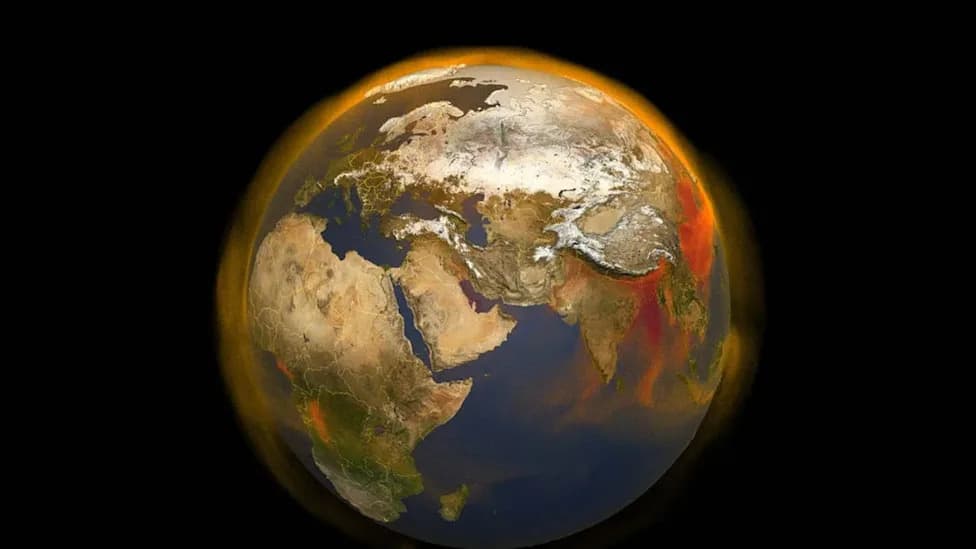
The 2025 update of the Indicators of Global Climate Change finds human activity raised global temperatures to 1.37°C, with the planet warming at about 0.27°C per decade. Researchers warn the carbon budget for 1.5°C could be exhausted in roughly three years and that global emissions remain at record highs. Sea level reached a new record (about 23 cm since 1901), marine heatwaves surged, and climate-monitoring systems face funding and political risks.
Planet Nears 1.5°C: Study Warns of Record Warming Rate and Rising Seas
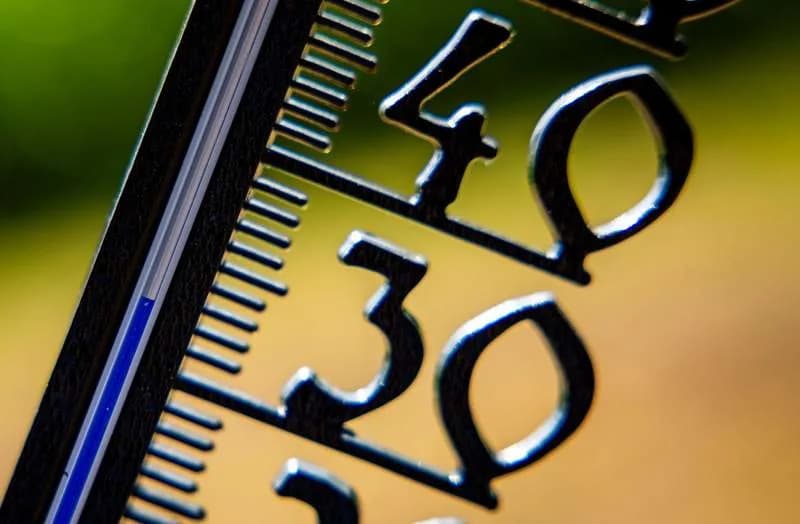
FILE PHOTO - In front of a cloudless blue sky, an outdoor thermometer in a garden already shows an air temperature of over 30 degrees in the morning. (is associated with: «Study warns of record rate of global warming and rising seas») Jens Büttner/dpa
Leading climate scientists warn that human activities pushed global average temperatures to 1.37°C in 2025, and the pace at which heat is accumulating in Earth's system points to substantially higher warming ahead.
Key Findings
The latest annual Indicators of Global Climate Change update, compiled by an international team and published in Earth System Science Data, shows unmistakable evidence that the planet is still warming. The report projects that global temperatures are likely to surpass the 1.5°C threshold in roughly four years if current trends continue.
Emissions and the Carbon Budget
The paper warns that the remaining "carbon budget" compatible with limiting warming to 1.5°C could be exhausted in about three years, while the budget consistent with 1.7°C may last roughly 12 years. Emissions of climate-warming pollutants remain at record highs, driven largely by continued fossil fuel combustion.
Professor Piers Forster, lead author, said the Earth's energy imbalance — a direct measure of how fast heat is being added to the climate system — has risen since the 1970s and is now at a record high, roughly doubling in recent decades.
Oceans, Ice and Sea Level Rise
The extra energy is warming land and ocean, increasing the frequency and intensity of marine heatwaves. In 2025 marine heat events affected the oceans for a total of 65 recorded days. Ice melt and sea level rise also accelerated: global sea level reached a new record, amounting to about 23 cm since 1901, with an average rise close to 1.8 mm/year — a pace researchers say is "speeding up fast." While these numbers may sound small, they are already intensifying coastal flooding in low-lying regions and harming livelihoods and ecosystems.
Signs Of Hope — And Limits
Researchers note emerging signs that greenhouse gas emission growth may be slowing, helped by high oil prices and shifts toward electric vehicles and renewable energy. However, these signals do not yet put the world on a safe trajectory, and immediate, stronger policy and technological action will be required to bend the warming curve meaningfully.
Data, Monitoring And Risks
Dr Samantha Burgess of the EU Copernicus Climate Change Service emphasized that nearly all warming over the past decade is human-caused and that climate impacts are already widespread. She warned that the global datasets and monitoring infrastructure that provide near-real-time climate evidence are vulnerable to funding cuts and geopolitical shifts, which would hinder adaptation, public safety planning, and accountability.
Bottom line: The study presents a clear, near-term warning: without rapid emissions reductions and strengthened climate monitoring, the world is likely to cross critical temperature thresholds and face worsening impacts from heat, sea level rise, and extreme events.
Help us improve.