Gift-card draining is a growing transnational crime in which scammers tamper with store cards to divert funds and buy high-value electronics for shipment overseas. Federal investigations have linked more than $100 million in compromised cards to a single ring and estimate roughly 1,000 participants nationwide. Retailers are adopting tamper-resistant measures while consumers are urged to buy cards from secure locations and verify balances at purchase.
Gift-Card Draining Exposed: How Organized Rings Steal Millions and Ship Electronics Overseas
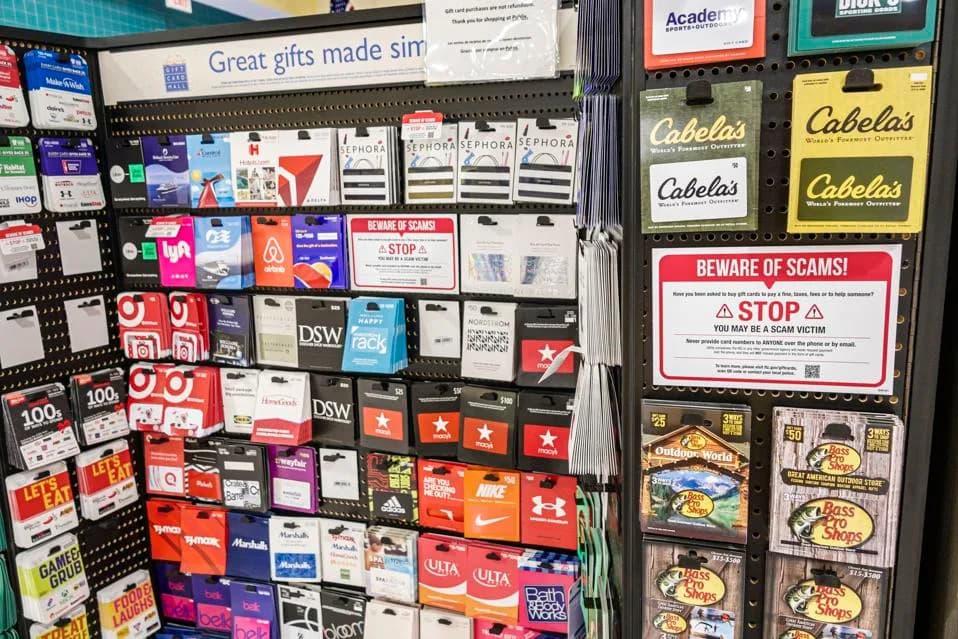
Miami Beach, Florida, Publix grocery store supermarket, gift cards display, Stop beware of scams warning sign. (Photo by: Jeffrey Greenberg/Universal Images Group via Getty Images)Jeffrey Greenberg/Universal Images Group via Getty Images
Gift-card draining has evolved into a sophisticated, large-scale criminal enterprise. Organized groups have used simple tools and deceptive tactics to steal card balances from shoppers and funnel the proceeds into purchases of high-value electronics that are then shipped abroad.
How The Scam Works
Criminals typically tamper with cards on store racks in two common ways. First, they use inexpensive handheld scanners to read the magnetic strip or barcode and record the card number printed on the front. After returning the card to the display, they repeatedly call the retailer's support line to check whether the card has been activated and to monitor its balance. Once the card is live, the thieves either create counterfeit cards with the recorded data or use the stolen information to place online orders without possessing the physical card.
Second, scammers sometimes place a sticker bearing the barcode of a card already under their control over the original barcode on a shelved card. When the victim buys that card and the cashier activates it, the purchase funds are credited to the criminal's card. The buyer discovers the fraud only when attempting to use the card later and finding a zero balance.
Investigations, Convictions And Impact
Federal prosecutions and reporting have revealed the scope and organization behind these schemes. In 2025, three Chinese nationals were convicted for roles in a major international gift-card theft ring. Homeland Security Special Agent Michael J. Krol said, "These individuals were part of a Chinese transnational criminal organization that used a complex scheme to steal and launder millions of dollars through gift card theft." Investigators disclosed this gang compromised more than $100 million in gift-card value and used the stolen balances to buy high-value electronics, predominantly Apple products, which were consolidated at U.S. warehouses for shipment to China, Hong Kong and other Southeast Asian destinations.
Reporting by New Hampshire Public Radio (NHPR) identified at least 13 facilities in New Hampshire used to store goods purchased with compromised cards, naming sites in Windham, Seabrook, Londonderry, Jaffrey, Hampstead and Amherst. NHPR reported that, over a 10-week window, Apple shipped 46,364 items valued at $47 million to a single Windham warehouse, while another facility in Amherst received roughly $35 million in iPhones in the same period.
The concentration of valuable goods attracted additional criminal activity, including robberies of FedEx drivers and a UPS facility. In May 2025, a Chinese national was murdered while unloading boxes from his car at one of the gang-controlled warehouses.
On a national level, Homeland Security special agent Adam Parks estimated roughly 1,000 people around the country were implicated and warned losses could reach "hundreds of millions, potentially billions" of dollars. The Department of Homeland Security is pursuing these networks through an initiative called Operation Red Hook.
Law enforcement actions have produced large seizures: a Florida gang member was convicted after authorities found 6,000 altered cards in his possession; in California, a traffic stop recovered 10,000 gift cards from a vehicle and a subsequent home search found another 15,000.
Retailer Defenses And Ongoing Risks
Retailers have introduced several countermeasures. Some issuers require a scratch-off PIN that must remain covered until purchase; however, many shoppers do not notice when the cover has already been removed. Target redesigned its cards so access codes are printed and applied by the cashier at checkout. Other merchants are using tamper-evident packaging, locked displays, or cashier-controlled activation to reduce opportunities for tampering.
Consumer Advice
To reduce the risk of becoming a victim, experts recommend buying gift cards only from secure locations such as behind a customer-service desk, asking the cashier to scan preloaded cards at checkout to confirm the full balance, and always inspecting cards for tampered barcodes or scratched-off PIN covers before purchase.
Note: This article summarizes public reporting and law-enforcement statements about gift-card draining operations. Originally published on Forbes.com.
Help us improve.