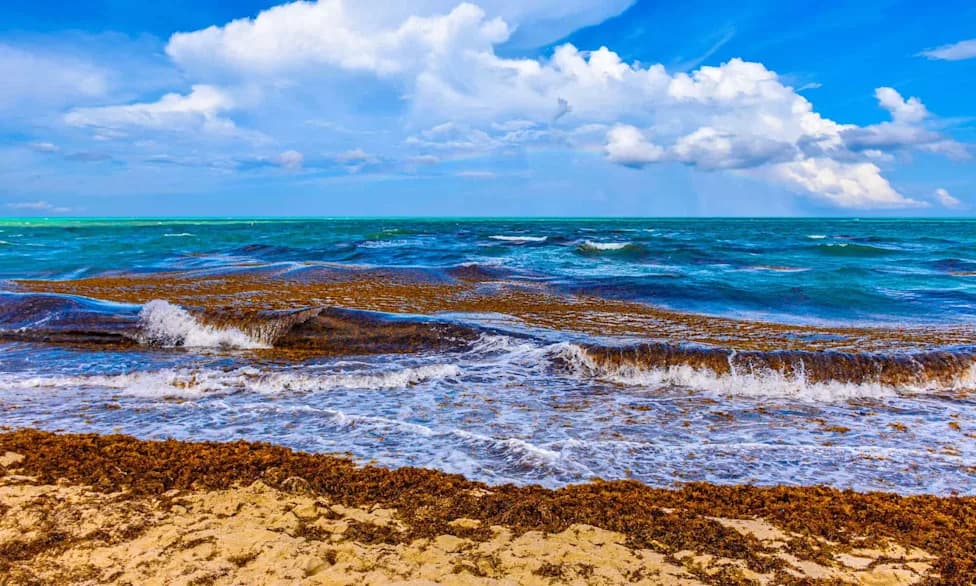
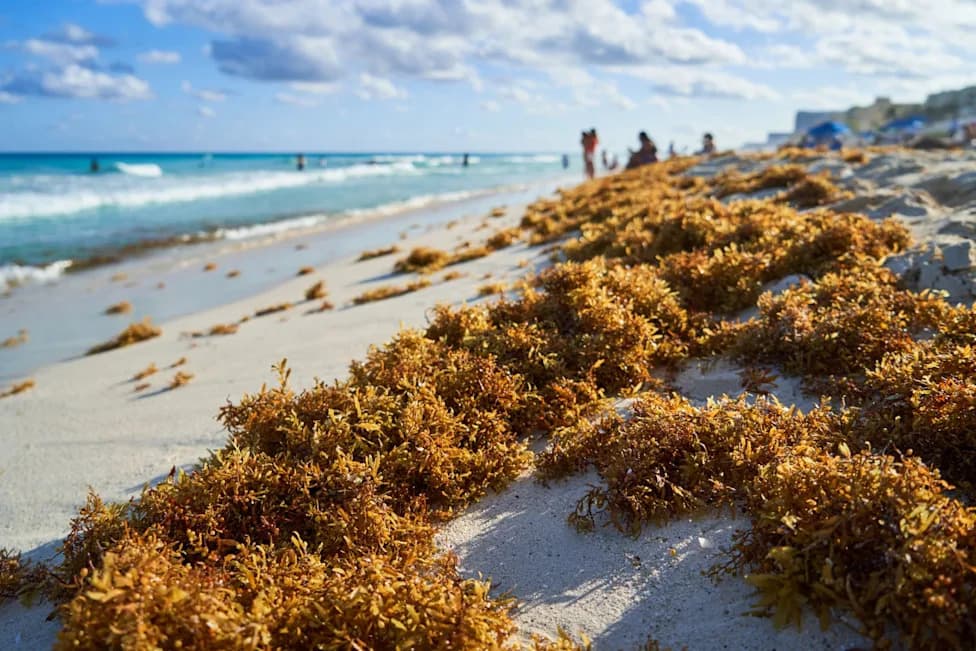
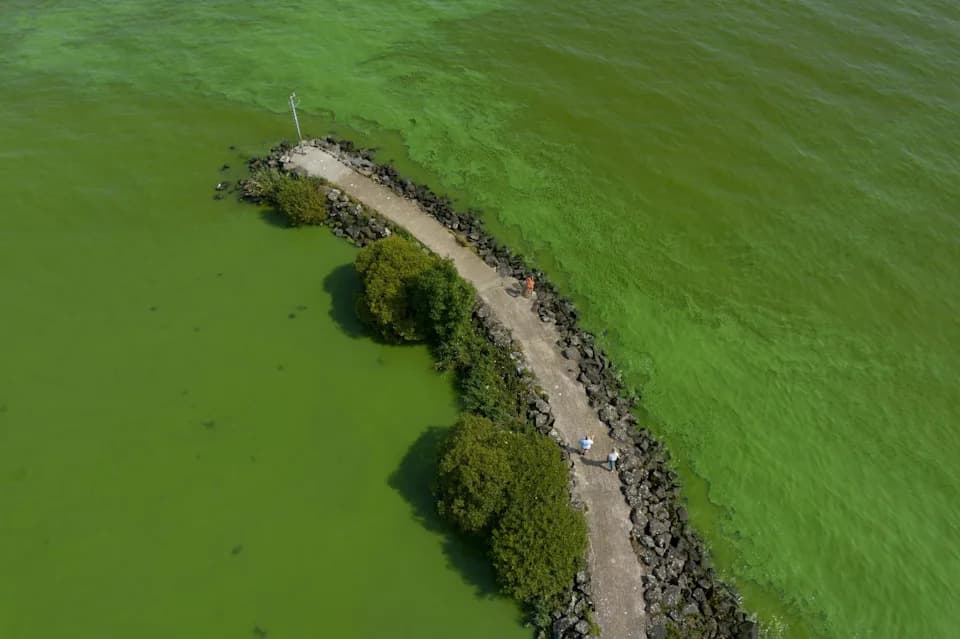
Large sargassum blooms in the tropical Atlantic have formed the Great Atlantic Sargassum Belt, visible from space and producing a record 2025 season. A TikTok video from Playa del Carmen shows volunteers removing waist-high mats of the brown algae. Scientists link the increase to warmer waters and nutrient-rich runoff; decomposing sargassum emits toxic gases within 48 hours and may contaminate freshwater with arsenic. Mexican authorities have declared more than a dozen beaches "red zones," and researchers are testing ways to repurpose the biomass.
Great Atlantic Sargassum Belt Visible From Space — Record 2025 Blooms Smother Mexican Beaches
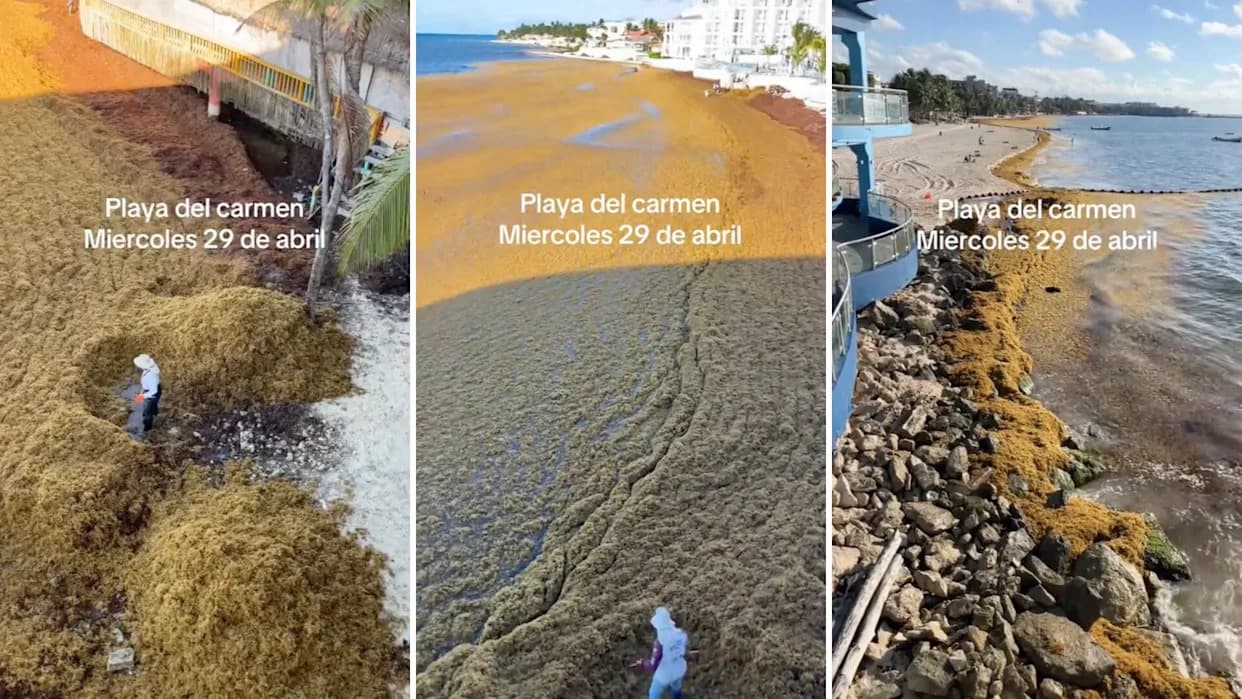
Photo Credit: TikTok
A dramatic surge of floating brown seaweed known as sargassum has formed the Great Atlantic Sargassum Belt — a macroalgal bloom so extensive it can be seen from space — and is washing up in thick mats along parts of Mexico's Caribbean coast.
A TikTok video posted by local resident Ahian (@ahianvlog) shows large swaths of sargassum off Playa del Carmen, with dense patches pushed against the shoreline. Volunteers are filmed wading into waist-high piles of algae to remove it by hand, highlighting the scale of the problem for coastal communities and tourism.
What Scientists Are Saying
Inside Climate News ocean correspondent Teresa Tomassoni notes that these blooms have become more frequent over the past 15 years. The 2025 season is a record year: on average it produced roughly 40% more sargassum by volume than 2022.
"We know that sargassum thrives in warmer waters," Tomassoni said, adding that a convergence of warm temperatures and nutrient-rich waters created a "perfect storm" for growth.
Likely Causes
Researchers point to climate change and increased nutrient inputs as primary drivers. Agricultural runoff rich in nitrogen and phosphorus — amplified by deforestation and river discharge near the mouths of the Amazon and Congo basins, plus runoff from the U.S. East Coast and Caribbean — supplies the nutrients that fuel blooms.
Environmental And Human Risks
While sargassum can provide habitat for some marine species, excessive accumulations damage nearshore ecosystems. Thick mats block sunlight, depriving coral reefs and seagrass beds of light and disrupting the organisms that depend on them.
When stranded on beaches, the algae decompose rapidly — often within 48 hours — releasing gases such as hydrogen sulfide and ammonia that can cause respiratory and eye irritation. Decomposing sargassum can also mobilize arsenic, posing a contamination risk to freshwater supplies, a serious concern for communities across Mexico's Yucatán Peninsula.
Response And Solutions
Mexican authorities have preemptively designated more than a dozen beaches as "red zones" because of heavy sargassum accumulation. There is no simple, large-scale remedy: removal is labor-intensive and temporary, and disposal can be challenging.
Scientists and engineers are exploring ways to repurpose sargassum biomass — from agricultural amendments and biochar to experimental building materials such as concrete-panel alternatives — but scalable, sustainable solutions remain limited.
Sources: Inside Climate News, local TikTok footage (@ahianvlog), Mexico News Daily.
Help us improve.