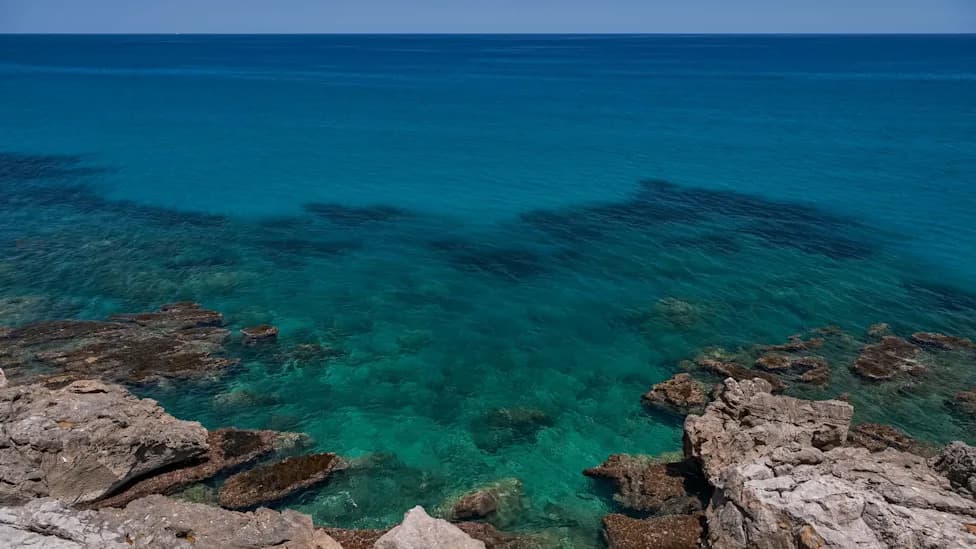
Scientists are tracking a large bloom of the phytoplankton Karenia mikimotoi that spans much of the Maine coast and may extend toward New Hampshire and Massachusetts. While not considered an immediate human health risk, the bloom can harm shellfish, finfish and other marine life. Residents have reported brown to reddish-brown water in bays and coves, and officials are collecting water and organism samples to assess impacts and improve future responses. The event is notable for its scale; the last major regional bloom occurred in summer 2023.
Massive Karenia mikimotoi Bloom From Gulf of Maine to Massachusetts Raises Concerns for Marine Life
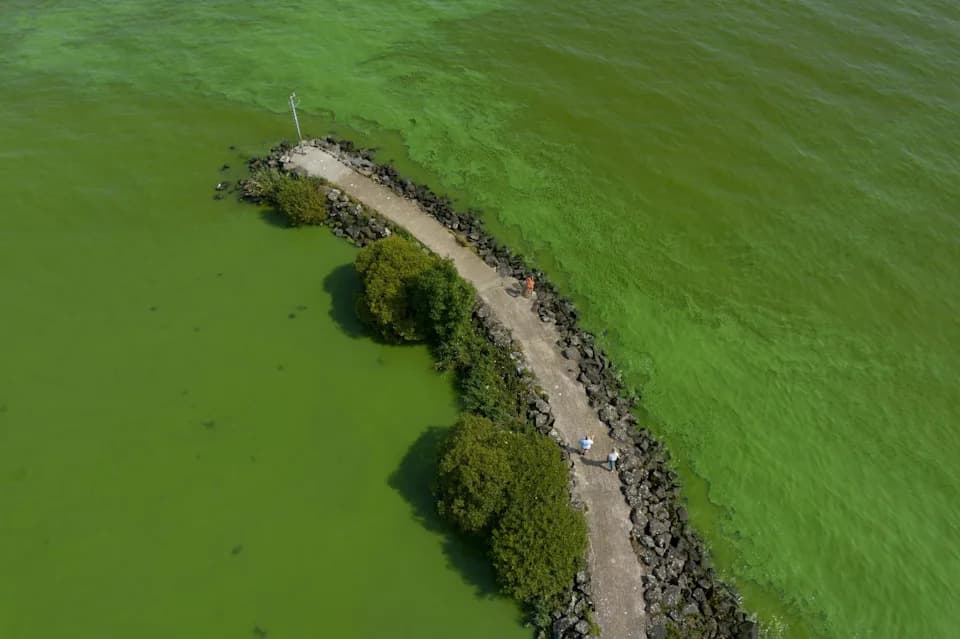
People walk past a blue-green algae bloom at Battery Harbour on Aug. 18, 2025 in Cookstown, Northern Ireland.
Scientists are closely monitoring a large algae bloom that stretches from the Gulf of Maine down the Maine coast and may extend toward New Hampshire and Massachusetts. The bloom has drawn attention because of its size and its potential impacts on local marine species, particularly shellfish and finfish.
What researchers know
Satellite imagery cited by local stations shows a wide swath of discolored water along much of the Maine shoreline, with possible reach from Penobscot Bay southward toward New Hampshire and Massachusetts. The phytoplankton species identified by reporters and regional laboratories is Karenia mikimotoi, a type of dinoflagellate that can form harmful algal blooms (HABs) and damage marine organisms it contacts.
Risk to people and marine life
Officials say the bloom does not pose a direct threat to human health, though people are advised to follow local guidance for harvesting or consuming shellfish. Elizabeth Harvey, associate professor and chair of the Department of Biological Sciences at the University of New Hampshire, told WCVB the bloom is not an immediate danger to people but can be harmful to marine animals.
Harpswell harbormaster Darcie Couture told WGME that the bloom has affected shellfish and finfish along parts of the Maine coast, with some of the most pronounced impacts reported around Casco Bay. Towns reporting effects include Harpswell and Brunswick.
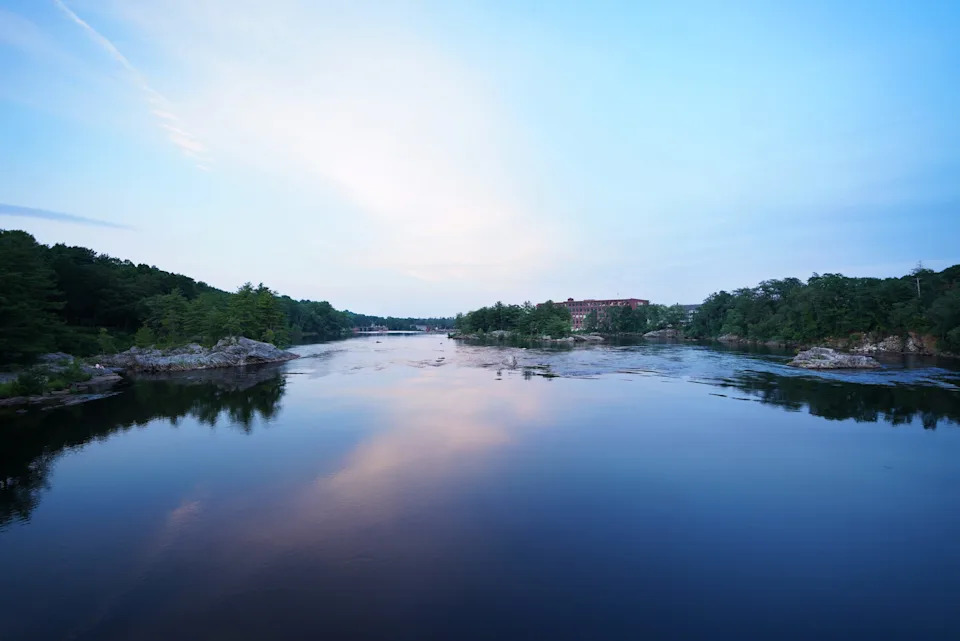
The Androscoggin River at dusk in Brunswick Maine
Observations and sampling
Residents along bays and coves have reported brown to reddish-brown water—some areas described as nearly coffee-colored—where phytoplankton concentrations are high. Unlike some other algal events, this species does not produce the bioluminescent glow sometimes associated with blooms.
Officials are collecting water samples, shellfish tests, and samples of worms and other affected organisms to assess the bloom's ecological impact. Couture said the bloom appears to be decreasing in some places while moving into others; the duration remains uncertain. The data being gathered will help authorities prepare for and respond to similar events in the future.
Context
Algal blooms occur in the region throughout the year, but scientists are paying special attention to this event because of its size. The last major regional bloom was reported in summer 2023.
Reporter: Anthony Thompson — [email protected] | X: @athompsonUSAT
Originally published on USA TODAY: "Large algae bloom stretches from Maine to Massachusetts." Local reporting referenced WCVB and WGME coverage.
Help us improve.