Early returns from Kerala’s state elections show the Congress-led United Democratic Front leading a decisive victory over the Left Democratic Front, potentially ending five decades of continuous left governance in at least one Indian state. Analysts cite regional limits, weakening trade unions, and failure to address caste and gender issues as key reasons for the left’s decline. Despite praised welfare measures and a notable COVID-19 response under Pinarayi Vijayan, the left faces demands to modernize into a social-democratic force to remain politically relevant.
Kerala Ousts India's Last Communist Government — Five-Decade Run Comes To An End
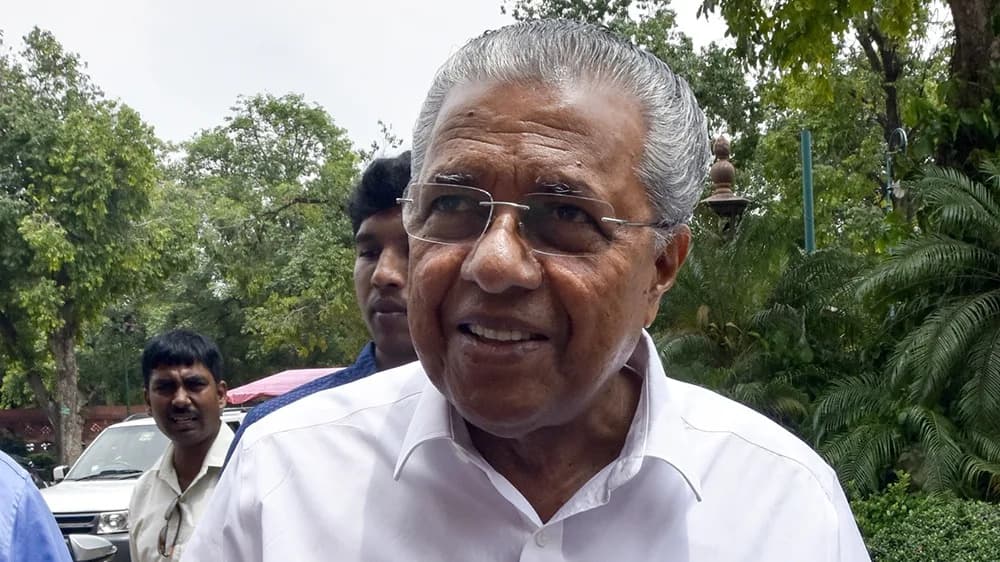
Kerala Chief Minister Pinarayi Vijayan at Parliament House in New Delhi [Sonu Mehta/Hindustan Times via Getty Images]
Bengaluru, India — Early returns from recent state elections indicate a dramatic reversal for India’s regional left: Kerala, the last state governed by communists and the place that once elected the world’s first democratically chosen communist government, appears to have voted the Left Democratic Front (LDF) out of power.
Election Returns And What They Mean
By late afternoon on election night, the United Democratic Front (UDF), led by the Congress party, was leading or had won 98 of Kerala’s 140 legislative seats, while the LDF had secured or led in 35 seats. If sustained in final counts, these results would mark the end of a continuous presence of left-wing governments in at least one Indian state since 1977.
Historical Context
Kerala gave the world its first democratically elected communist government in April 1957 under the Communist Party of India (CPI), led by EMS Namboodiripad. That government introduced ambitious land and education reforms that provoked strong resistance from the Congress and sections of the church, prompting the national government of Jawaharlal Nehru to dismiss the state administration in 1959. The CPI later split into multiple left parties that have since cooperated in alliances such as the LDF.
Peak Influence And The Turning Point
The left’s high-water mark at the national level came in 2004, when allied left parties held 62 seats in the Lok Sabha. The 2007 nuclear deal negotiations — when the left acted as a kingmaker and opposed the government-led agreement with the United States — symbolized the movement’s ability to shape national policy. Over subsequent years the left has steadily declined in national representation, now holding only a handful of parliamentary seats.
Why The Left Lost Ground
Analysts point to several structural and strategic reasons for the decline: the erosion of trade-union strength in industrial regions, a failure to broaden appeal beyond traditional strongholds, and limited engagement with issues of caste and gender that shape modern Indian politics. The left’s inability to renew leadership and messaging has also hampered its reach.
"This year’s election results indicate that, for the first time, the left may not come to power in any state," said Rahul Verma, political scientist and fellow at the Centre for Policy Research (CPR) in New Delhi.
Rajarshi Dasgupta of Jawaharlal Nehru University added that the left must evolve from a 20th-century communist mould into a social-democratic force if it hopes to recover relevance.
LDF's Recent Record And Voter Backlash
Under Chief Minister Pinarayi Vijayan, the outgoing LDF government emphasized infrastructure and welfare programs and received international attention for Kerala’s early pandemic response. The administration also launched an Extreme Poverty Alleviation Project (EPEP) and later declared Kerala free from extreme poverty — a claim that boosted its profile but did not prevent voter dissatisfaction.
Critics and some traditional supporters said the LDF’s rhetoric and behavior shifted toward the language of power, prompting a corrective vote by long-time left-leaning constituencies.
Outlook
With the left’s strongholds reduced and national representation diminished, commentators say the movement faces a stark choice: reorganize and modernize or continue to shrink. Persistent problems such as growing inequality and jobless growth leave space for a reinvigorated left or social-democratic alternatives, provided they can adopt broader, inclusive platforms and cultivate new leaders.
Key facts: Kerala was the first state to elect a communist government (1957); the left held continuous rule in at least one Indian state from 1977 until these returns; national left representation has fallen from 62 Lok Sabha seats in 2004 to single digits today.
Help us improve.