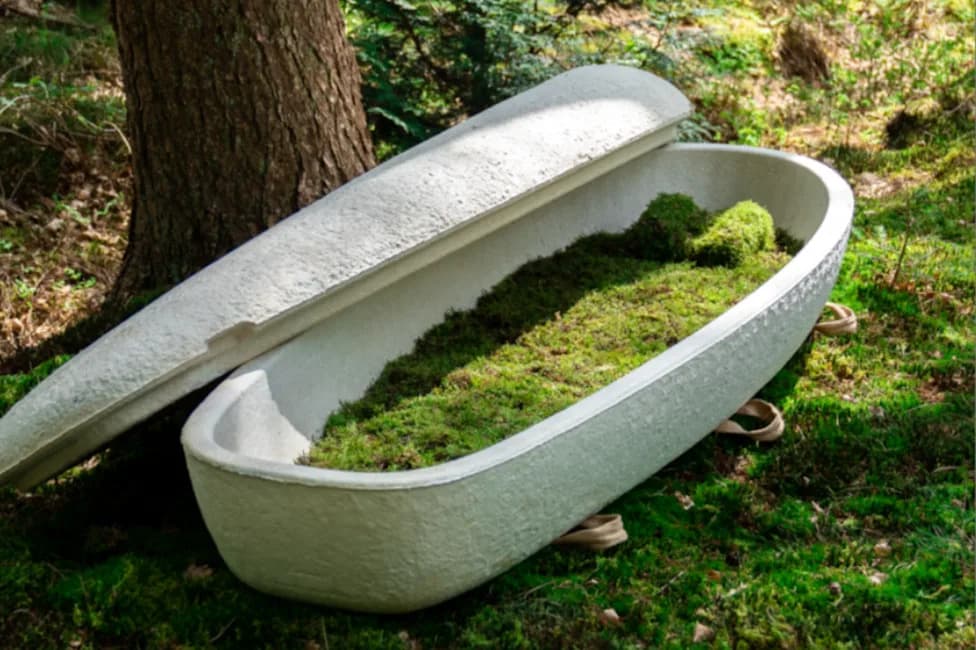
Interest in environmentally friendlier disposition methods is growing as people weigh the climate and health impacts of embalming, traditional burial and flame cremation. Conservation (green) burials protect habitat and can act as carbon sinks, while natural organic reduction (human composting) and alkaline hydrolysis (water cremation) sharply reduce energy use and return usable soil or remains to families. Legal availability varies by jurisdiction, but more U.S. states are authorizing alternatives like human composting as demand rises.
Greener Ways to Rest: How Natural Burials, Human Composting and Water Cremation Cut the Climate Cost of Death
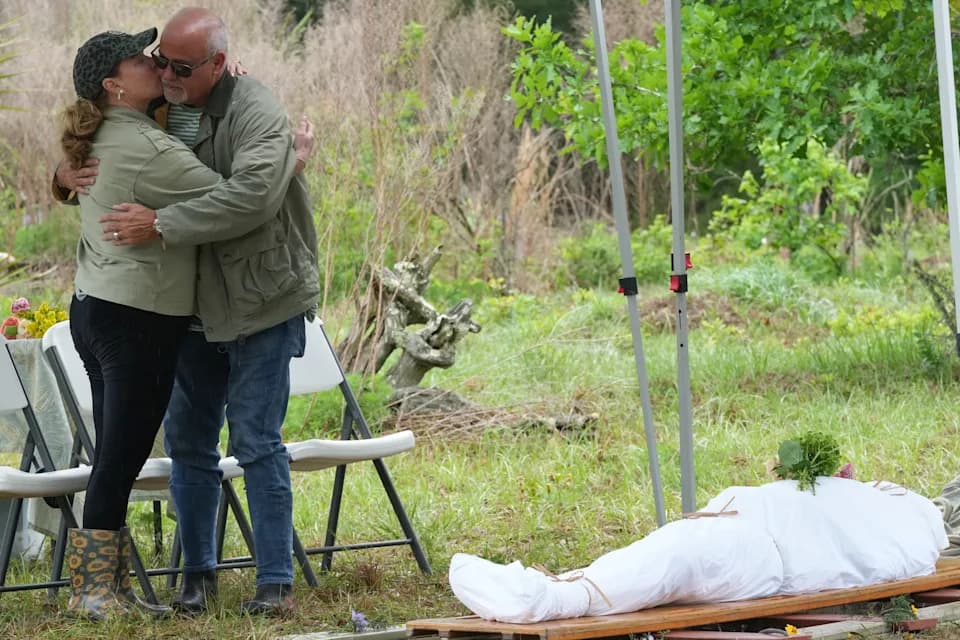
Jacqui King kisses her husband Scott King during the burial of his brother Kenneth King at the Prairie Creek Conservation Cemetery, Tuesday, April 7, 2026, in Gainesville, Fla. (AP Photo/Marta Lavandier)(ASSOCIATED PRESS)
When Moira Cathleen Delaney was diagnosed with an aggressive intestinal cancer, her thoughts turned to how she wanted her body handled after death. A lifelong gardener who loved birds and the woods, Delaney chose to be returned to the soil through natural organic reduction. When she died at 57, her family scattered some of the resulting soil beneath her favorite backyard tree and placed portions in glass jars for friends and relatives to keep or use for planting.
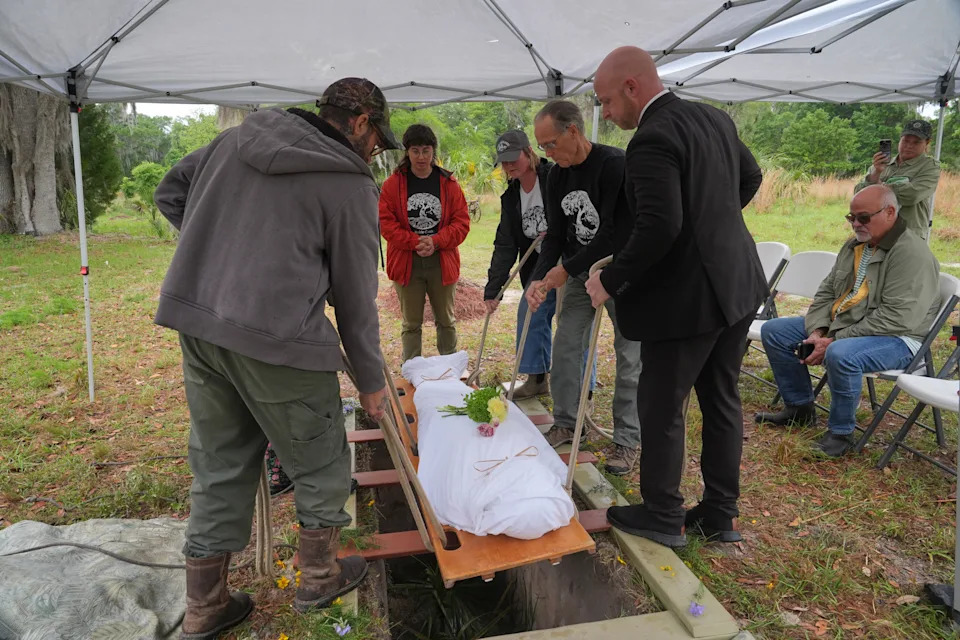
Scott and Jacqui King watch the burial of his brother Kenneth King at the Prairie Creek Conservation Cemetery, Tuesday, April 7, 2026, in Gainesville, Fla. (AP Photo/Marta Lavandier)(ASSOCIATED PRESS)
Why More People Are Choosing 'Green' Death Practices
Interest in burial and disposition methods that reduce environmental harm has climbed in recent years, according to research from the National Funeral Directors Association. Many people are concerned about the climate and health effects of conventional practices — embalming, flame cremation and vault-and-casket burials — while others simply prefer a final resting place in nature.
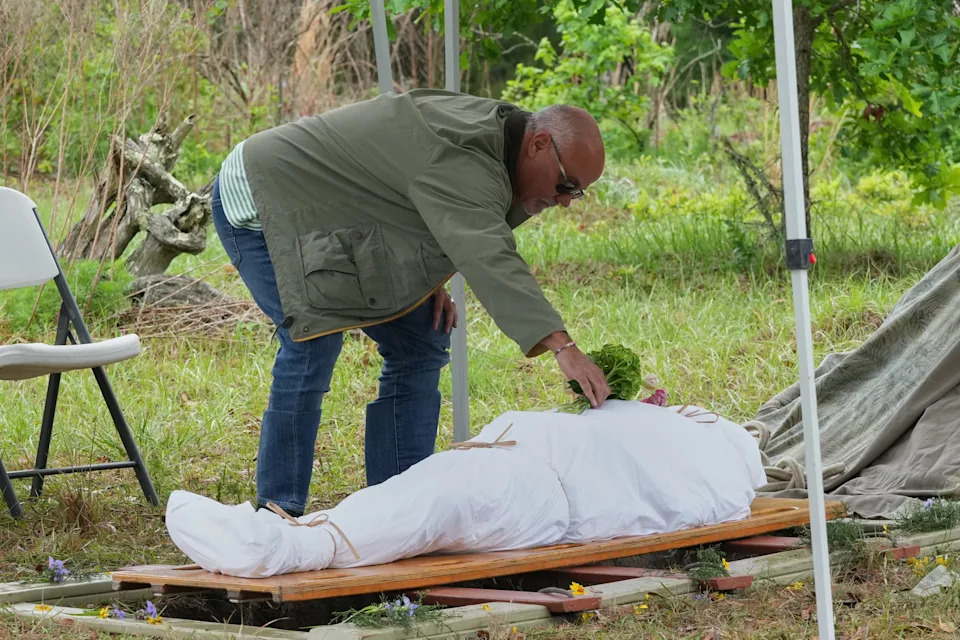
Scott King places a bouquet of flowers on the body of his brother Kenneth King at the Prairie Creek Conservation Cemetery, Tuesday, April 7, 2026, in Gainesville, Fla. (AP Photo/Marta Lavandier)(ASSOCIATED PRESS)
“How we die does lead to a substantial impact on not only the people around us and our communities, but the earth itself,” said Mark Shelvock, a psychotherapist and lecturer at Western University in Canada, co-author of a paper on green death practices.
Conventional Options and Their Environmental Costs
Embalming: Embalming slows decomposition for viewings by injecting chemicals such as formaldehyde into the body. The U.S. Environmental Protection Agency has said formaldehyde poses an “unreasonable risk” to public health for workers exposed to it. Research suggests the chance of embalming chemicals contaminating soil or groundwater is low, but health and workplace concerns remain.
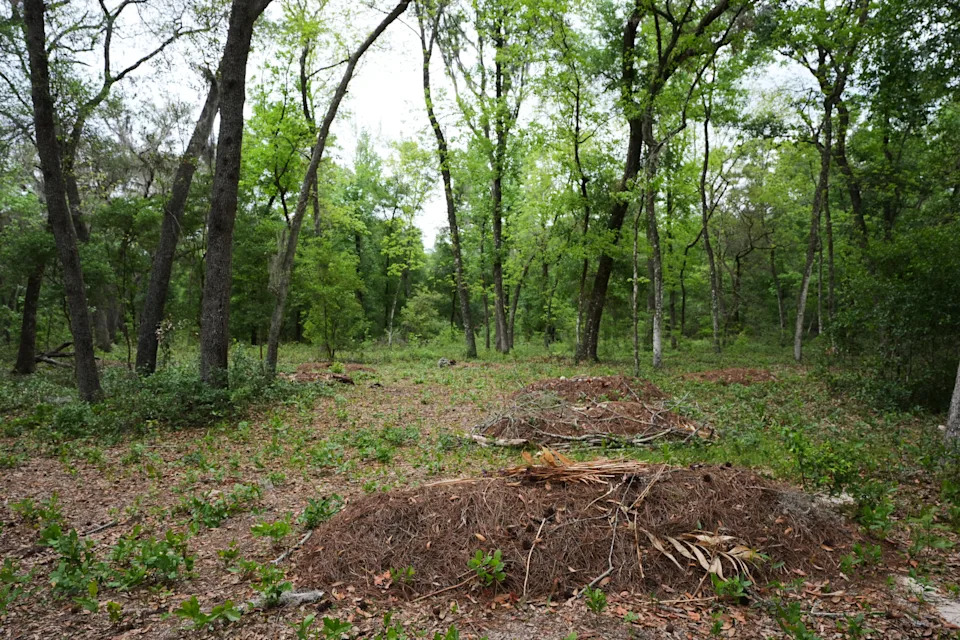
Graves are visible in the forest at the Prairie Creek Conservation Cemetery, Monday, April 6, 2026, in Gainesville, Fla. (AP Photo/Marta Lavandier)(ASSOCIATED PRESS)
Fire Cremation: The most common choice in the United States — nearly two-thirds of respondents to a funeral directors association survey preferred it — cremation requires large amounts of energy, typically from fossil fuels. The Cremation Association of North America estimates the energy used in a typical cremation is equivalent to powering a 2,000-square-foot (186 m²) home for about a week.
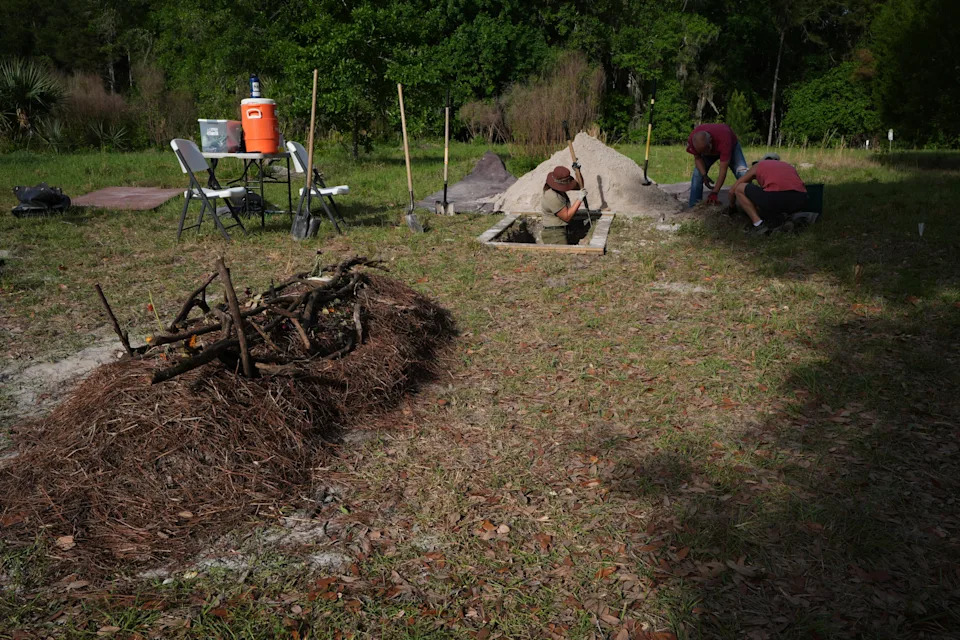
Carly Zeffren, left, with the Prairie Creek Conservation Cemetery, digs a grave with the help of volunteers Monday, April 6, 2026, in Gainesville, Fla. (AP Photo/Marta Lavandier)(ASSOCIATED PRESS)
Caskets, Vaults and Cemeteries: Caskets and burial vaults are made from wood, metal or concrete, whose production consumes energy and raw materials. Concrete production and cement processing account for a significant share of global CO2 emissions. Cemeteries also require land and ongoing maintenance — mowing, watering and fertilizing — which increases their environmental footprint.
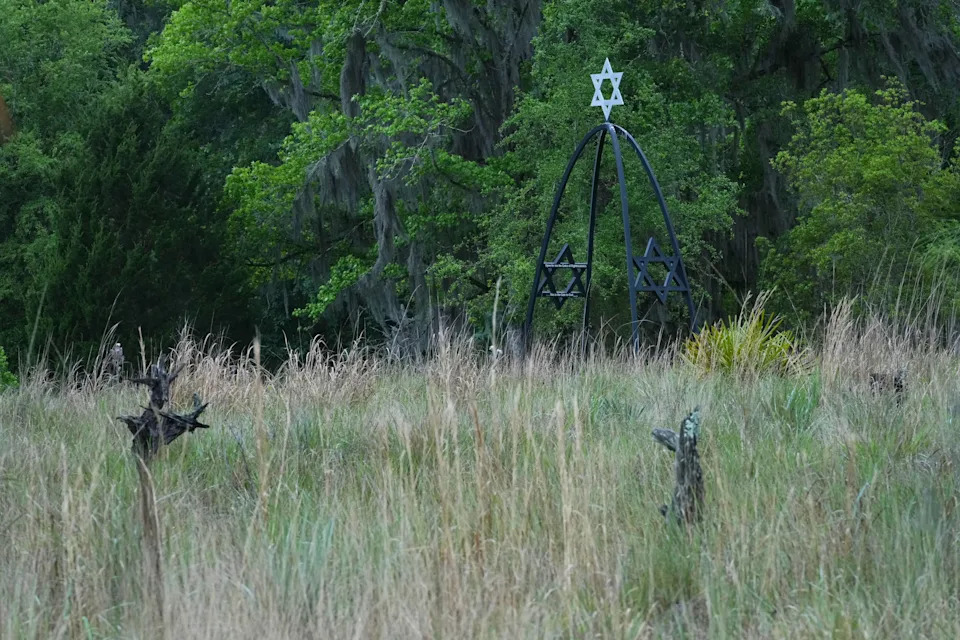
An arch leading to the Jewish burial site rises over grave markers on a field of native grasses at the Prairie Creek Conservation Cemetery, Tuesday, April 7, 2026, in Gainesville, Fla. (AP Photo/Marta Lavandier)(ASSOCIATED PRESS)
Lower-Impact Alternatives
Conservation (Green) Burial
Conservation cemeteries combine burial with land protection and restoration. Bodies are buried without embalming and placed in biodegradable shrouds or caskets (bamboo, cotton, wicker). Prairie Creek Conservation Cemetery in Florida, for example, partners with a land trust to restore native habitat, remove invasive species and perform prescribed burns. These sites aim to let the body decompose naturally while protecting open space and encouraging biodiversity.
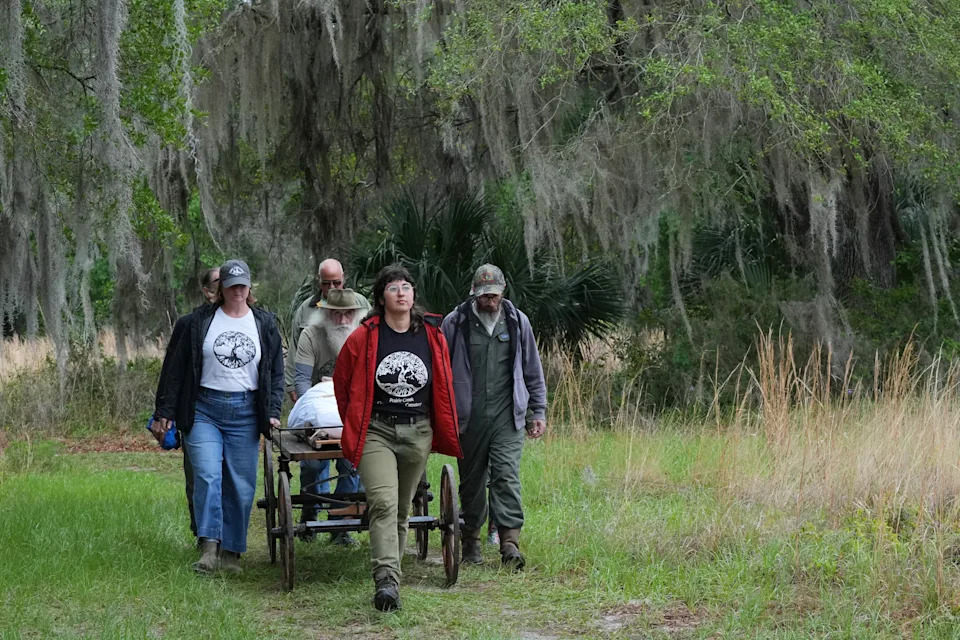
Carly Zeffren, with the Prairie Creek Conservation Cemetery, brings the body of Kenneth Jennings King to his grave site Tuesday, April 7, 2026, in Gainesville, Fla. (AP Photo/Marta Lavandier)(ASSOCIATED PRESS)
According to the Green Burial Council, a green burial can sequester about 25 pounds (≈11.3 kg) of carbon. Researcher Elena Slominski says conservation burials can function as carbon sinks while restoring habitat — making them one of the strongest choices for climate benefits where land is available.
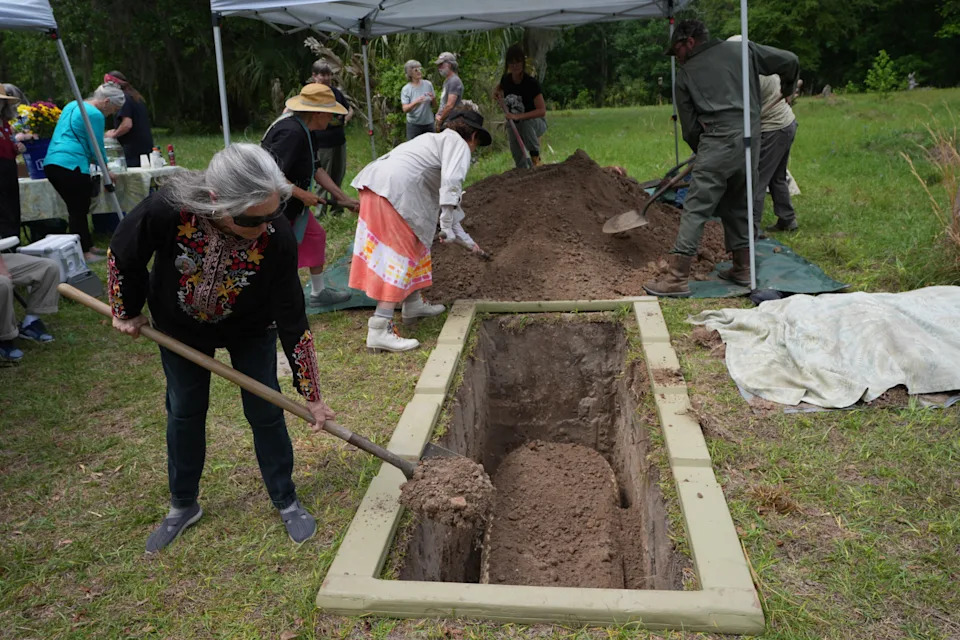
Friends and family help bury the body of Jacqueline Betz at the Prairie Creek Conservation Cemetery, Monday, April 6, 2026, in Gainesville, Fla. (AP Photo/Marta Lavandier)(ASSOCIATED PRESS)
Natural Organic Reduction (Human Composting / Terramation)
Also called terramation or human composting, this process places a body in a sealed vessel with wood chips, mulch and plant material for roughly 30–45 days. Microorganisms break the body down into soil while temperatures rise (~131 °F / 55 °C or higher), sufficient to kill pathogens. Companies such as Earth Funeral say they use renewable energy where possible; families may keep some of the finished soil while the rest is donated to reforestation or conservation efforts.
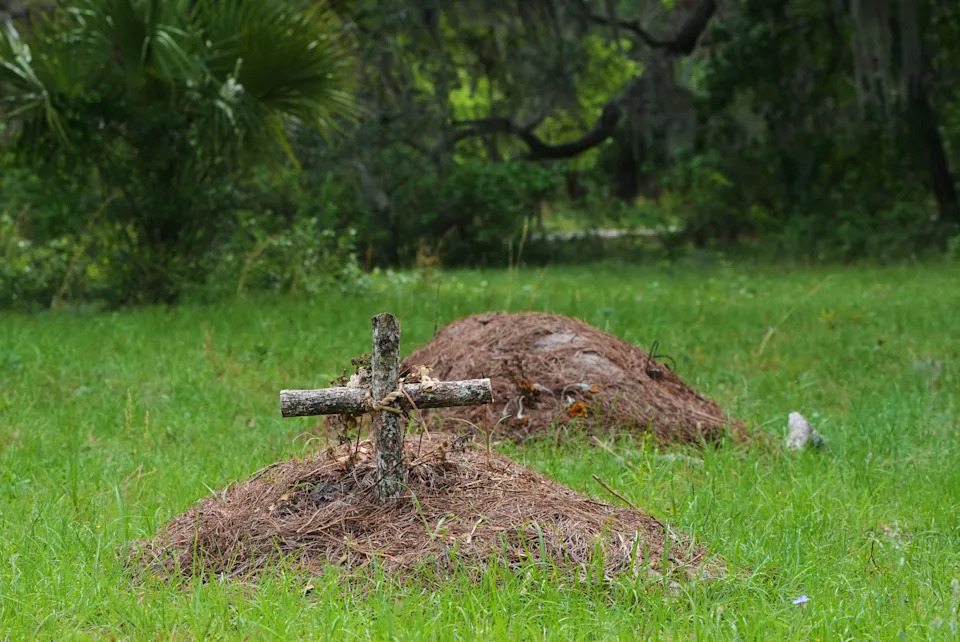
A grave is marked with a cross at the Prairie Creek Conservation Cemetery, Monday, April 6, 2026, in Gainesville, Fla. (AP Photo/Marta Lavandier)(ASSOCIATED PRESS)
As of this report, 14 U.S. states allow human composting and about 15 more have introduced bills to legalize it. Advocates say it’s a practical option for urban residents where burial space is limited.
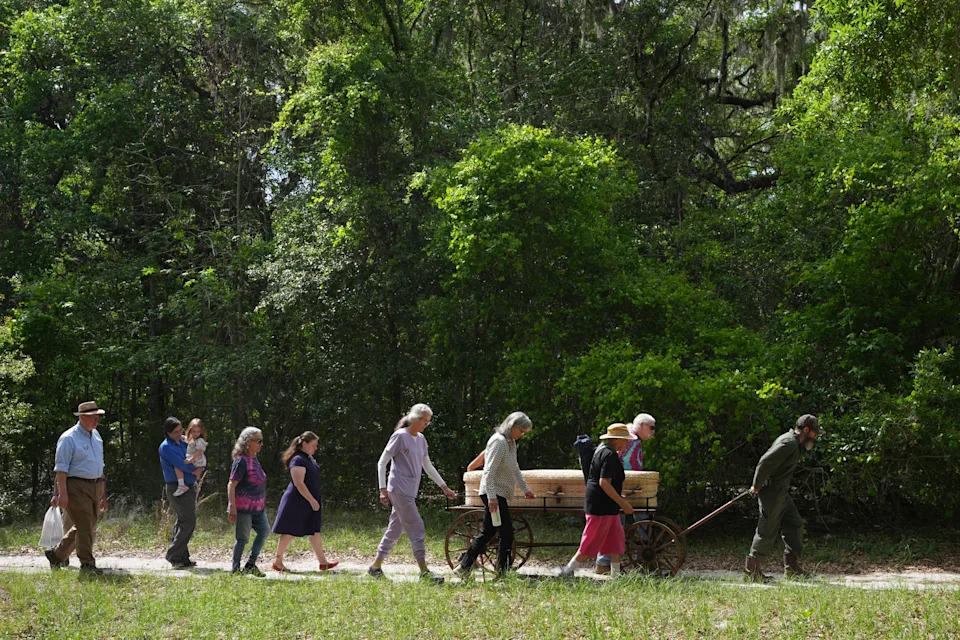
Friends and family of Jacqueline Betz push an Amish cart with her body at the Prairie Creek Conservation Center Cemetery, Monday, April 6, 2026, in Gainesville, Fla. (AP Photo/Marta Lavandier)(ASSOCIATED PRESS)
Alkaline Hydrolysis (Water Cremation)
Alkaline hydrolysis uses a heated, pressurized solution of water and an alkaline chemical (commonly potassium hydroxide) to accelerate decomposition. After about 18 hours at high temperature, the remaining bone material is processed into a dry powder returned to families; some providers convert residual liquid into fertilizer for conservation projects, while others treat and discharge it according to local regulations. Providers estimate the process uses roughly 90% less energy than flame cremation.
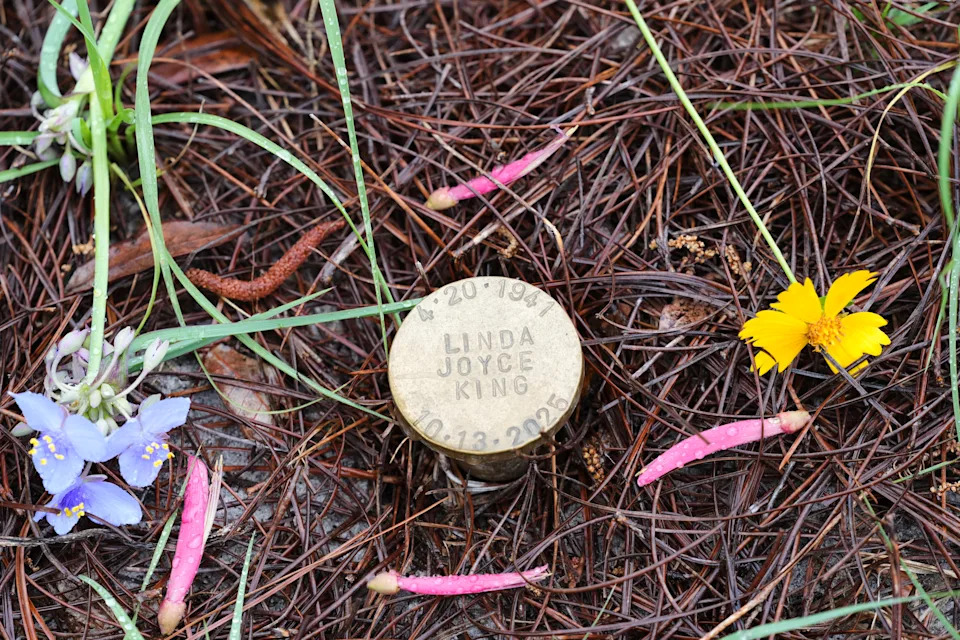
Fresh flowers adorn the grave of Linda Joyce King at the Prairie Creek Conservation Cemetery, Tuesday, April 7, 2026, in Gainesville, Fla. (AP Photo/Marta Lavandier)(ASSOCIATED PRESS)
Practical Considerations and the Big Picture
Availability and legality vary by country, state or province. Costs, cultural norms, religious beliefs and land availability also influence choices. Some experts caution one person's choice won't solve climate change alone, but shifting industry practices at scale — reducing embalming, using fewer resource-intensive materials and choosing lower-energy disposition methods — can make a meaningful cumulative difference.
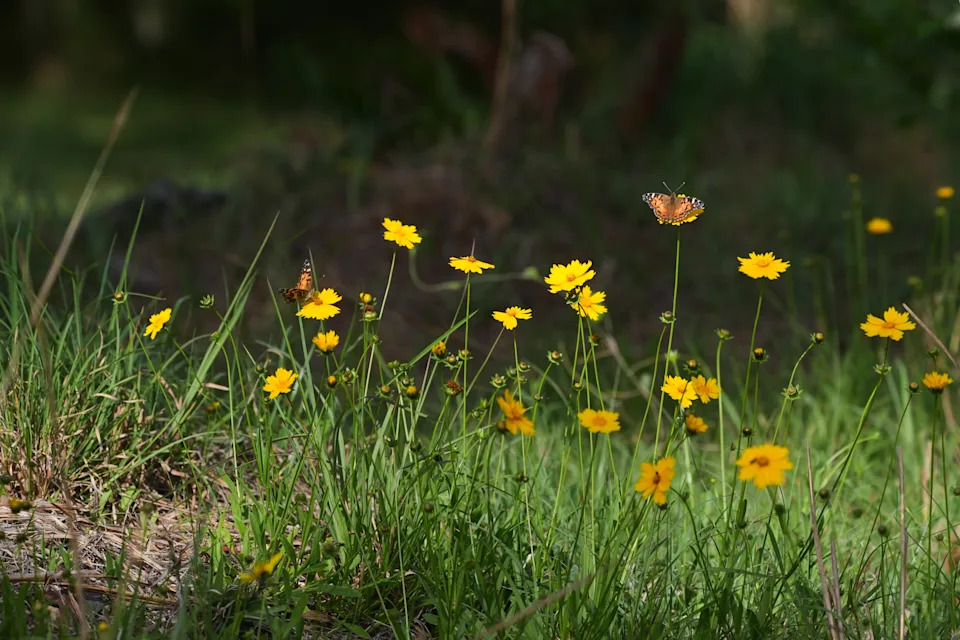
Painted Lady butterflies collects pollen from tickseed flowers planted on a grave at the Prairie Creek Conservation Cemetery, Monday, April 6, 2026, in Gainesville, Fla. (AP Photo/Marta Lavandier)(ASSOCIATED PRESS)
Samuel Perry, president of the Green Burial Council, summed it up: “The quick and dirty answer is no — I don’t think this one thing is going to change a whole lot. But it’s always about changing industries. And as an industry, if we do better, we are making a bigger impact.”
Note: Laws and environmental impacts vary by location and provider. Readers considering green disposition options should consult local regulations, certified providers and their chosen cemetery or funeral director.
Help us improve.