Carolyn, a woman in her 70s, became the first person in Australia to be buried in a coffin grown from mycelium and upcycled hemp. The Loop Biotech cocoon is formed in about seven days and, under ideal conditions, is absorbed into the soil in roughly 45 days — far faster than a traditional wooden casket. Funeral directors and cultural experts say demand for eco-friendly burial options has risen as Australians seek sustainable, values-based ways to be laid to rest.
Sydney Woman Becomes First In Australia Buried In Coffin Grown From Mushrooms
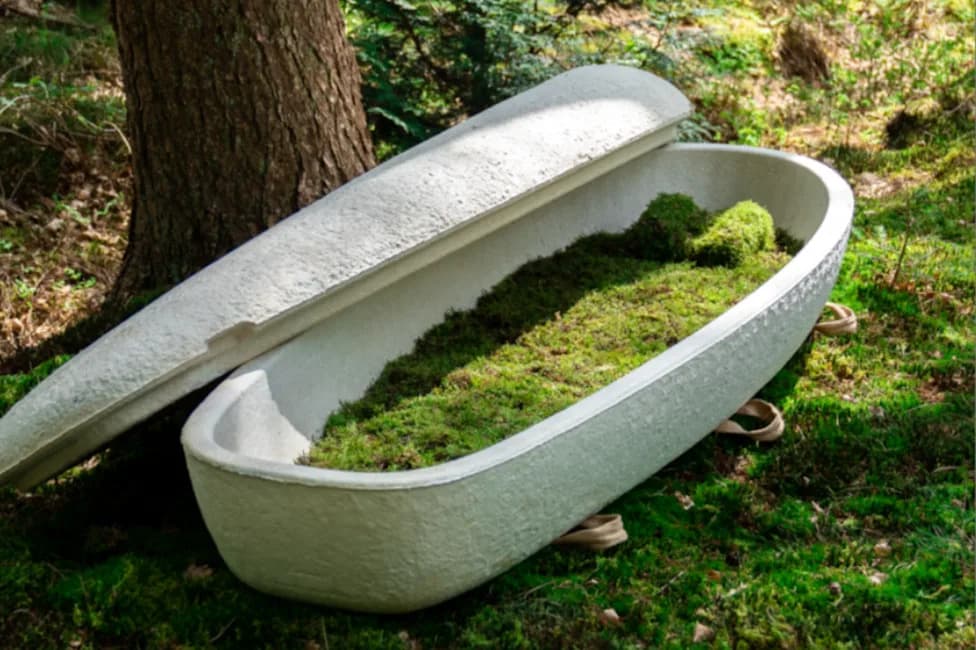
Sydney woman becomes first in Australia to be buried in mushroom coffin
A Sydney woman in her 70s, identified as Carolyn at her family's request, has become the first person in Australia to be buried in a coffin grown from mushrooms and upcycled hemp. Her funeral service took place in Faulconbridge, and she was interred at Springwood Cemetery in the Blue Mountains, New South Wales.
The coffin was developed by Dutch company Loop Biotech and is made from mycelium — the root-like network of a mushroom colony — blended with hemp fibres sourced from agricultural waste. The mycelium-and-hemp mixture is packed around a mould in a climate-controlled space and grows into the shape of a cocoon-like coffin in about seven days.
Loop Biotech says the cocoon biodegrades and enriches the soil, breaking down in roughly 45 days under ideal conditions — far faster than a conventional wooden casket, which can take decades to decompose.
"It feels very true to who she was that even after her death, she can still do something for others while giving something back to nature," Carolyn's husband, Donald, said.
Bob Hendrikx, 32, founder and CEO of Loop Biotech, said the idea began as a university project at Delft University of Technology about five years ago. He told the Sydney Morning Herald the product was designed to be fully biodegradable and to enrich the soil rather than pollute it. The company worked with Australian authorities to meet strict biosecurity rules before signing a local distributor.
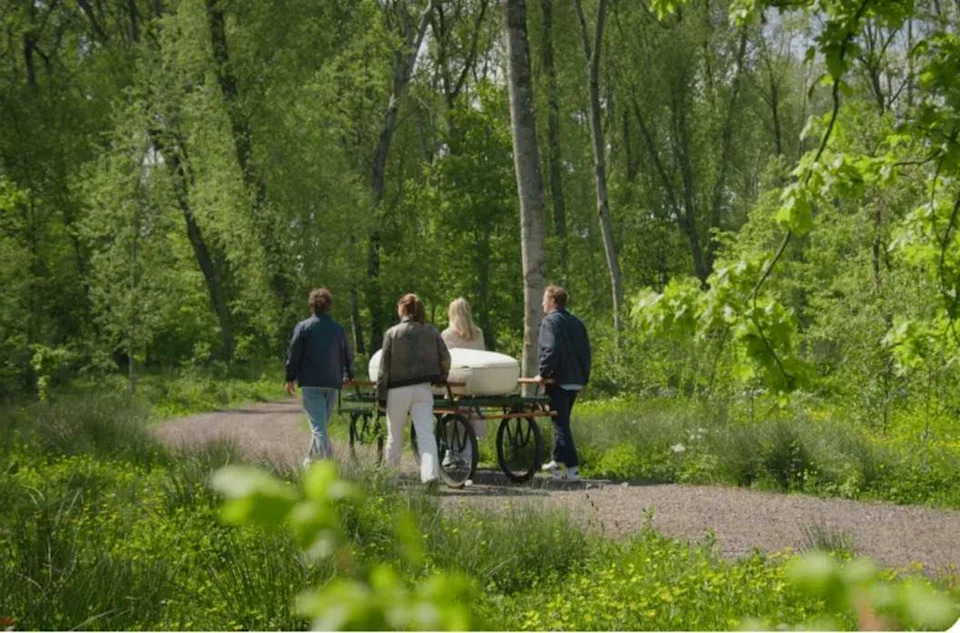
Loop Living Cocoon says their coffin grows in just seven days from local mushrooms and upcycled hemp fibres and it fully returns to earth in 45 days (Loop Living Cocoon)
Asha Dooley, managing director of Grace Funerals and national president of Funerals Australia, directed the service. She said families' interest in environmentally sustainable funerals has grown substantially over the past four to five years, reflecting a broader shift toward end-of-life choices that align with people's values.
"Five years ago, very few families were asking these questions. Today we're regularly speaking with people who want a farewell that reflects how someone lived their life," Dooley said.
Dr Hannah Gould, a cultural anthropologist at the University of Melbourne, said eco-friendly funeral practices have gained popularity as fewer Australians identify with organised religion and more people embrace narratives of returning to the earth.
About 200,000 funerals take place in Australia each year. Cremations currently outnumber burials by roughly seven to three, driven in part by limited and costly burial land in major cities. A typical cremation is estimated to produce more than 100 kg of carbon dioxide, although estimates vary by source.
Other alternative end-of-life options gaining attention include alkaline hydrolysis — a water-based process similar to cremation — and human composting, where remains are broken down with organic materials such as wood chips and straw over several weeks. Independent Sydney MP Alex Greenwich introduced a bill in June to legalise human composting in New South Wales; if passed, NSW would be the first Australian state to allow the method.
Help us improve.