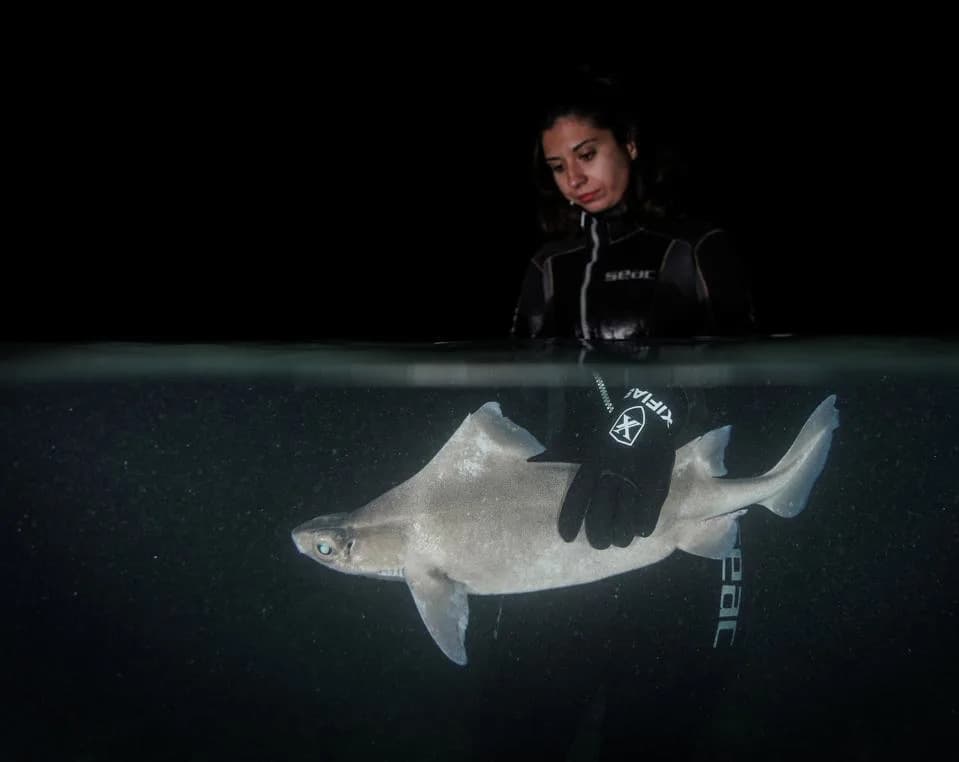
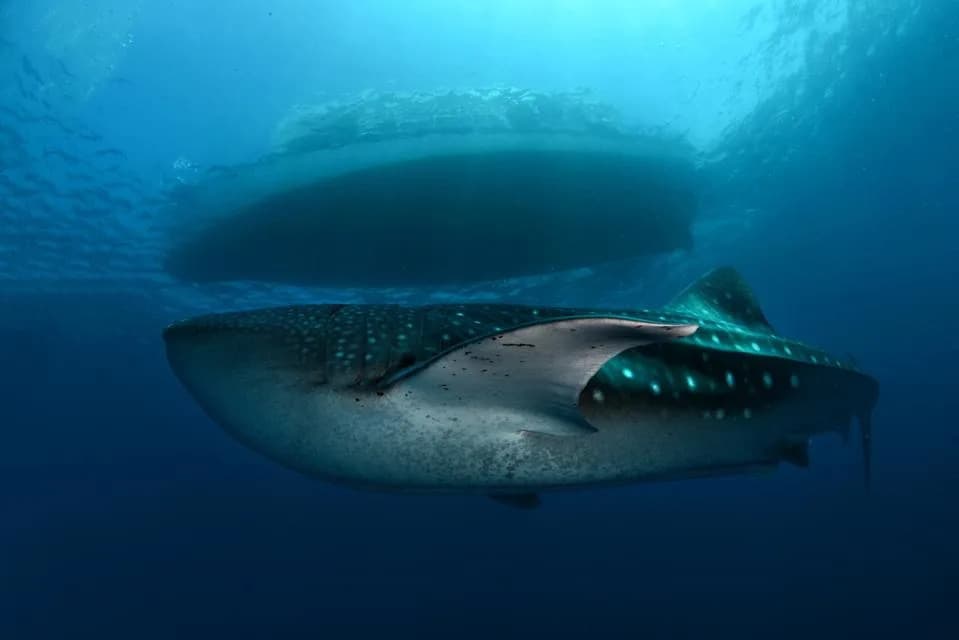
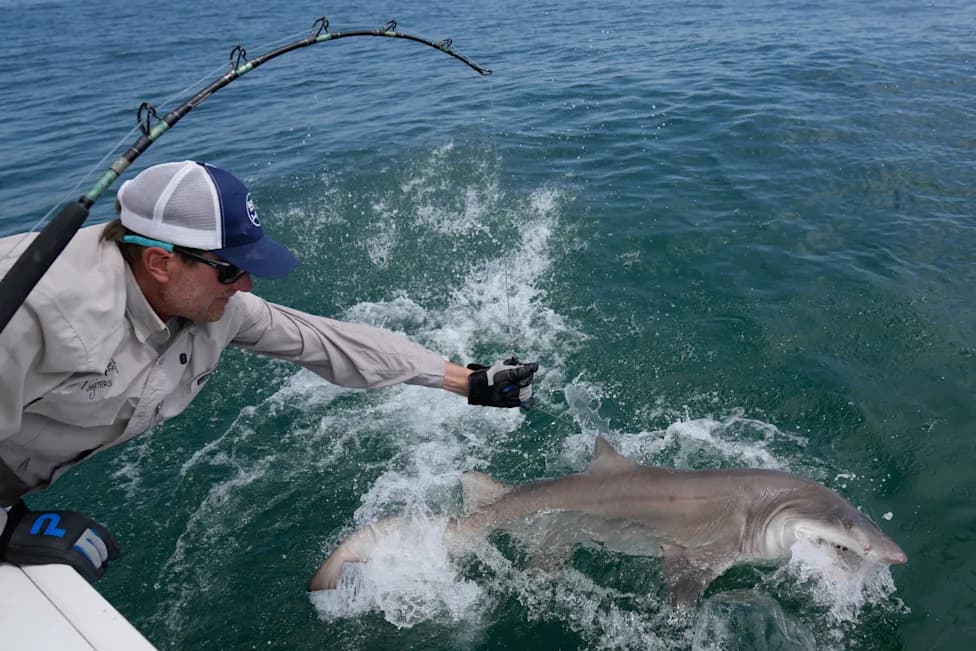
PADI, in partnership with Blancpain and James Cook University, has launched the Global Shark & Ray Census to crowdsource sightings from recreational divers and the public. The program pairs a worldwide survey with a Shark & Ray Conservation Specialty Course that teaches species identification, safe interaction and standardized data collection. Collected observations are validated, and sensitive location details are withheld to protect vulnerable species. Aggregated dive records aim to reveal where sharks and rays persist or decline and to guide targeted conservation action.
Divers Power New Global Shark & Ray Census: Citizen Science to Map Ocean Life
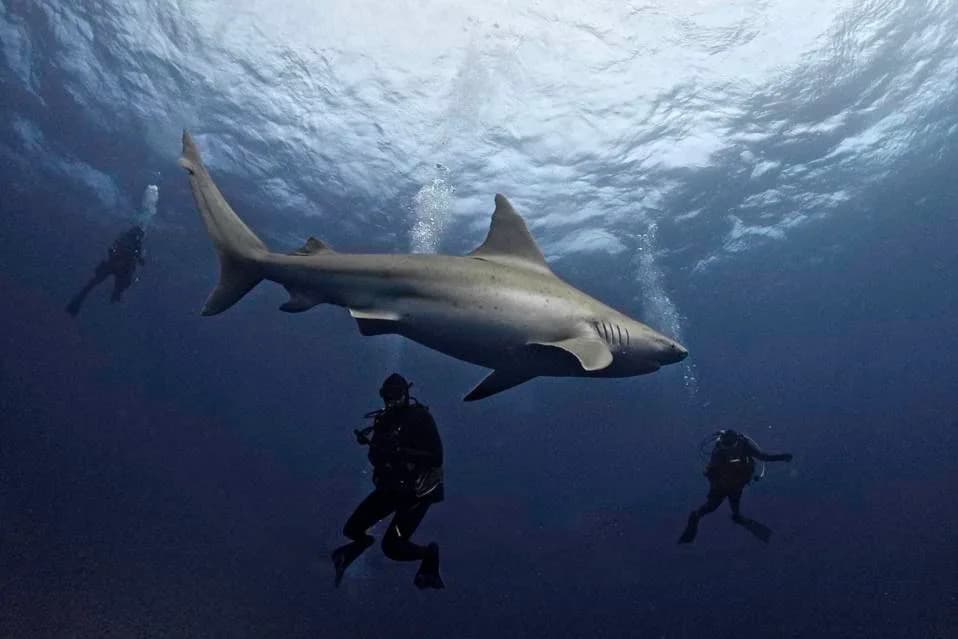
A group of divers swim with a sandbar shark off Jupiter, Florida.AFP via Getty Images
The first time you meet a shark underwater, perception shifts: time seems to stretch, sounds sharpen and every breath feels amplified. You become acutely aware of the ocean around you and of sharing space with an animal that has evolved for hundreds of millions of years. Then, almost as quickly, the shark slips back into blue. Around the world, divers — whether novices or veterans — are experiencing these moments more often, and a new global effort asks them to turn those encounters into actionable data.
What The Program Is
PADI, marking its 60th anniversary and in partnership with Swiss watchmaker Blancpain, has launched the Global Shark & Ray Census, developed with James Cook University. The initiative pairs a worldwide census of sharks and rays with a new Shark & Ray Conservation Specialty Course. This effort arrives at a critical point: nearly one-third of shark and ray species are threatened with extinction because of overfishing, habitat degradation and the international wildlife trade.
Why This Matters
Many sharks and rays grow slowly, mature late and produce few offspring, so population declines can outpace recovery. Traditional monitoring tools — fisheries records, tagging programs and targeted surveys — are expensive, time-consuming and geographically limited. There simply aren't enough researchers to observe every reef, slope and open-ocean corridor. That is where divers can make a difference.
How It Works
The Global Shark & Ray Census is built on a simple but powerful idea: people are already in the water observing marine life. Divers record sightings of sharks and rays across designated sites, including Important Shark & Ray Areas and locations within the Adopt the Blue network. Participants log species, behavior, location and environmental conditions and submit observations through a dedicated platform.
Citizen science becomes transformational when it's part of the everyday diving experience. Divers aren't just witnessing change, they're documenting it and helping drive solutions.
— Kristin Valette Wirth, Global Brand & Membership Officer, PADI Worldwide
Individually, a dive log may seem small, but combined these records produce thousands of data points that help map where predators are thriving and where they have declined. Long-term, large-scale datasets can reveal patterns — species that consistently appear in the same locations, sites where animals have vanished, or shifts in behavior over time — that short-term studies cannot.
Training, Data Quality And Protection
The new specialty course trains scuba divers and freedivers, and offers a non-diver option for those who wish to participate without entering the water. The curriculum emphasizes accurate species identification, understanding threats and safe, responsible interactions with wildlife. Importantly, participants learn standardized methods for collecting and reporting observations so the data are useful to scientists.
The program addresses common citizen-science challenges: submissions are validated, large datasets are managed centrally, and precise location details for vulnerable species are withheld to reduce risk from poaching or exploitation. These safeguards help ensure data quality while protecting sensitive populations.
From Data To Action
We already know the main threats to sharks and rays: overfishing, bycatch and habitat loss. The larger challenge is often translating knowledge into timely protection and policy. If divers and ocean users can document changes at scale, stakeholders — from researchers to managers to local communities — will be better equipped to act. When the data show declines at treasured dive sites, the question becomes not whether we have information, but what we will do with it.
The ocean has always been vast, but it is increasingly knowable. With more eyes in the water than ever before, scientists and the public have an opportunity to map and understand marine ecosystems in greater detail. The crucial step now is turning that understanding into effective conservation and stewardship.
This article was originally published on Forbes.com
Help us improve.