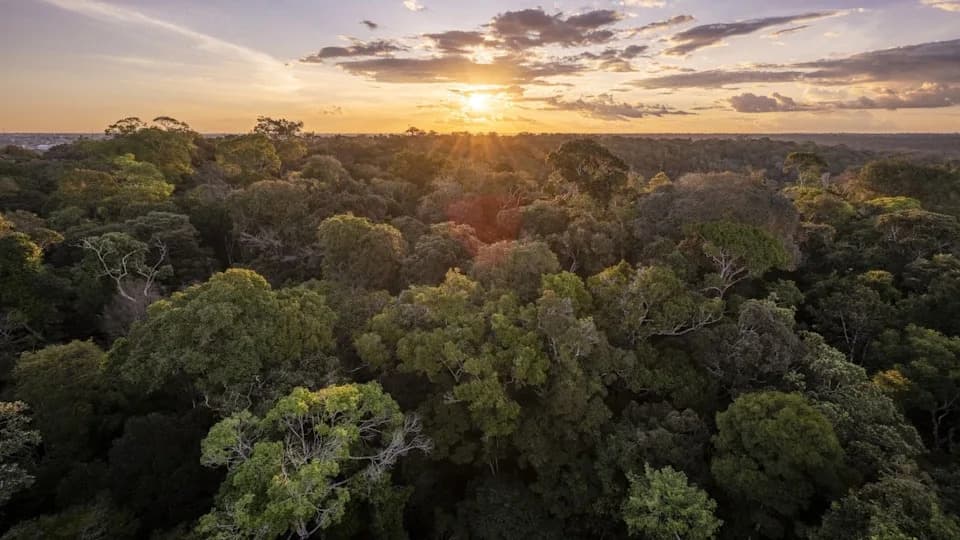
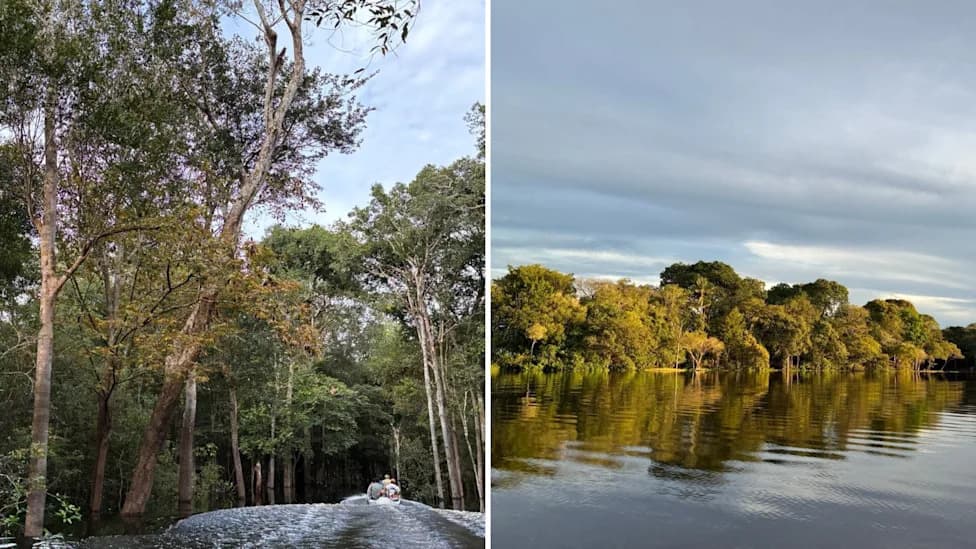
New analysis from the World Resources Institute and the University of Maryland finds tropical primary rainforest loss fell to 4.3 million hectares in 2025, a 36% decline from 2024 driven largely by reductions in Brazil. Despite the drop, loss is still 46% higher than a decade ago and roughly 70% above the pace required to meet 2030 targets. Fires accounted for 42% of tropical forest destruction and climate-driven risks such as the expected return of El Niño could quickly reverse gains. Researchers stress that stronger policy, enforcement and fire management are needed to sustain progress.
Encouraging But Fragile: Tropical Rainforest Loss Falls 36% in 2025 — Experts Warn Risks Could Reverse Gains
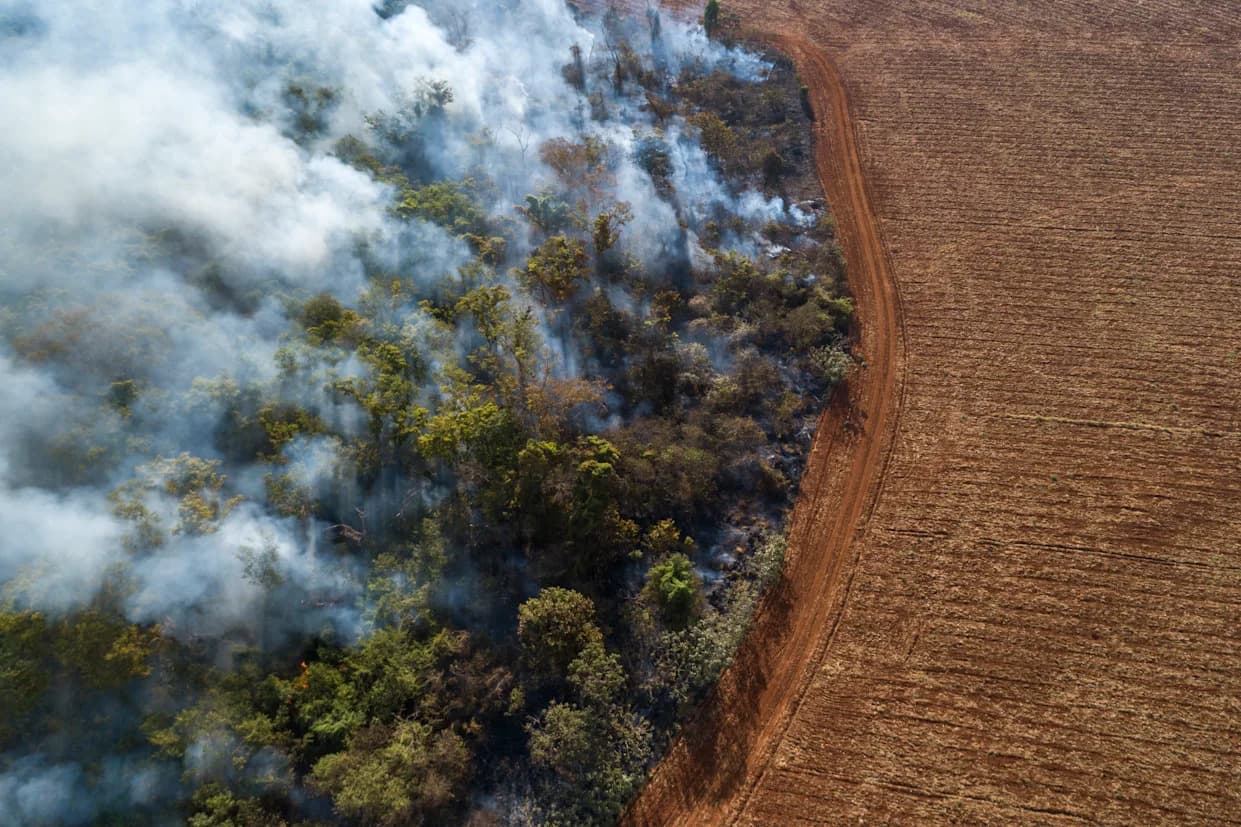
Aerial view of a forest fire in the Amazon Rainforest, Brazil, in September 2020 [File: Courtesy Andre Dib/WWF Brazil]
The pace of tropical primary rainforest destruction eased in 2025 after a record year, but researchers warn that the improvement is fragile and could be undone by climate-driven fires, drought and renewed agricultural pressure.
Key Findings
New analysis from the World Resources Institute (WRI) and the University of Maryland shows the world lost 4.3 million hectares (10.6 million acres) of tropical primary rainforest in 2025 — a 36% decline from 2024. The researchers used satellite data compiled by WRI’s Global Forest Watch platform to produce the figures.
Although the single-year drop is notable, the researchers cautioned that last year’s loss was still 46% higher than a decade earlier, and that global forest loss remains roughly 70% above the pace needed to meet the 2030 goal of halting and reversing forest loss.
Drivers And Regional Trends
Much of the 2025 slowdown was driven by sharp declines in Brazil. Excluding fires, Brazil’s forest loss fell 41% compared with 2024 — its lowest recorded rate. WRI attributes the drop to stronger environmental policies and enforcement since President Luiz Inácio Lula da Silva took office in 2023, including a relaunched anti-deforestation action plan and tougher penalties for environmental crimes.
However, researchers warned that Brazil’s forests still face significant threats from agricultural expansion for soy and cattle ranching, and from local political pressures to weaken protections. Colombia also saw improvements: forest loss there fell 17%, marking one of its lowest totals since 2016.
Tropical forest loss remained high in parts of Africa and Southeast Asia, including the Democratic Republic of the Congo and Cameroon, the report said.
Fires, Climate Risks And The Outlook
Fires played a major role in 2025, accounting for 42% of tropical forest destruction. On broader measures, global tree-cover loss fell by 14% last year. The researchers noted that part of the decline reflects a lull following an unusually intense fire year in 2024, rather than only long-term structural gains.
“A drop of this scale in a single year is encouraging — it shows what decisive government action can achieve,” said Elizabeth Goldman, co-director of WRI’s Global Forest Watch platform. “But part of the decline reflects a lull after an extreme fire year.”
Climate change is intensifying natural fire cycles and raising the risk that forests will shift from carbon sinks to net sources of greenhouse gases as droughts and wildfires become more frequent and severe. Canada experienced its second-worst fire year on record in 2025, with wildfires burning through about 5.3 million hectares (13 million acres) of forest.
The warming El Niño pattern is expected to return mid-year, increasing the odds of heatwaves, drought and more wildfires in many regions — factors that could rapidly reverse recent gains in forest protection.
“We’re on a kind of knife’s edge,” said Rod Taylor, WRI’s global director for forests, warning that fires and drought on a warming planet increasingly threaten forests’ role as carbon sinks.
What This Means
The 2025 decline demonstrates that policy and enforcement can reduce deforestation, but the broader trajectory remains troubling: forest loss is still far above long-term targets, and climate-driven fire risk could erase progress quickly. Continued, decisive action — including stronger protections, better enforcement, sustainable land use policies and fire risk management — will be required to sustain and build on last year’s gains.
Help us improve.