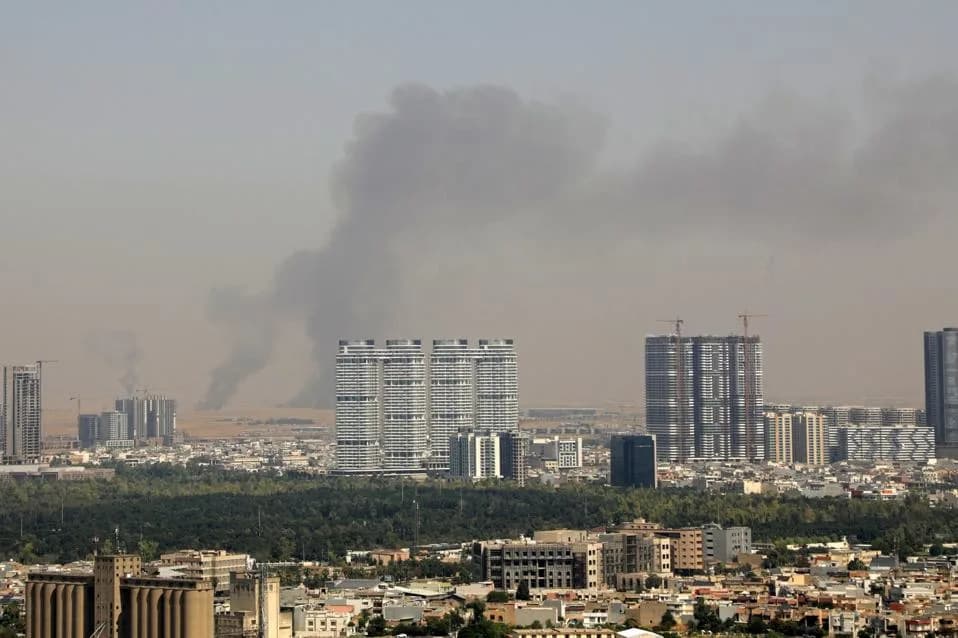
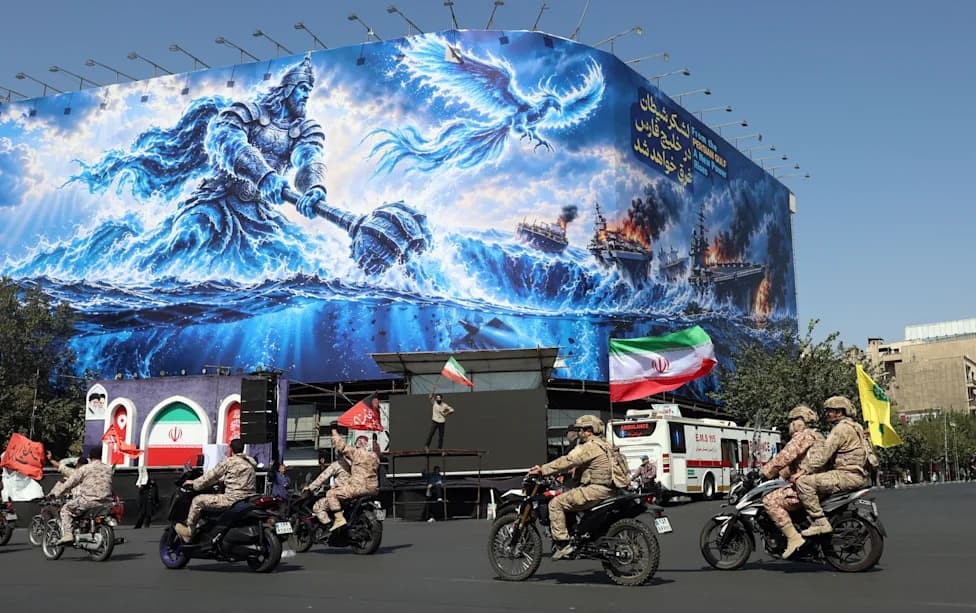
Rabih Khreiss, a 45-year-old mechanic and father of nine, fled Khiyam on March 2 and has spent nearly two months living in a tent in Beirut, surviving on donations and lacking basic services. Khiyam has been largely flattened by near-daily demolitions and is empty of its former population of about 10,000. Around 1.2 million people across Lebanon have been displaced by the fighting, and many who hoped a ceasefire would allow a return now face indefinite exile. The continuing strikes, occupations and mutual accusations of ceasefire breaches have deepened despair among displaced families.
Nearly Two Months Displaced: Father Of Nine Survives In Beirut Tents As Khiyam Lies Flattened
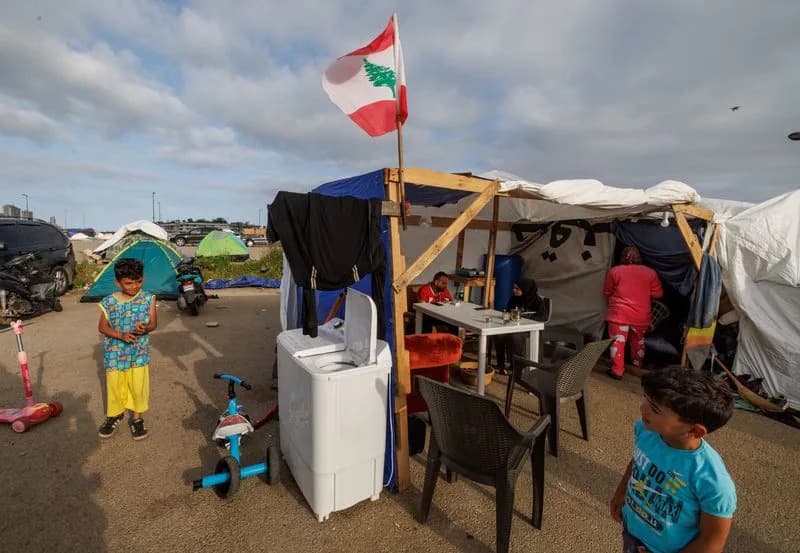
Rabih Khreisse, 44, a displaced Lebanese man from the southern village of Khiyam, near the border with Israel, sits with his sister Rajaa Kherisse, 55, who has been displaced five times in her life and suffers from lung cancer, at their shelter in a makeshift encampment, amid a temporary ceasefire between Lebanon and Israel, in Beirut, Lebanon April 27 2026. REUTERS/Zohra Bensemra
It has been nearly two months since Rabih Khreiss and his family fled their southern hometown of Khiyam, and the 45-year-old mechanic still struggles to recognise the life they now lead. Once able to support nine children through his car repair workshop, Khreiss is now living in a makeshift tent in Beirut and relying on donations for basic needs.
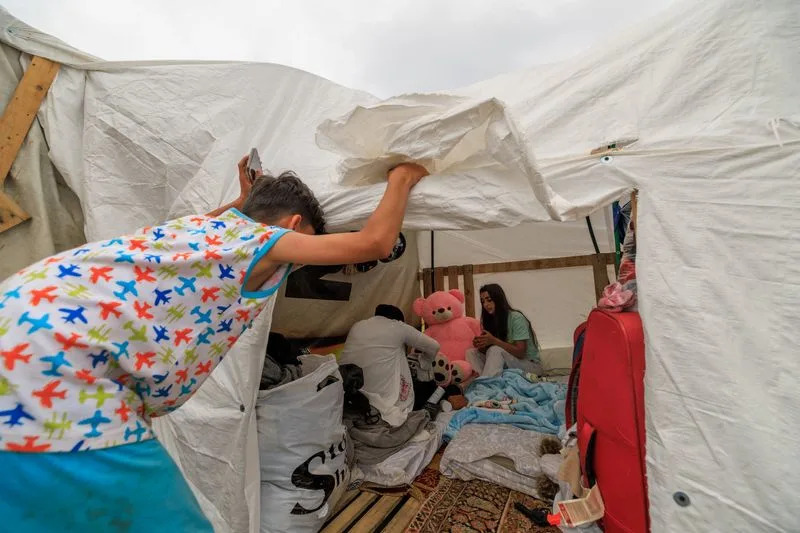
Aya Kheriss, 19, a displaced Lebanese woman from the southern village of Khiam, near the border with Israel, chat with her mother-in-law Souad inside their tents in a makeshift encampment, amid a temporary ceasefire between Lebanon and Israel, in Beirut, Lebanon April 27, 2026. REUTERS/Zohra Bensemra
Like thousands of others, the Khreiss family left Khiyam in the early hours of March 2 after learning that the Hezbollah armed group had fired into Israel — an action that triggered the latest round of cross-border violence. Anticipating Israeli reprisals, Khreiss evacuated his family with only the clothes they were wearing. The strikes began almost immediately.
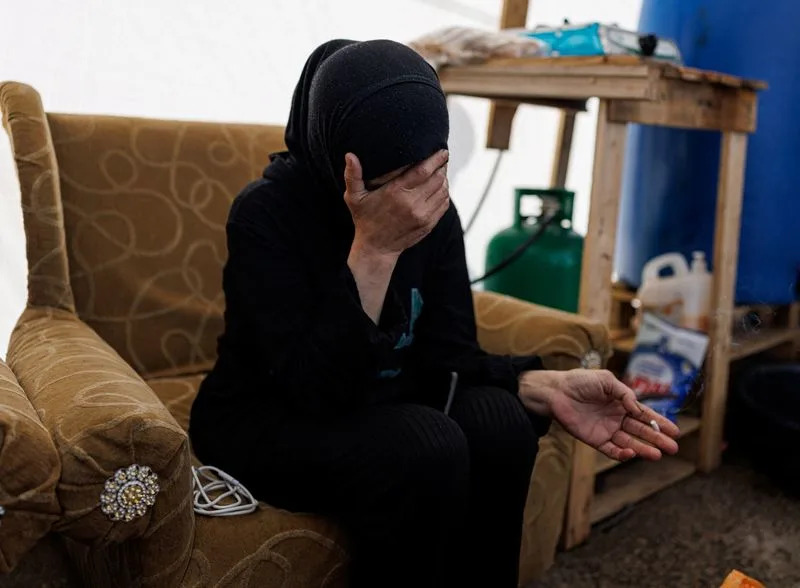
Rajaa Kherisse, a displaced Lebanese woman from the southern village of Khiam, near the border with Israel, who has been displaced five times in her life and suffers from lung cancer, shows her medical documents as she sits on a donated armchair at her family's shelter in a makeshift encampment, amid a temporary ceasefire between Lebanon and Israel, in Beirut, Lebanon April 26, 2026. REUTERS/Zohra Bensemra
"I feel like my children and I are prisoners in a room, sentenced to life imprisonment. But when will relief come so we can get out of this life sentence? No one knows," Khreiss said.
Lebanon's Displaced Face Bleak Future
The family wakes each day in tents built from wooden beams and tarpaulins that creak in the wind. With no access to showers, they bathe in plastic tubs and wash clothes by hand. An older sister who lives with them has cancer and is struggling to obtain medical care.
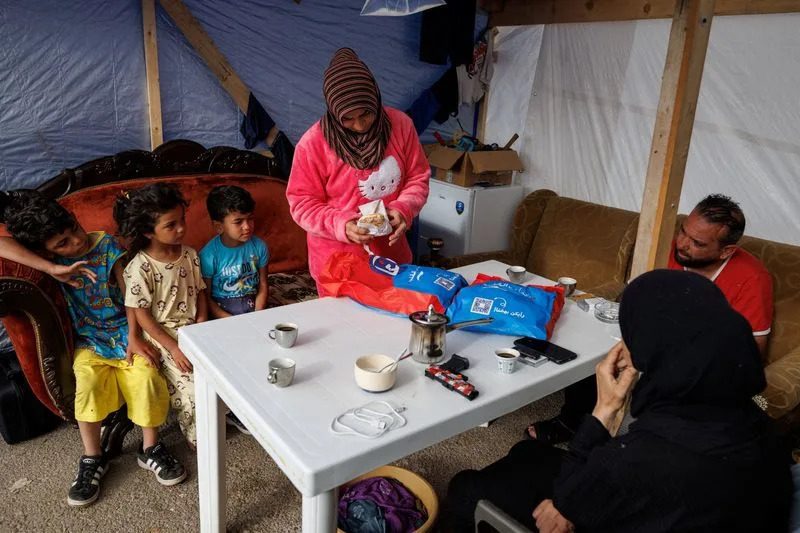
Souad Khreisse, a displaced Lebanese man from the southern village of Khiyam, near the border with Israel, shows a photograph of his son Ziad, 11, lying in a hospital after being wounded in an Israeli strike in 2024, as they sit at their shelter in a makeshift encampment, amid a temporary ceasefire between Lebanon and Israel, in Beirut, Lebanon April 27 2026. REUTERS/Zohra Bensemra
"We're living in tents, not knowing where these days will take us. We start thinking, 'if only we could wake up and win the lottery so we could get out of this mess'," Khreiss said.
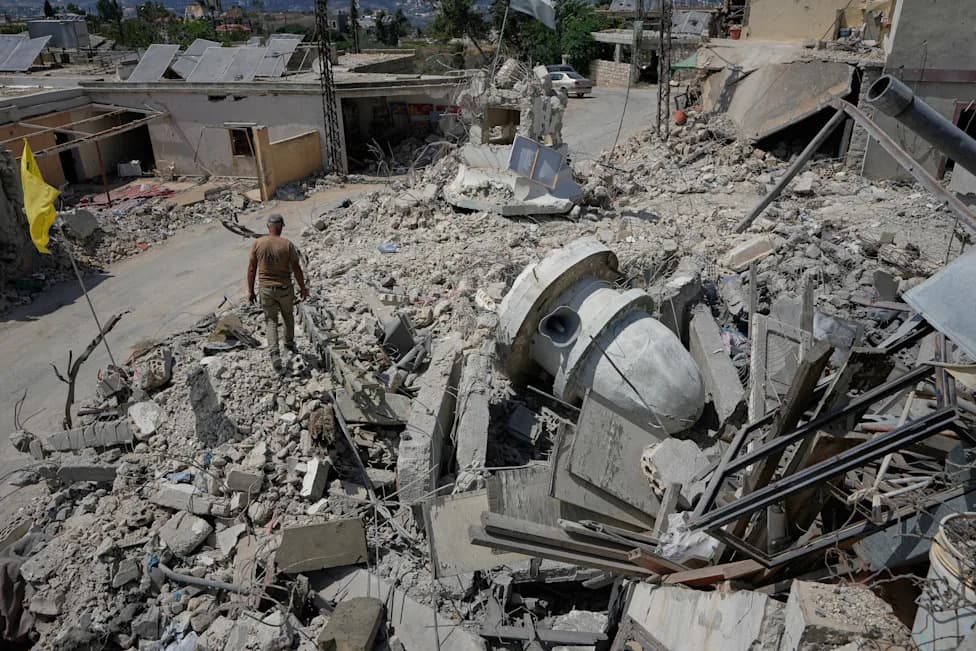
Despite a U.S.-brokered ceasefire, strikes into Lebanon have continued and Israeli forces are reported to be occupying a strip of the south, carrying out demolitions they say target Hezbollah infrastructure. Khiyam has been subjected to near-daily controlled demolitions and is now almost entirely flattened and empty of its pre-war population of about 10,000 people.
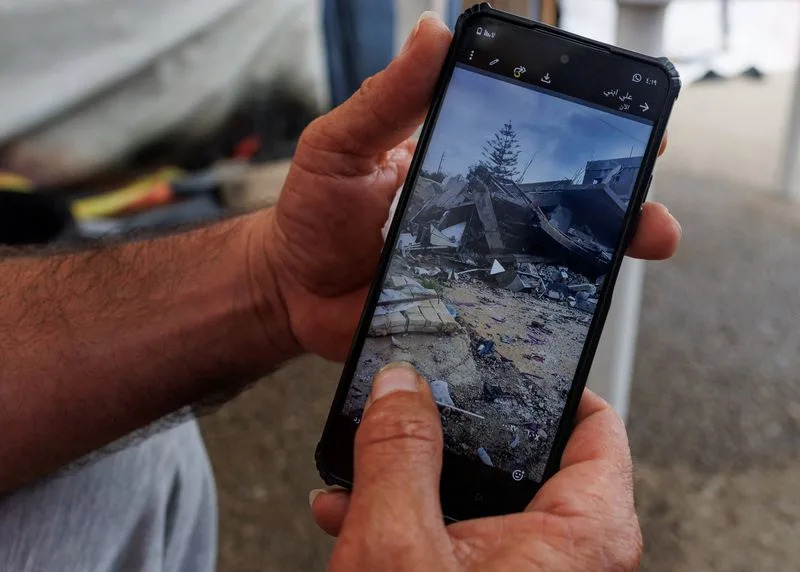
Rabih Kherisse, 45, a displaced Lebanese man from the southern village of Khiyam, near the border with Israel, shows images of his house damaged by an Israeli strike as he sits at his shelter in a makeshift encampment, amid a temporary ceasefire between Lebanon and Israel, in Beirut, Lebanon, April 27 2026. REUTERS/Zohra Bensemra
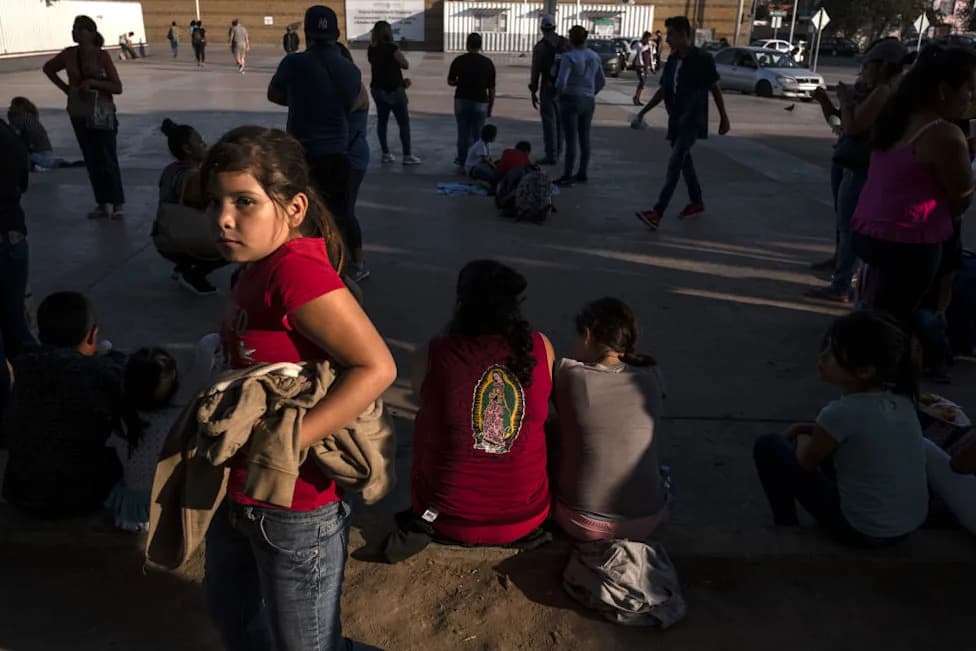
The wider toll is vast: roughly 1.2 million people across Lebanon have been displaced by the fighting and many who hoped a ceasefire would enable a quick return now face an indefinite separation from their homes.
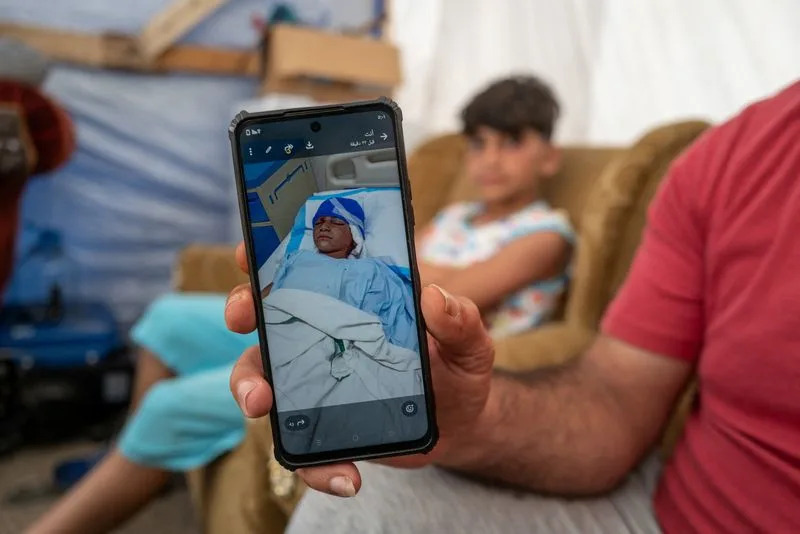
Rabih Khreisse, 44, a displaced Lebanese man from the southern village of Khiyam, near the border with Israel, shows a photograph of his son Ziad, 11, lying in a hospital after being wounded in an Israeli strike in 2024, as they sit at their shelter in a makeshift encampment, amid a temporary ceasefire between Lebanon and Israel, in Beirut, Lebanon April 27 2026. REUTERS/Zohra Bensemra
Hezbollah And Israel In A Cycle Of Conflict
Khreiss's family bears long-term scars. One of his older sons lost an eye when their Khiyam home was struck during the 2024 conflict; Khreiss pulled his children from the rubble and says he aged "years" in an hour. Though he rebuilt his garage after that earlier war, he does not know whether his home or workshop still stand today.
Driven by anxiety about his children’s future, Khreiss says he may be forced to sell his car if he cannot find work soon. "It's showing in my children that they've never known joy or happiness, never been to an amusement park, never had fun like other children," he said. "I brought them into this world, and I have to take responsibility for them and secure their future. But circumstances have forced me to do nothing for them. There's nothing I can do."
The continuing exchanges of fire, mutual accusations of ceasefire breaches, and the presence of occupation and demolitions in the south have deepened despair among displaced communities and left many uncertain about when or whether they can return home.
Help us improve.