U.S. Defense Secretary Pete Hegseth announced that the American naval blockade of Iran is expanding worldwide and urged Tehran to seize a diplomatic "open window" to negotiate over its nuclear program. U.S. Central Command reports 34 ships have been turned back since the blockade began on April 13, and U.S. forces plan to interdict Iranian vessels in distant waters. Officials warned that mining the Strait of Hormuz would violate the ceasefire, while sources say peace talks may soon resume in Pakistan.
U.S. Defense Chief: Naval Blockade Of Iran 'Going Global' — 34 Ships Turned Back, Talks May Resume
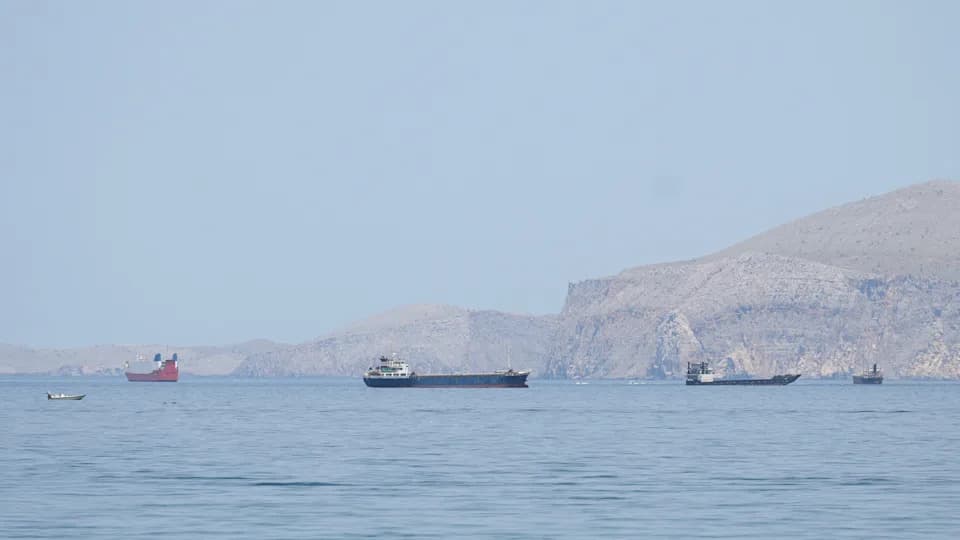
Ships and boats in the Strait of Hormuz, Musandam, Oman, April 24, 2026.
Washington — U.S. Defense Secretary Pete Hegseth said on Friday that the American naval blockade of Iran is expanding globally and that Tehran still has an opportunity to reach a "good deal" with Washington.
"Our blockade is growing and going global," Hegseth told reporters, adding bluntly: "No one sails from the Strait of Hormuz to anywhere in the world without the permission of the United States Navy." He warned that attempts by Iran to lay mines in the Strait would breach the existing ceasefire.
Standing beside top U.S. General Dan Caine, Hegseth emphasized that Washington was "not anxious" to strike a deal immediately and echoed former President Donald Trump's phrase that the U.S. has "all the time in the world." He said Iran still has "an open window" to choose diplomacy and must abandon any nuclear weapons program "in meaningful and verifiable ways."
Operational Update
Gen. Caine said U.S. Central Command is enforcing a strict blockade of Iranian ports. As of Friday morning, 34 vessels had been turned away. The U.S. military also plans to interdict Iranian ships in the Pacific and Indian oceans and is tracking vessels of interest that may be transiting to or from Iranian ports.
"We're enforcing the blockade across the board against any ship of any nationality that is transiting to or from an Iranian port or territory," Caine said. "We're prepared and postured to intercept them."
Regional Implications
The blockade began on April 13. Hegseth painted a picture of risk to commercial transit through the Strait of Hormuz, citing "small, fast boats" armed and behaving irresponsibly. He warned that such activity increases danger for all vessels passing the chokepoint.
Separately, three Pakistani sources told Reuters that peace talks between Iran and the United States could resume soon in Pakistan after a previously scheduled round failed to take place. The U.S. stance, as described by Hegseth, couples pressure at sea with a continued offer of negotiation on verified limits to Iran's nuclear capabilities.
Reporting by Phil Stewart; writing by Bhargav Acharya. This article originally appeared on The Detroit News.
Help us improve.