Exceptional drought and a persistent high‑pressure ridge have limited rainfall across much of the Southeast, funneling warm, dry air into the region and lowering relative humidity. Dry trees, grasses and leaf litter have become widespread fuels, allowing dozens of fires in Georgia and Florida to spread rapidly and destroy homes. Forecasted low‑pressure systems may bring relief, but rising temperatures suggest drought and wildfire risk will grow without sustained action.
Why The Southeast Is Burning — Drought, A Stubborn Ridge And Dry Fuels Are Fueling Wildfires
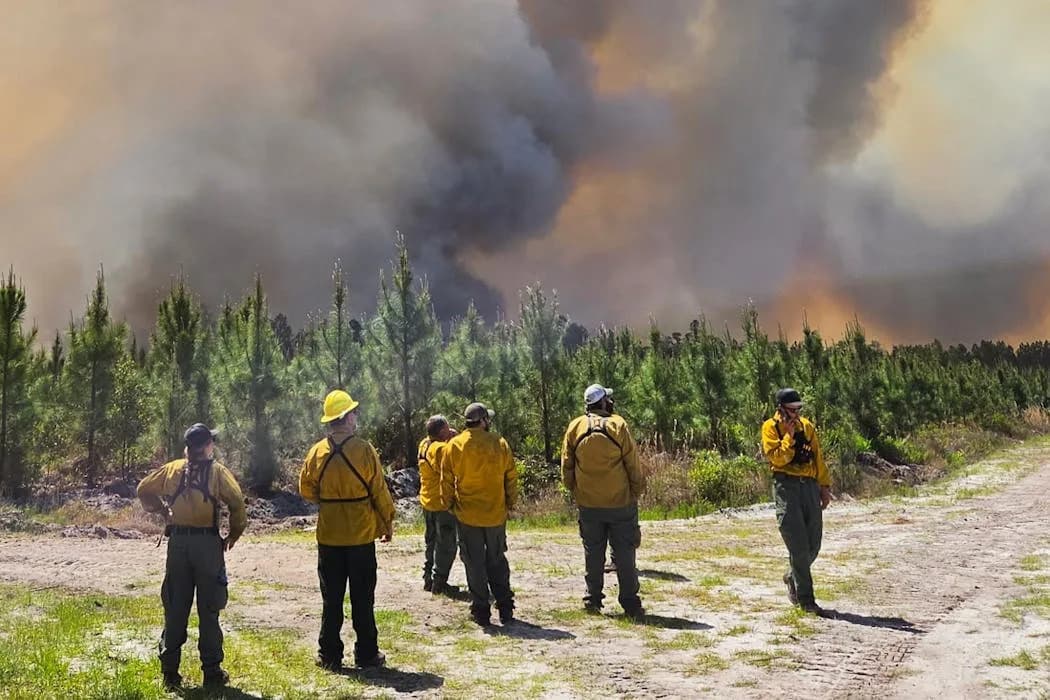
Fire crews responded to dozens of wildfires burning in Georgia and northern Florida on April 23, 2026.Georgia Department of Natural Resources via AP
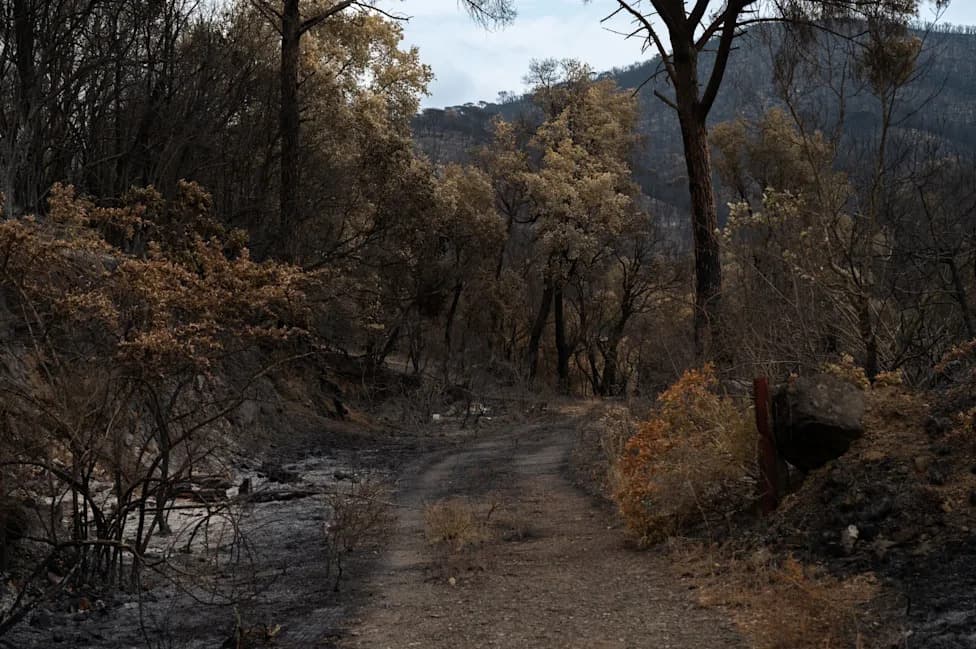
Large areas of the southeastern United States are experiencing an exceptional drought that has helped spark dozens of wildfires across Florida and Georgia. Several large blazes have destroyed homes, threatened communities and sent smoke across cities, triggering air-quality alerts.
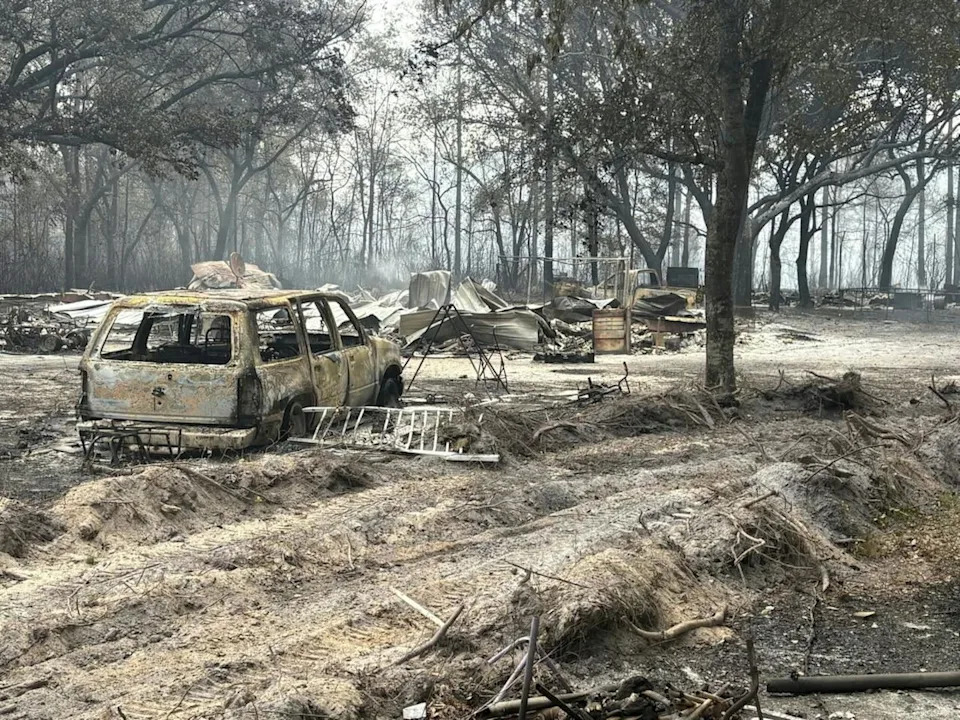
A fire near the Florida-Georgia line had burned nearly 30,000 acres by April 23, 2026, leaving ash behind.Georgia Department of Natural Resources via AP
What's Happening
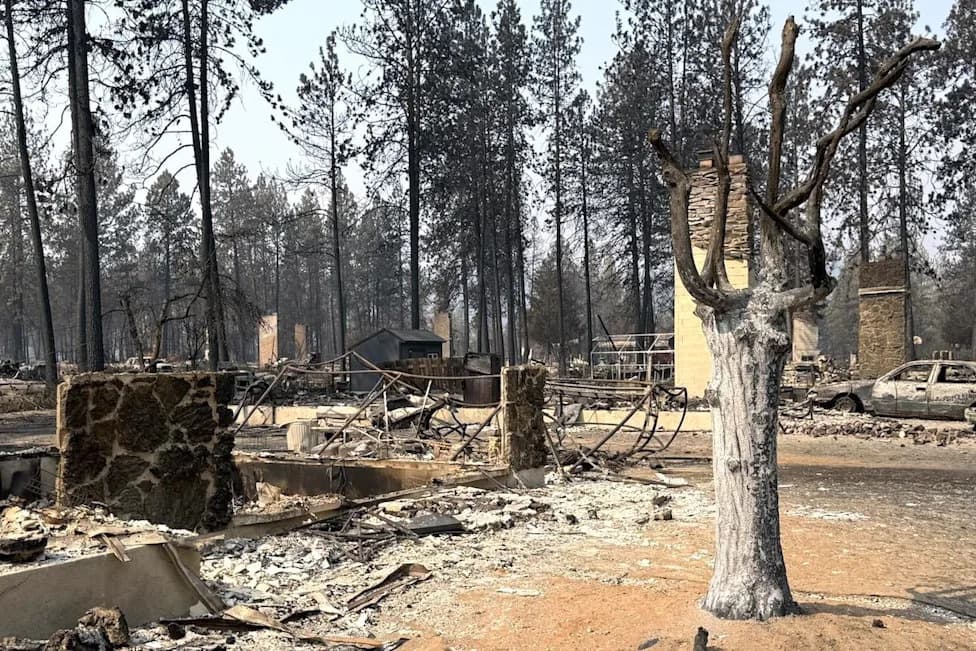
One major fire in Brantley County in southeastern Georgia had destroyed more than 50 homes by April 23, and state officials said roughly 1,000 additional homes were at risk. Another blaze near the Georgia–Florida border had burned nearly 30,000 acres and was only about 10% contained. Smoke from the fires prompted air-quality alerts in Atlanta and surrounding areas.
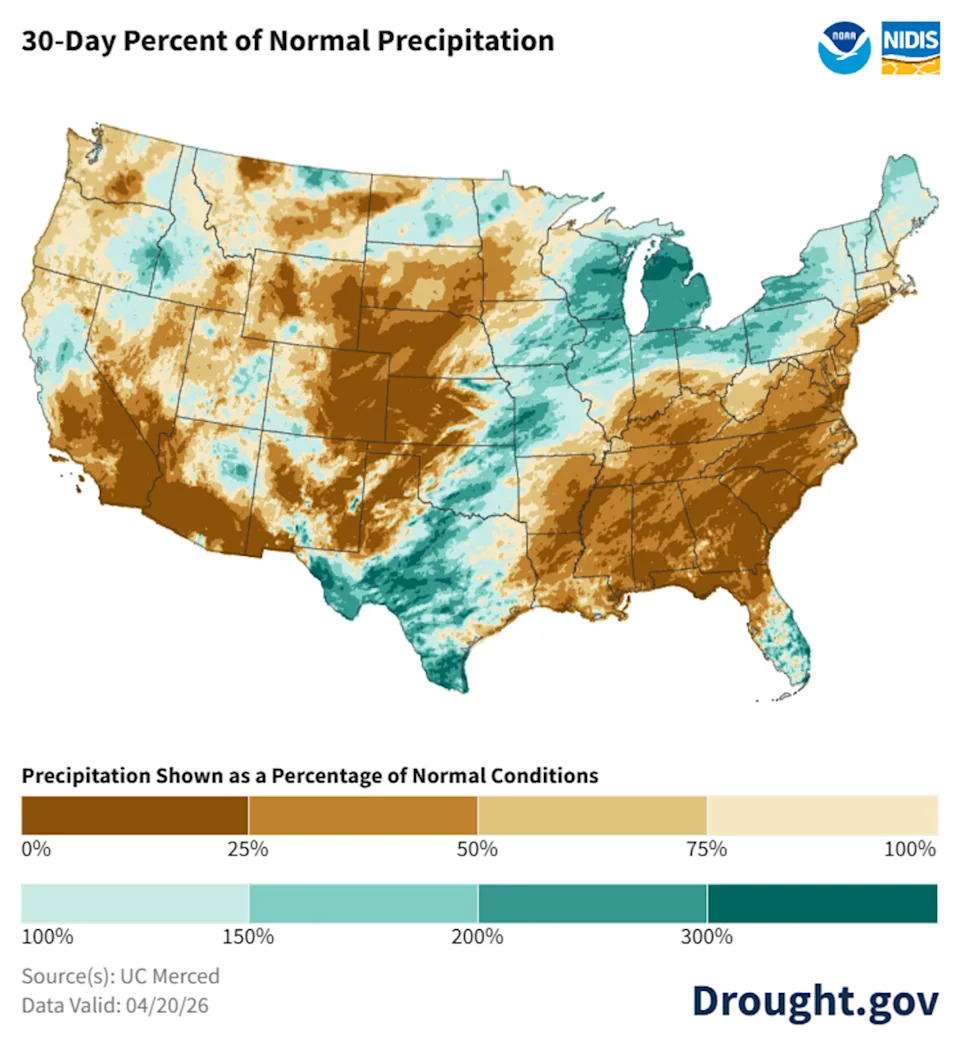
A map showing how far above or below average precipitation has been in each region from mid-March to mid-April 2026 shows just how dry much of the U.S. Southeast has been.Drought.gov
Key Conditions That Fuel Wildfires
Wildfires spread when three ingredients align: low relative humidity, dry fuels and strong winds. In the Southeast this spring, all three have come together.
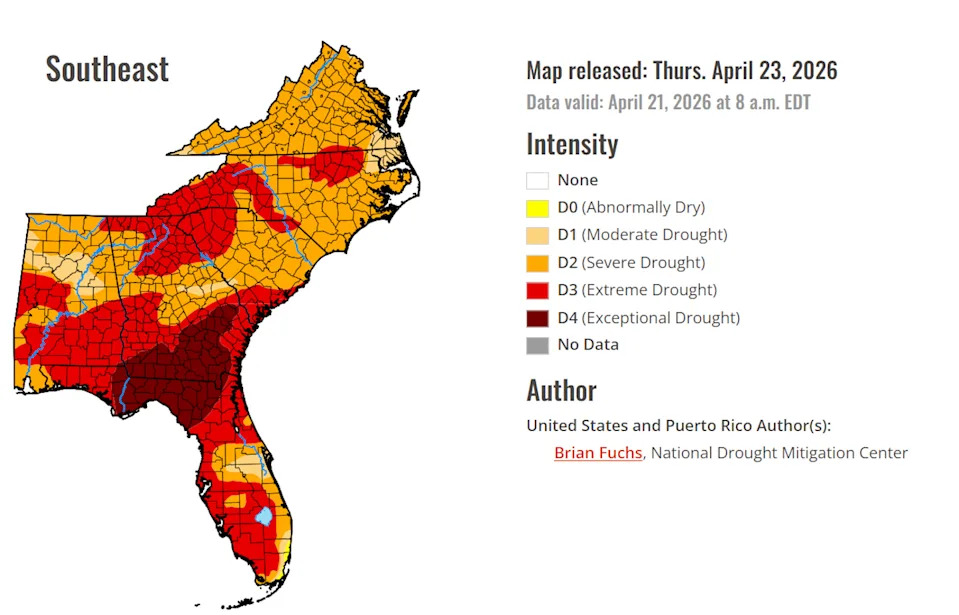
A map of the U.S. Southeast as of April 21, 2026, shows exceptional drought across the Georgia-Florida border area and extreme drought in many other areas.Brian Fuchs, National Drought Mitigation Center/U.S. Drought Monitor
Much of the region has been in drought since July 2025. Between mid‑March and mid‑April 2026 the Southeast received less than a quarter of its usual rainfall for that period, and by mid‑April the U.S. Drought Monitor classified most of the region as being in 'extreme' or 'exceptional' drought.
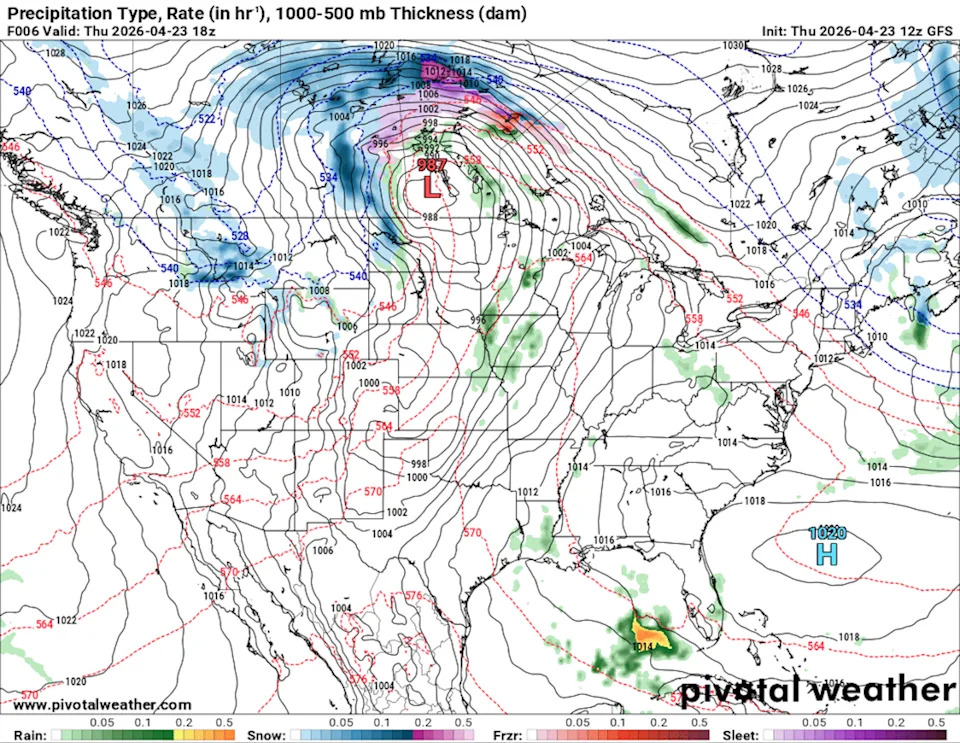
A weather map from the Global Forecast System shows the forecasted low-pressure (red L) and high-pressure (blue H) systems.Pivotal Weather
A persistent high‑pressure system — tied to a pronounced ridge in the jet stream — has sat over the Southeast. High pressure forces air aloft to sink toward the surface, which suppresses cloud formation and rainfall. That pattern also produced generally southeast winds that funneled warm, relatively dry air into the region, lowering relative humidity and speeding the drying of trees, grasses and leaf litter.
How Fires Start And Spread
When vegetation and leaf litter become dry, they turn into abundant, flammable fuel across rural landscapes. Ignitions can come from lightning, downed or damaged power lines, machinery, escaped debris burns and other human causes. Once a fire starts, strong winds and contiguous dry fuels allow it to spread rapidly, threatening homes and infrastructure.
Outlook And Response
Rising global temperatures are expected to increase the frequency and intensity of drought conditions in the Southeast, and lower soil moisture in summer could make the region more susceptible to wildfires in coming years. In the short term, multiple low‑pressure systems were forecast in late April and early May that could bring much‑needed rain to parts of Georgia and Florida and help damp fires.
Meanwhile, more than half of Georgia's counties were placed under a state of emergency as firefighting agencies deployed helicopters, engines and ground crews to protect homes and communities. Containment requires both meteorological relief — sustained precipitation and higher humidity — and human action, such as removing or controlling dry fuels and managing controlled burns when safe.
About The Author
Written by Dr. Zachary Handlos, Georgia Institute of Technology. Dr. Handlos receives funding from the U.S. National Science Foundation. He is affiliated with Georgia Tech's School of Earth and Atmospheric Sciences, directs the Atmospheric and Oceanic Sciences undergraduate program, and serves as chair of the American Meteorological Society Board on Higher Education.
Help us improve.