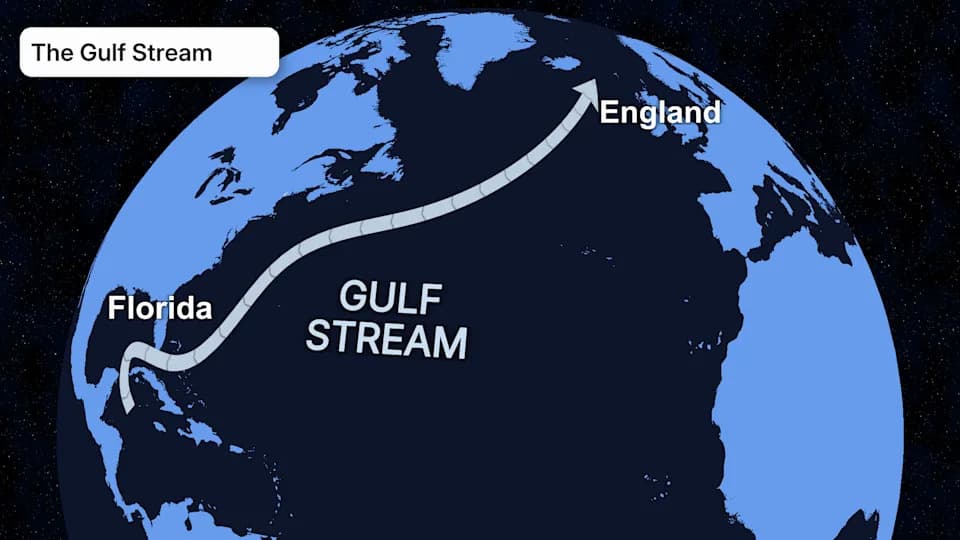
New research in Nature finds the Atlantic Meridional Overturning Circulation (AMOC) could weaken up to 50% by 2100, and may reach critical thresholds earlier than expected. The study combines models with real-world ocean observations and raises the risk of abrupt, hard-to-predict climate shifts. Potential impacts include faster sea-level rise on the U.S. East Coast, disrupted monsoons, regional cooling in parts of Europe, and large polar temperature changes. Changes to ocean circulation could also reduce carbon uptake and modestly raise global temperatures.
New Study: Atlantic 'Conveyor' Could Slow Up to 50% by 2100, Raising Risk of Abrupt Global Weather Shifts
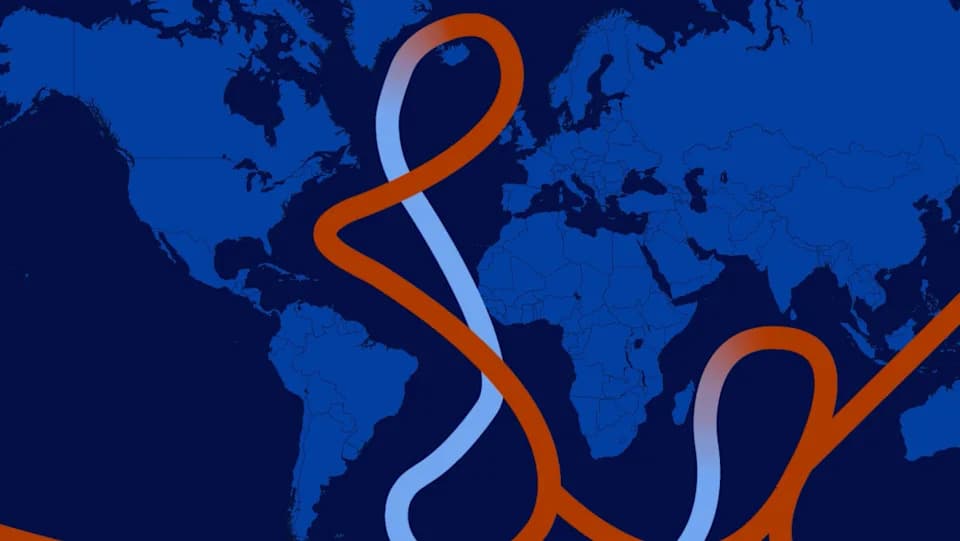
This image shows how the AMOC carries warm water northward and brings cooler water southward in the Atlantic Basin.
New research published in Nature warns that the Atlantic Meridional Overturning Circulation (AMOC) — the large-scale ocean "conveyor belt" that redistributes heat around the globe — may weaken far faster than many previous estimates suggested. The study finds the AMOC could decline by as much as 50% by 2100 under some scenarios, and that the system may approach critical thresholds sooner than once thought, increasing the risk of abrupt climate changes.
What Is the AMOC?
The AMOC carries warm, salty surface waters north from the tropics and returns colder, denser water south at depth. This continuous exchange helps regulate regional climates, ocean temperatures and rainfall patterns across the Atlantic Basin and beyond.
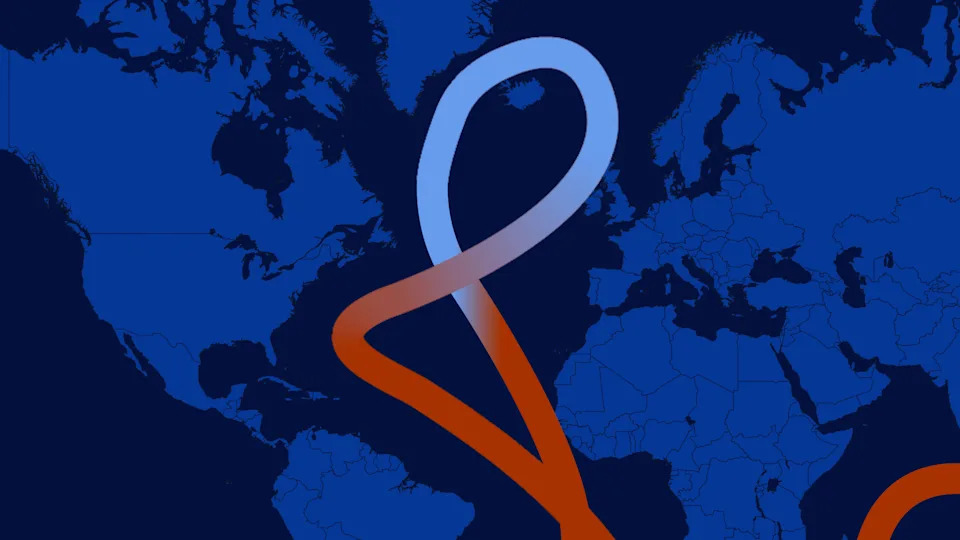
This image shows what would happen if the AMOC were to slow. Cooler water would stay to the north, while warmer water would stay near the tropics.
Key Findings
The new study narrows uncertainty by combining climate-model simulations with real-world ocean observations, including temperature and salinity patterns. That blended approach suggests a substantially larger slowdown than many earlier projections and signals a higher chance that the AMOC could reach critical tipping points earlier in this century.
While a total collapse of the AMOC this century remains unlikely, a substantial weakening could have profound and widespread effects.
Potential Impacts
Regional and global consequences could include:
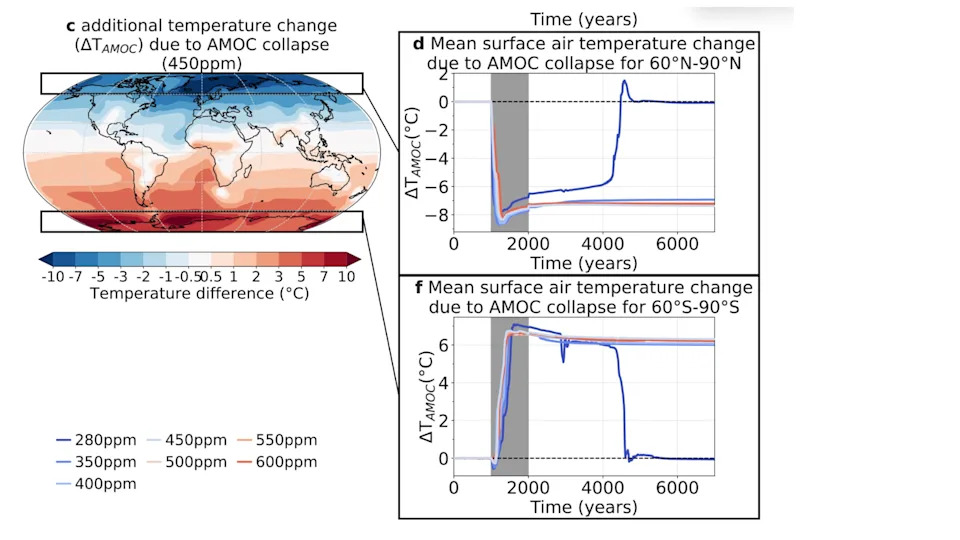
Earth System Analysis and Earth Resilience Science Unit, Potsdam Institute for Climate Impact Research
- Faster local sea-level rise on the U.S. East Coast: Changes in ocean circulation can raise regional sea levels and increase coastal flood risk.
- Shifts in storm tracks and marine ecosystems: Altered temperature patterns across the Atlantic may change how storms develop and affect fisheries and ocean life.
- Regional cooling in parts of Europe: A weaker AMOC could offset some warming in northern Europe, producing cooler conditions in some areas even as the planet warms overall.
- Tropical rainfall and monsoon disruption: Redistribution of ocean heat could disrupt rainfall patterns, with implications for agriculture and water supplies for billions of people.
- Large regional temperature swings in polar regions: Some model scenarios indicate Arctic cooling on the order of ~11°F (≈6°C) and warming in parts of the Antarctic by more than ~12°F (≈7°C) in specific projections.
- Changes to the ocean carbon sink: The ocean has absorbed roughly a quarter of human CO2 emissions; a reorganization of circulation could reduce uptake and, by one estimate, increase global temperatures by about 0.36°F (≈0.2°C).
Why Projections Differ
Researchers say earlier projections may have underestimated the risk because small biases in how models represent temperature and salinity — especially in critical Atlantic regions — can have outsized effects on water density, sinking, and the circulation that drives the AMOC. Direct instrumental measurements of the AMOC span only a few decades, which limits certainty about how close the system is to a tipping point.
What This Means
The findings add to mounting evidence that the AMOC is more vulnerable than previously thought and underscore the importance of improved ocean monitoring and stronger emissions reductions to lower the risk of abrupt and disruptive changes to global climate patterns.
Jennifer Gray is a weather and climate writer for weather.com and has covered major global weather and climate stories for more than two decades.
Help us improve.