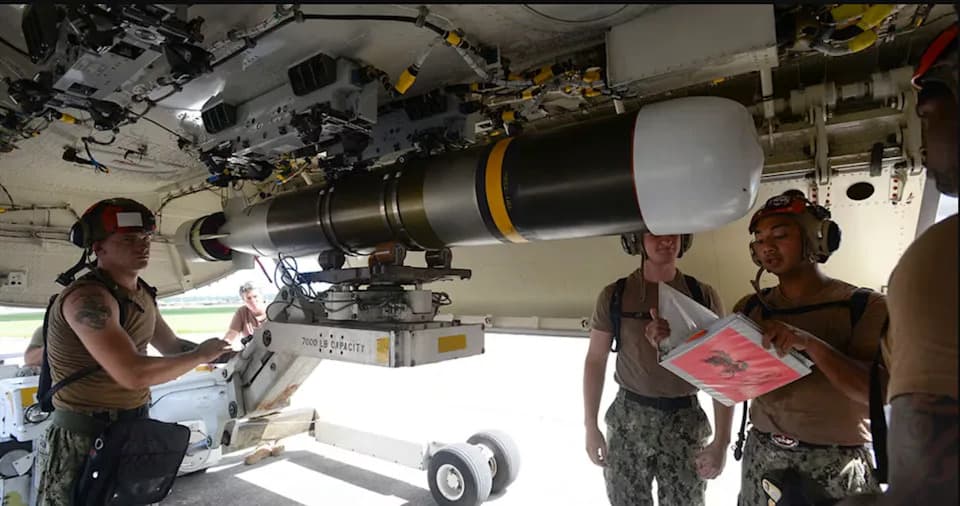
The US Navy completed two tests of a jet-powered long-range JDAM off California that demonstrated safe separation from an F/A-18 Super Hornet, integration with existing aircraft systems, and powered precision flight of roughly 200 nautical miles to target. The turbojet-equipped variant turns the guided bomb into a cruise-missile-like weapon with Boeing claiming 300+ nm with a 500-lb warhead and up to 700+ nm with a decoy fuel tank. Next steps focus on shipboard integration and fleet qualification as the Navy pursues more affordable standoff strike options.
US Navy Tests Jet-Powered Long-Range JDAM, Pushing For Cheaper Cruise-Missile Capability
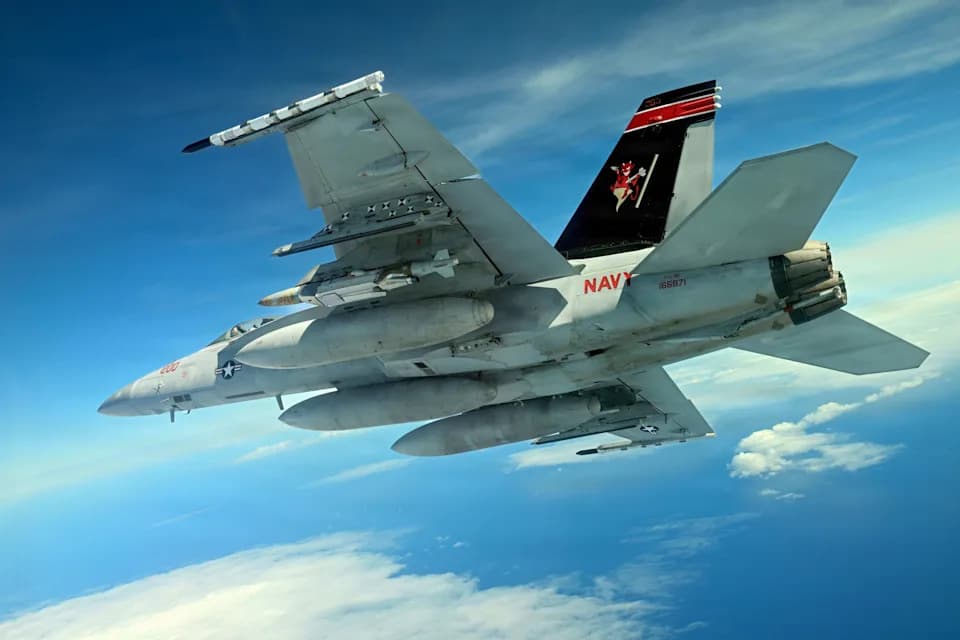
The long-range JDAM variant could give the Navy a new, low-cost cruise missile equivalent.US Navy photo
The US Navy has successfully tested a jet-powered long-range variant of the Joint Direct Attack Munition (JDAM), advancing an effort to give carrier-based aircraft a lower-cost, standoff strike option that behaves like a cruise missile.
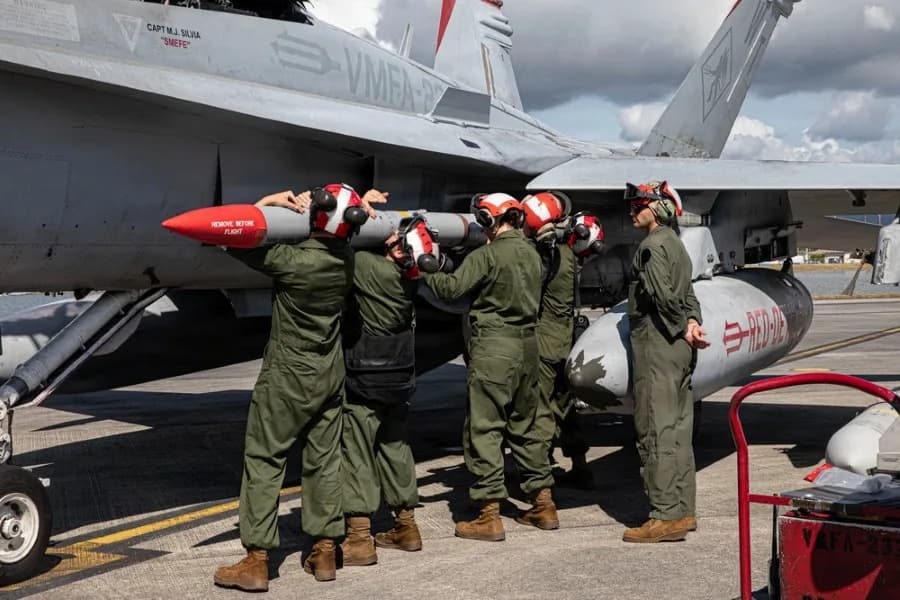
In two trials off the coast of California earlier this month, the weapon separated safely from an F/A-18 Super Hornet, integrated with existing aircraft interfaces, and demonstrated powered flight with precision navigation to the intended target. During each demonstration the munition traveled roughly 200 nautical miles while "maintaining consistent guidance directly to its target," the Navy said.
What Makes This JDAM Different
Standard JDAM kits convert unguided bombs into precision-guided munitions using inertial navigation and GPS; they are unpowered and glide to the target. The new long-range variant adds a small turbojet engine, effectively turning the bomb into a powered, precision cruise-like weapon that can be employed from much greater stand-off distances than legacy JDAMs.
By comparison, legacy JDAMs have ranges of about 15 nautical miles for standard variants and roughly 40 nautical miles for extended-range versions. Boeing, the company that manufactures JDAM kits, has described the new configuration as "game-changing," reporting ranges of more than 300 nautical miles with a 500-pound warhead and suggesting the munition could exceed 700 nautical miles when paired with a low-cost decoy fuel tank.
Why This Matters
The Navy and industry officials emphasize affordability: the long-range JDAM is intended to deliver cruise-missile-like effects at a fraction of the cost of full-fledged standoff missiles. Traditional JDAM kits typically cost tens of thousands of dollars each, while dedicated air-launched cruise missiles such as the AGM-158 JASSM can exceed $1 million per round.
"As Naval Air Forces in theater continue to rely heavily on JDAM systems, the program recognizes a critical need to provide the fleet with greater standoff range," said Capt. Sarah Abbott, Precision Strike Weapons program manager. "This new capability allows pilots to engage targets from significantly safer distances, maintaining a tactical advantage in contested environments."
The Navy said the next qualification phase will focus on shipboard integration and fleet qualification. If successful, the long-range JDAM could provide warfighters a lower-cost alternative for many missions that currently require expensive standoff missiles.
Strategic Context
The development reflects a broader Pentagon push to field weapons that deliver cruise-missile-like effects affordably and that can be launched from outside the range of many air defenses. JDAMs have been in service for decades and are used by many militaries worldwide, including in recent conflicts involving the United States, Ukraine, and Israel.
Help us improve.