Exit polls put Rumen Radev's Progressive Bulgaria at 44%, far ahead of GERB at 12.5%, suggesting a potential parliamentary majority and an end to years of coalition instability. Radev, a eurosceptic who resigned the presidency in January to run, opposes military aid to Ukraine and favors warmer ties with Moscow but has said he could work with pro‑European forces on judicial reform. Turnout rose to 47% with an hour to go; final official results were expected on Monday.
Exit Polls Show Rumen Radev's Party Poised For Landslide in Bulgaria — Could End Years of Coalition Turmoil
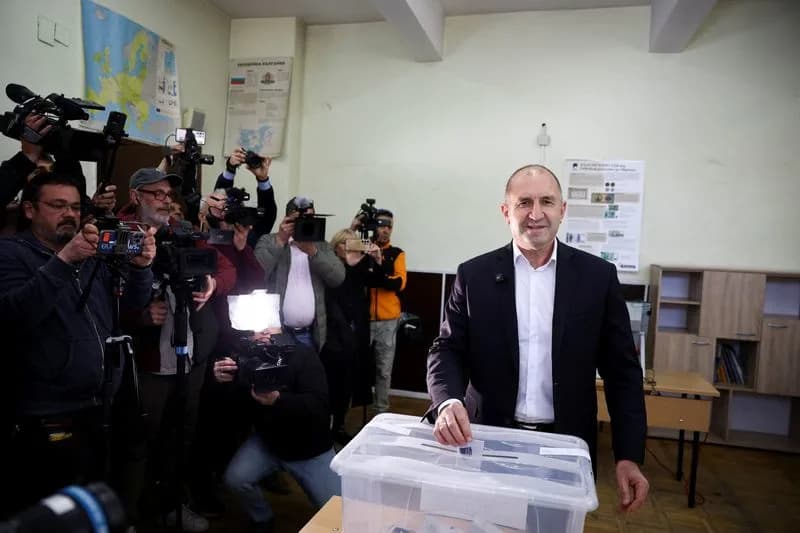
Rumen Radev, former Bulgarian president and leader of Progressive Bulgaria coalition, votes during the parliamentary election, in Sofia, Bulgaria, April 19, 2026. REUTERS/Stoyan Nenov
Exit polls on Saturday suggested pro‑Russian former president Rumen Radev is on track for a decisive victory in Bulgaria's parliamentary election, with some projections even indicating his Progressive Bulgaria party could win an outright majority and bring an end to years of fragile coalition governments.
Alpha Research, a Sofia‑based pollster, put Progressive Bulgaria at 44%, far ahead of the long‑established GERB party led by former prime minister Boyko Borissov at 12.5%. The pro‑European We Continue The Change‑Democratic Bulgaria (PP‑DB) coalition was third on 11.3% in the same survey. Turnout was reported at 47% with one hour of voting remaining, up from 39% in the October 2024 election.
What the Exit Polls Would Mean
If confirmed by official counts, the result would be one of the strongest showings by a single party in Bulgaria in a generation, potentially sidelining a party that has governed intermittently for decades and ending a period that produced eight national ballots in five years.
“Progressive Bulgaria won decisively. This is a victory of hope over distrust, a victory of freedom over fear, and finally, if you will, a victory of morality,” Radev said at a press conference responding to the exit poll figures.
Radev's Platform And Political Stakes
A eurosceptic and former fighter pilot, Radev resigned the presidency in January to contest the parliamentary vote. He opposes military assistance to Ukraine and has advocated closer ties with Moscow, including calls to resume Russian oil and gas deliveries to Europe. During the campaign he drew comparisons with Hungary's Viktor Orbán for his emphasis on pragmatic ties with Russia and criticism of some EU policies, including what he described as an overreliance on renewable energy.
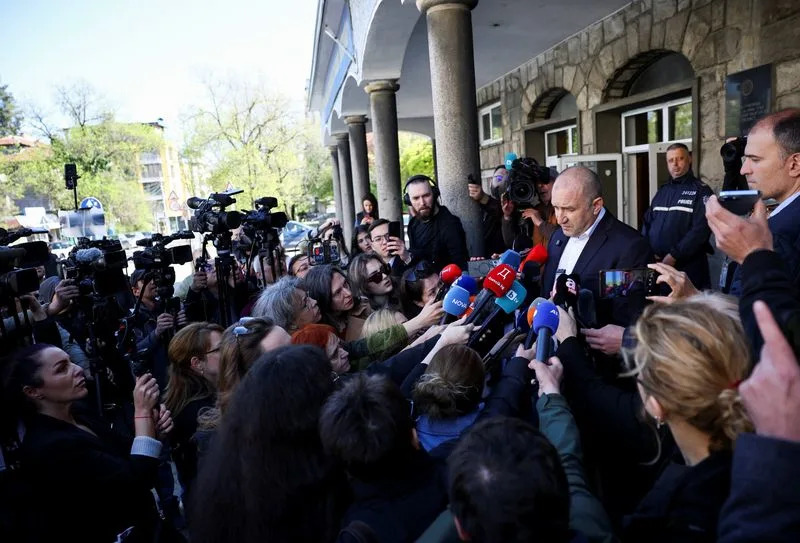
Rumen Radev, former Bulgarian president and leader of Progressive Bulgaria coalition, speaks to the members of the media after voting during the parliamentary election, in Sofia, Bulgaria, April 19, 2026. REUTERS/Stoyan Nenov
At the same time, Radev signalled readiness to work with pro‑European forces on domestic reforms. He said he would be willing to cooperate with PP‑DB on judicial reform and that forming a minority government remains an option within Bulgaria's 240‑seat parliament.
Domestic Concerns And Broader Context
Bulgaria, a NATO member that only joined the euro zone in January, has made measurable progress since the fall of communism — higher life expectancy, the EU’s lowest unemployment rate and increased economic safeguards since euro adoption. Yet it continues to lag other EU states on several indicators and struggles with entrenched corruption, including vote‑buying during elections.
Rising living costs since euro adoption have become a flashpoint. The previous government fell after mass protests in December over a proposed budget that included tax increases and higher social security contributions.
GERB leader Boyko Borissov acknowledged the exit poll outcome on social media but cautioned that winning votes is different from forming a government: “To win the elections is one thing; to govern is quite another. Elections decide who comes first, but negotiations will decide who governs.”
Final, official results were expected on Monday. Reporting for this story was provided by Alex Lefkowitz and Edward McAllister, with additional reporting from Ivana Sekularac.
Help us improve.