A March 2026 study in Biology Letters reports that European hedgehogs can hear ultrasound up to 85 kHz, with peak sensitivity near 40 kHz. ABR tests on 20 rehabilitated hedgehogs and micro-CT 3D models of their ears revealed structural specialisations — a partly fused tympanic–malleus joint, a very small stapes and a compact cochlea — consistent with high-frequency hearing. Researchers propose silent ultrasonic emitters on vehicles and garden machines as a potential early-warning to reduce collisions, but behavioural trials are needed to avoid habituation and confirm effective signal patterns.
Hedgehogs Hear Ultrasound Up to 85 kHz — A Silent Tool to Reduce Road and Garden Machine Deaths

Wild, native hedgehog foraging on a fallen log in Autumn with colourful orange and yellow leaves© Anne Coatesy/iStock via Getty Images
The European hedgehog (Erinaceus europaeus) may have a newly recognised advantage against modern hazards: the ability to hear ultrasonic sounds far above human hearing. A March 2026 study led by Sophie Lund Rasmussen and published in Biology Letters reports auditory sensitivity up to 85 kHz and identifies ear structures adapted for high-frequency hearing. These findings could inform silent ultrasonic warning systems to help hedgehogs avoid cars, robotic lawnmowers and other garden machinery.

European hedgehogs are threatened by road traffic, habitat loss, and pesticides.©Petr Bonek/Shutterstock.com(Petr Bonek/Shutterstock.com)
How Researchers Tested Hedgehog Hearing
Researchers used non-invasive Auditory Brainstem Response (ABR) testing on 20 rehabilitated hedgehogs to measure hearing thresholds across frequencies. Complementing the physiological tests, the team produced high-resolution micro-CT scans and 3D models of the hedgehogs’ middle and inner ear anatomy to identify structural specialisations consistent with ultrasonic hearing.
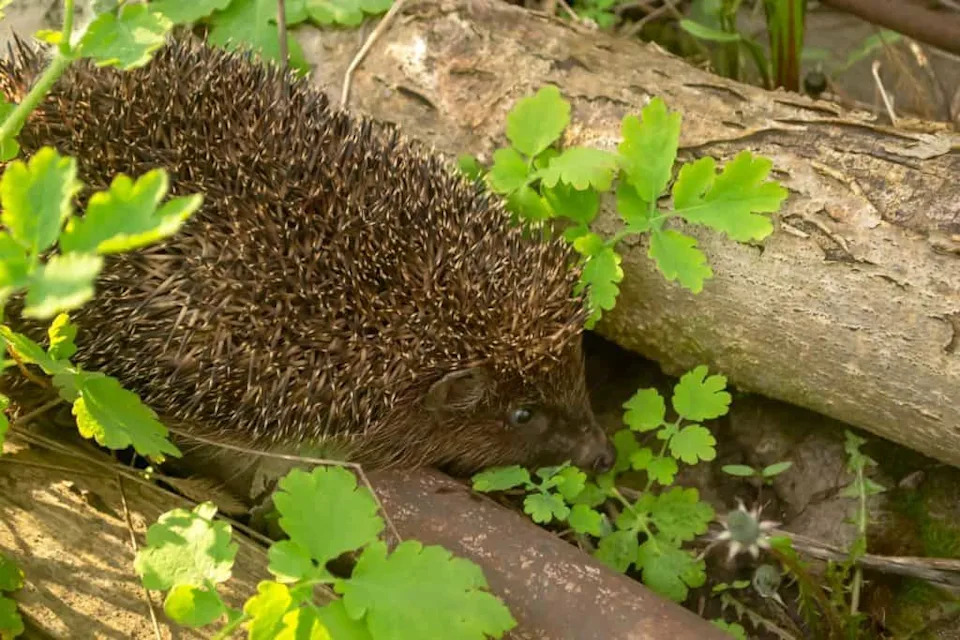
Hedgehogs are omnivores and eat a wide variety of insects, mushrooms, and fruits.©k1tyara/Shutterstock.com(k1tyara/Shutterstock.com)
Key Anatomical Findings
- Partly fused tympanic membrane–malleus joint: The scans revealed a stiffened connection between the eardrum and the malleus that helps transmit high-frequency vibrations efficiently — a trait also seen in other ultrasound-sensitive mammals.
- Exceptionally small stapes: The stapes (stirrup) is very small, dense and lightweight, enabling it to vibrate at the rapid rates needed to process ultrasonic sounds.
- Compact cochlea: The inner ear is short and tightly coiled, an architecture suited to detecting rapid, high-frequency vibrations.
- Peak sensitivity near 40 kHz and detection up to 85 kHz: Hedgehogs show maximum sensitivity around 40 kHz—well above human hearing limits—and can detect sounds as high as 85 kHz according to ABR measurements.
Why Ultrasound Matters for Conservation
Hedgehogs are primarily nocturnal, making them vulnerable to collisions with vehicles and garden machinery. In some local populations, road mortality contributes to as many as one in three deaths each year. Combined with habitat loss, fragmentation and pesticide use, this has helped push the Western European hedgehog to Near Threatened on the IUCN Red List (2024).

Hedgehogs are nocturnal, which makes vehicle collisions even more hazardous.©Popova Victoria/Shutterstock.com(Popova Victoria/Shutterstock.com)
The study suggests that ultrasonic emitters — mounted on electric vehicles, robotic mowers or ride-on garden machines — could create a silent early-warning field. Because most humans and many pets cannot hear these frequencies, ultrasonic alerts could prompt hedgehogs to move away without disturbing people.
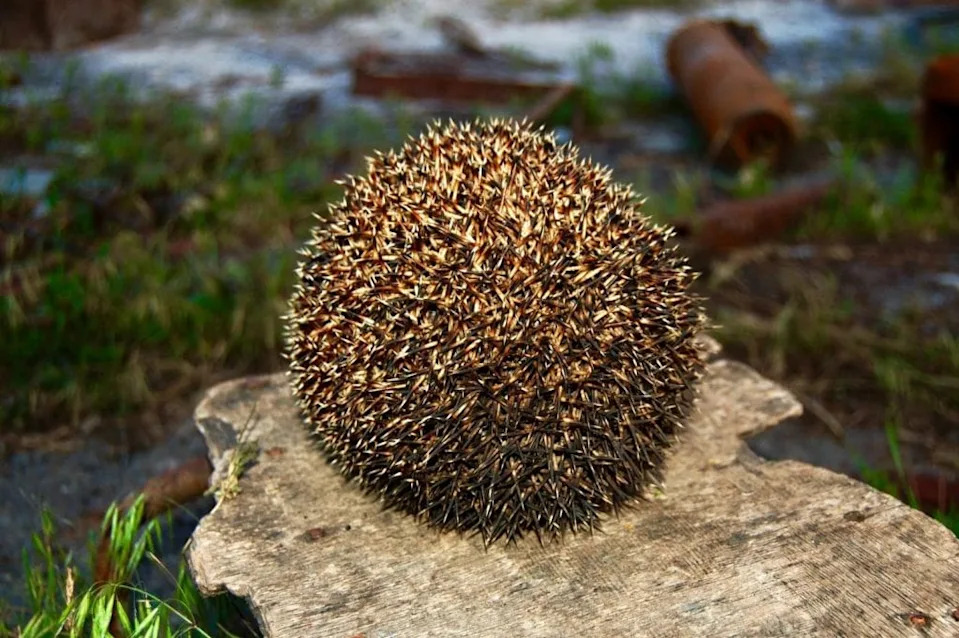
Hedgehogs have thousands of spines on their backs.©moryachka7/Shutterstock.com(moryachka7/Shutterstock.com)
Practical Challenges and Next Steps
A major concern is habituation: if ultrasonic sounds are continuous, hedgehogs might learn to ignore them. The researchers therefore propose activating signals only when a machine is in motion or when an animal is nearby. Ongoing behavioural trials aim to identify specific ultrasonic patterns that reliably trigger escape behaviour rather than freezing or curling into a defensive ball.
Developing effective, animal-safe devices will require collaboration among biologists, engineers and industry partners. Dr. Rasmussen and collaborators at the University of Southern Denmark and the Natural History Museum of Denmark are pursuing behavioural testing, signal optimisation and partnerships to build practical deterrents.
Broader Biological Insights
Beyond conservation applications, the ear specialisations likely evolved to help hedgehogs detect insect prey and may facilitate private mother–young communication in ultrasonic bands inaccessible to larger predators. The research bridges anatomy, physiology and applied engineering to suggest real-world solutions that could reduce hedgehog fatalities while preserving quiet environments for people.
Source: Rasmussen et al., Biology Letters, March 2026. Study combined ABR testing of 20 rehabilitated hedgehogs with micro-CT 3D modeling of ear anatomy.
Help us improve.