The University of Tübingen asked 84 participants to rate recordings from 123 wild bird species and linked those ratings to measurable acoustic features. Listeners preferred softer calls with narrower frequency ranges and greater acoustic complexity; the common blackbird scored highest (4.52/5) while the barn owl scored lowest (1.32/5). Preferences were not influenced by birdwatching experience, and researchers suggest these insights could help shape urban soundscapes—though more cross-cultural and neural research is needed.
Why Some Birdsong Sounds So Pleasant to Humans — New Study Reveals Acoustic Clues
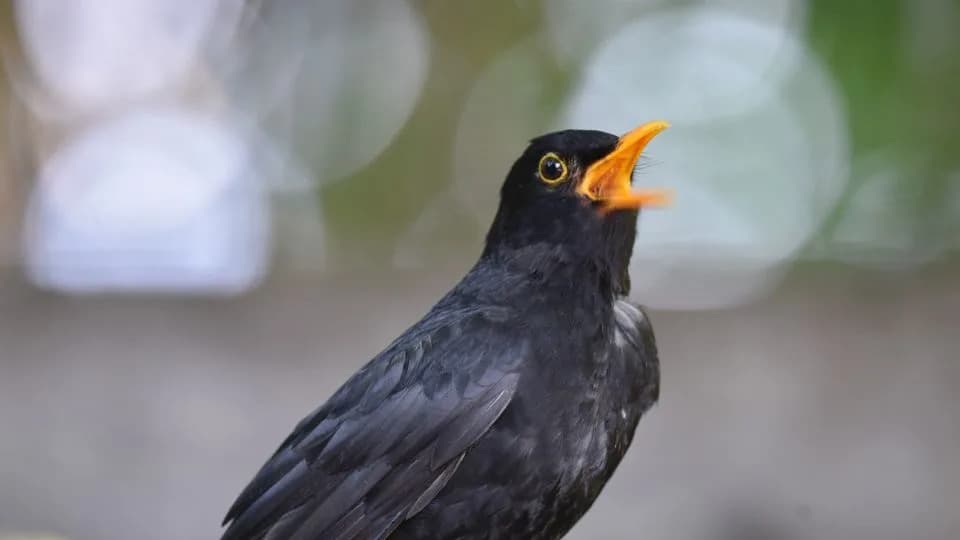
The common blackbird, scientifically known as Turdus merula, took top honors in a new study. - Courtesy of Dr. Randler
Many people report feeling calmer when birds sing. A new study from the University of Tübingen identifies specific acoustic features that make some bird vocalizations sound more pleasant to human listeners, and explores how those findings could shape our understanding of soundscapes and well-being.
Study Overview
Researchers led by Dr. Nadine Kalb and Dr. Christoph Randler asked 84 participants to rate recordings from 123 wild bird species on perceived pleasantness. The team then compared those subjective ratings with measurable sound characteristics—such as amplitude (loudness), frequency range (bandwidth) and acoustic complexity—to find which features correlated with higher pleasantness scores.
Key Findings
Overall, listeners tended to prefer bird calls that were softer, had a narrower frequency range (bandwidth), and displayed greater acoustic complexity. Contrary to an intuitive expectation that simple, repetitive sounds might be more agreeable, more intricate songs generally received higher pleasantness ratings.
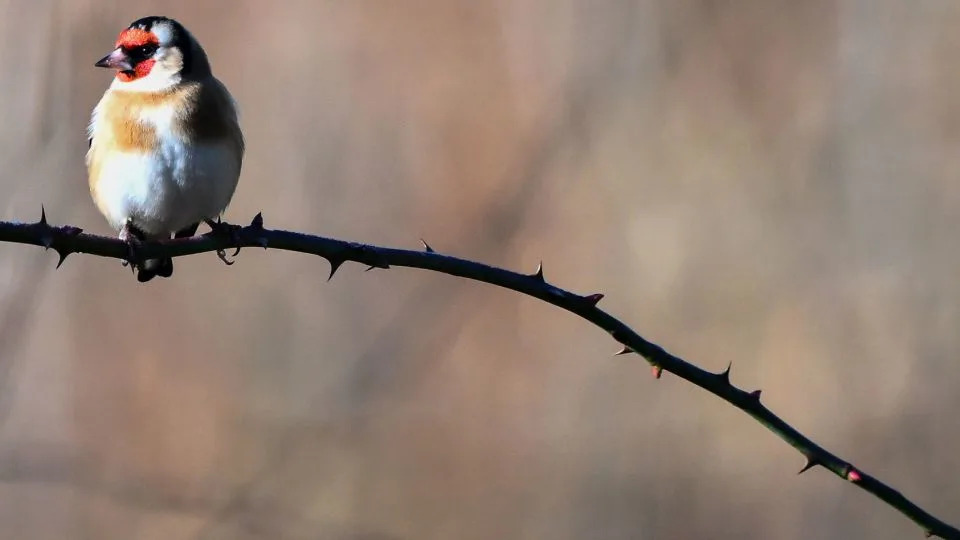
A European goldfinch, seen at the Bois de Vincennes park in Paris in January 2025, received a pleasantness score of 4.26 out of 5 from survey participants of the new study. - Martin Lelievre/AFP/Getty Images
"This suggests that enjoyment of birdsong is connected to something more fundamental than just knowing what you are listening to," said Dr. Nadine Kalb, lead author of the study published Sept. 1 in the journal Frontiers.
Among the species tested, the common blackbird (Turdus merula) topped the list with an average pleasantness score of 4.52 out of 5. The barn owl ranked lowest at 1.32, its rasping screeches judged far less pleasant. Other high scorers included the European goldfinch (4.26), the European robin (4.04) and the blue tit (3.92).
Context, Caveats and Expert Views
The authors note that birding experience did not significantly change ratings, suggesting some preferences may arise from general perceptual or biological factors rather than learned familiarity. Still, external researchers caution that the study is an early step: preferences may vary by culture, personal associations, and specific frequency regions that simple bandwidth measures might not fully capture.
Dr. Olga Feher, who studies birdsong at the University of Warwick, said the findings "point to at least some biological factors in human birdsong preference" but also stressed that experience and association shape tastes. Dr. Robert Lachlan of Royal Holloway noted that more work is needed to identify exactly which frequency ranges and acoustic patterns are most attractive.
Implications
The results could inform how planners and conservationists think about urban soundscapes—shifting the focus from merely reducing noise to encouraging or protecting the kinds of natural sounds that people find restorative. The researchers caution, however, that playback of recorded birdsong does not necessarily substitute for naturally occurring vocalizations and may not deliver equivalent well-being benefits.
Next Steps
Kalb and colleagues call for larger and cross-cultural studies, plus research into the neural mechanisms behind birdsong preference, to determine whether the same acoustic patterns hold across regions and populations. Understanding which natural sounds people find restorative could help design green spaces that support both human well-being and biodiversity.
Help us improve.