Researchers at Princeton converted ordinary egg whites into a porous carbon aerogel that can capture microplastics from seawater. The team freeze-dried egg-white proteins and pyrolyzed them at about 900°C in an oxygen-free environment, producing a lightweight material that removed roughly 99% of microplastics and 98% of salt in lab tests. The aerogel outperformed activated carbon in comparisons, but the method remains at lab scale and will need further testing for real-world deployment.
Princeton Turns Egg Whites Into Aerogel That Captures Microplastics From Seawater
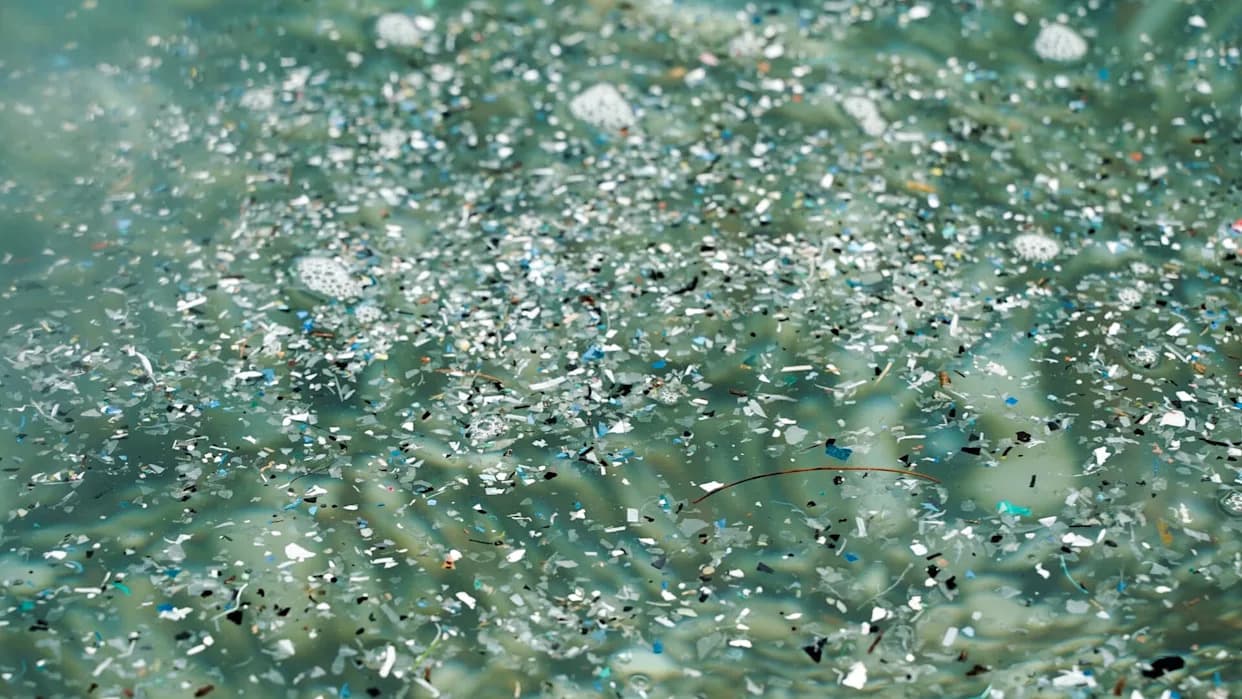
Photo Credit: iStock
Egg whites are known for their nutritional value — but researchers at Princeton have repurposed this everyday kitchen ingredient into a lightweight carbon aerogel that can capture microplastics from seawater.
From Sandwich Inspiration to Lab Breakthrough
The idea originated during a lunch break, when Craig Arnold, Princeton’s vice dean of innovation, noticed the porous structure of bread and realized a similar architecture could be useful for filtration. His team experimented with formulations that mimic that structure and discovered the proteins in ordinary, store-bought egg whites were the key ingredient.
"We started with a more complex system, and we just kept reducing, reducing, reducing, until we got down to the core of what it was," Arnold told Phys.org. "It was the proteins in the egg whites that were leading to the structures that we needed."
How the Process Works
The researchers freeze-dried egg-white proteins to remove water and lock in the porous structure, then subjected the dried material to high-temperature pyrolysis — heating to about 900°C (above 1,600°F) in an oxygen-free environment. This transforms the proteins into an interconnected carbon network containing graphene-like sheets and carbon fibers, producing a highly porous aerogel.
Performance and Potential
In a paper published in Materials Today, the team reported that the egg-white–derived aerogel removed roughly 99% of microplastics and about 98% of salt from seawater in laboratory tests. The material proved inexpensive and energy-efficient to produce at lab scale and outperformed activated carbon in the researchers’ comparisons.
Applications: Because aerogels are lightweight and highly porous, the material could be useful for water filtration, energy storage, thermal insulation and other environmental technologies. However, further work is needed to confirm long-term durability, environmental impacts and scalability for real-world ocean cleanup.
Next Steps and Caveats
While the results are promising, the experiments were performed at lab scale. Practical deployment would require pilot testing, lifecycle and cost analyses, and evaluation of environmental impacts for production and disposal. Still, the study highlights an inventive route to turn inexpensive, widely available biomaterials into high-performance filtration media.
Help us improve.