NIH employees warn that Jay Bhattacharya’s temporary appointment to run the CDC risks diluting his attention at the NIH at a time of tightening budgets, hiring constraints and rising costs for early-career scientists. NIH data show R01 success rates for early-career investigators fell from 26.1% in FY2024 to 18.9% in FY2025, and 16 of 27 NIH institutes and centers are currently led by acting directors. Staff and experts say both the NIH and CDC need focused, full-time leadership to avoid governance gaps and protect the future research pipeline.
NIH Staff Warn of Leadership Gaps as Bhattacharya Takes On Acting CDC Role
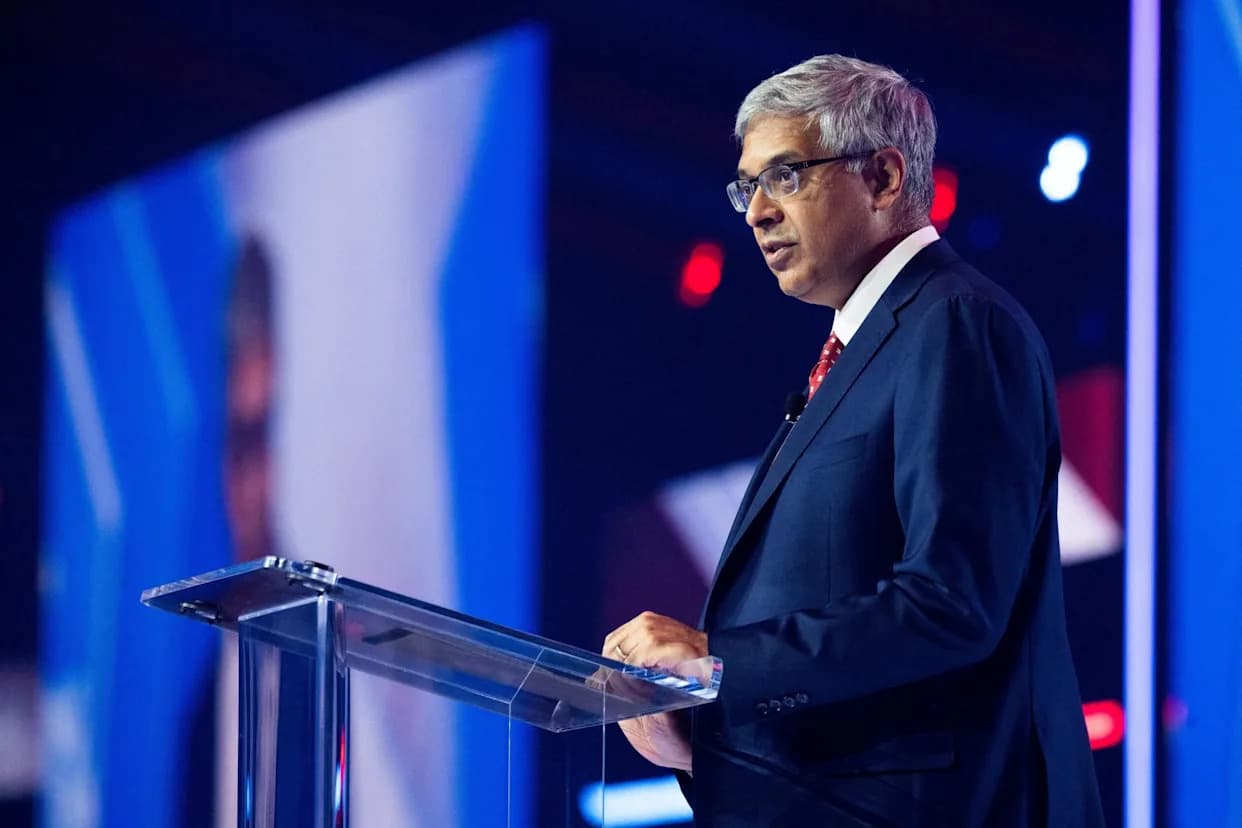
Jay Bhattacharya at AmericaFest, run by Turning Point USA, in Phoenix in December.Photograph: Caitlin O’Hara/Reuters(Photograph: Caitlin O’Hara/Reuters)
Staff at the National Institutes of Health (NIH) say they are worried that Director Jay Bhattacharya’s temporary assignment to lead the Centers for Disease Control and Prevention (CDC) will further divide his attention and leave urgent problems at the research agency unresolved.
Concerns from Early-Career Scientists
At a January meeting, Ian Morgan, a postdoctoral researcher and steward for NIH Fellows United-UAW 2750, raised alarm over sharp increases in health insurance costs for early-career scientists. With a child on the way, Morgan asked what the agency could do to support researchers struggling to cover basic expenses on federal salaries.
“What can we do to actually support early-career researchers like myself who are struggling to get by?”
Attendees said Bhattacharya—who has repeatedly said supporting innovative early-career investigators is a priority—appeared unfamiliar with the insurance issue and invited Morgan to follow up by email. Morgan says the requested meeting has not taken place because Bhattacharya was too busy.
Staff Say NIH Needs Full-Time Leadership
Observers emphasize that the NIH director job is demanding and typically full time. The agency manages a $48.7 billion portfolio and is one of the world’s leading biomedical research institutions. Shiv Prasad, a scientific review officer who spoke in a personal capacity, said: "The NIH director position has always been a full-time job...and no one has treated it as a part-time job before."
Prasad and other staff warned that tightened funding and hiring restrictions have hit the pipeline for early-career scientists. NIH data show the success rate for early-career investigators applying for R01 grants fell from 26.1% in fiscal year 2024 to 18.9% in fiscal year 2025, even though applications rose by only about 1% in the same period.
Leadership Vacancies and Delegation Concerns
Another worry is instability across NIH components: 16 of the agency's 27 institutes and centers are led by acting directors, a level of temporary leadership higher than many staff have seen in decades. Permanent institute directors set research priorities, implement missions and disburse congressional appropriations.
Employees say day-to-day operations are widely regarded to be run by Principal Deputy Director Matthew Memoli, but many argue that delegating responsibilities to deputies cannot fully replace a present, engaged director. Legal scholar Anne Joseph O'Connell of Stanford warned that while a Senate-confirmed director can legally take on a second acting role, doing so risks governance harms: "It is hard to do two full-time jobs."
Public Profile and Limited Availability
Some staff also question how Bhattacharya spends his time, noting frequent media appearances, podcasts and speaking engagements. Bhattacharya has defended his approach, saying he built a leadership team at NIH and stays in touch with them. On the podcast Why Should I Trust You? he said: "I worked very hard this last year at the NIH to place a leadership team and a set of ideas and priorities ... and I'm working to stay in touch with them continuously."
Supporters point to actions taken after staff raised issues: employees say Bhattacharya helped ease a hiring freeze on postdoctoral researchers so some recruitment could resume, though restrictions reportedly remain.
Acting CDC Role and Outlook
Bhattacharya is the fourth person to lead the CDC in a year and may serve as acting director until 25 March, which would mark 210 days since the last confirmed director departed. The Department of Health and Human Services (HHS) said the NIH leadership team will continue agency priorities while the CDC leadership team works closely with Bhattacharya during the acting period.
Even so, staff voices across both agencies emphasize the need for focused, full-time leadership at each institution to protect scientific funding pipelines, maintain staff morale, and ensure public health preparedness.
"Part of doing the job is being there and meeting with people and using the influence that you have as NIH director to make sure that things work smoothly. And if you're not there, able to do that, then things are going to break," Morgan said.
Help us improve.