Unusually warm winter temperatures and a severe snow drought have left Western U.S. mountain snowpacks far below average, with many basins under 50% of typical snow-water equivalent and some near 25%. Colorado reports its lowest mountain snowpack in over 40 years and an exceptionally warm October–February, including nearly double the usual number of 60°F winter days in Fort Collins. Scientists warn that reduced snowpack and earlier melt dry vegetation sooner, increasing the likelihood of intense summer wildfires and stressing water supplies, especially in the already over-allocated Colorado River basin.
West Faces Elevated Wildfire Risk After Severe Snow Drought and Unseasonably Warm Winter
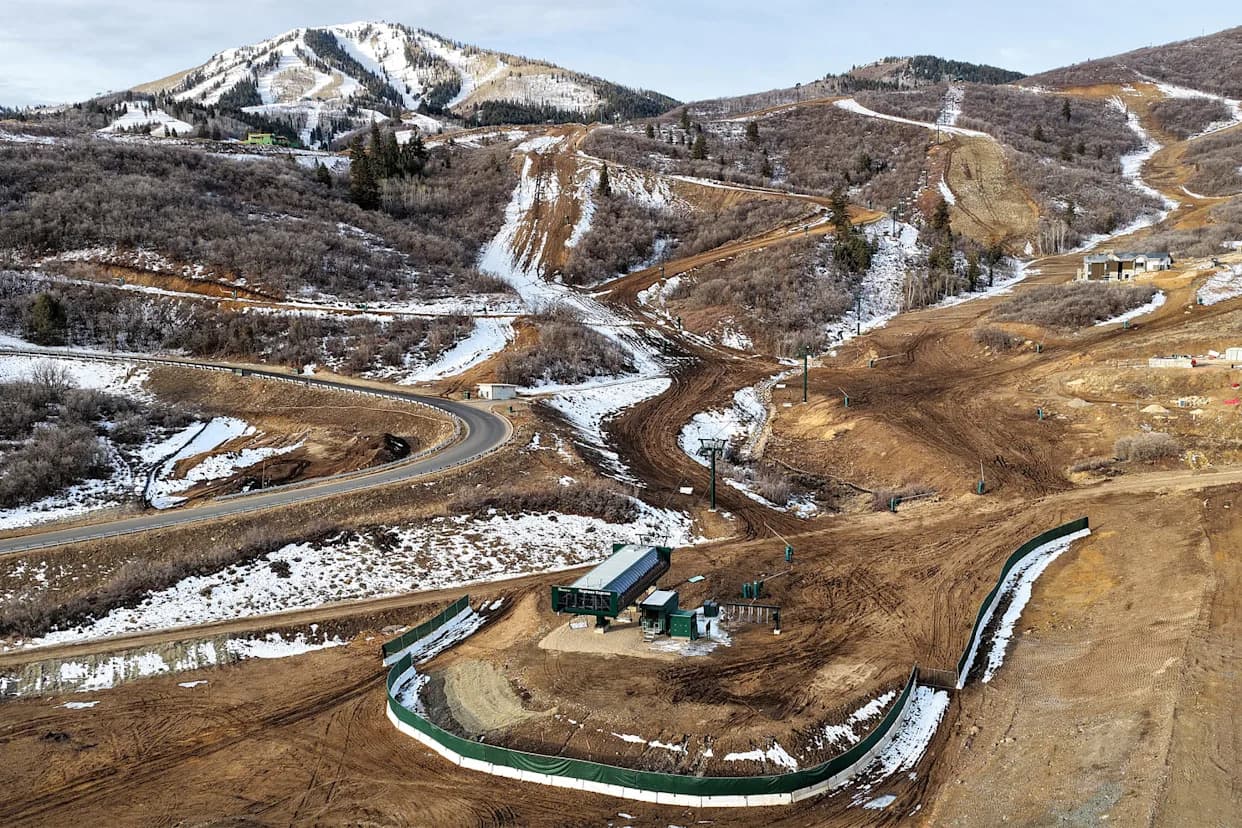
Construction of ski trails and a ski lift in Park City, Utah, on Feb. 8. A snow drought and warmer weather across Utah and much of the West has resulted in Utah's receiving only around one-third of its normal early February snowpack. (Mario Tama / Getty Images)(Mario Tama)
A combination of unusually warm winter temperatures and one of the most severe snow droughts in decades has left mountain snowpacks across much of the Western United States far below normal. Experts warn the shortfall increases the chance of a more intense wildfire season and could strain water supplies fed by seasonal snowmelt.
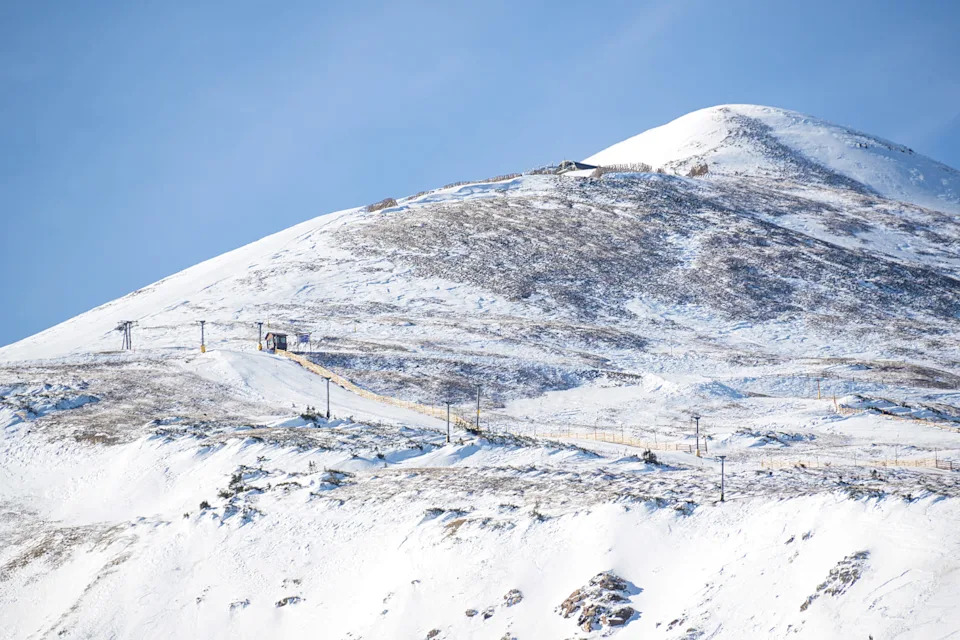
A snow drought sweeping the Western United States led to low snowpack in Breckenridge, Colo., on Jan. 22. (Hyoung Chang / Denver Post via Getty Images)(Hyoung Chang)
Snowpack Mostly Well Below Average
Measurements of snow-water equivalent—the amount of water contained in the snowpack—show most basins across the Western continental U.S. are well below typical values for this time of year. Many are under 50% of average, and some are near 25%.
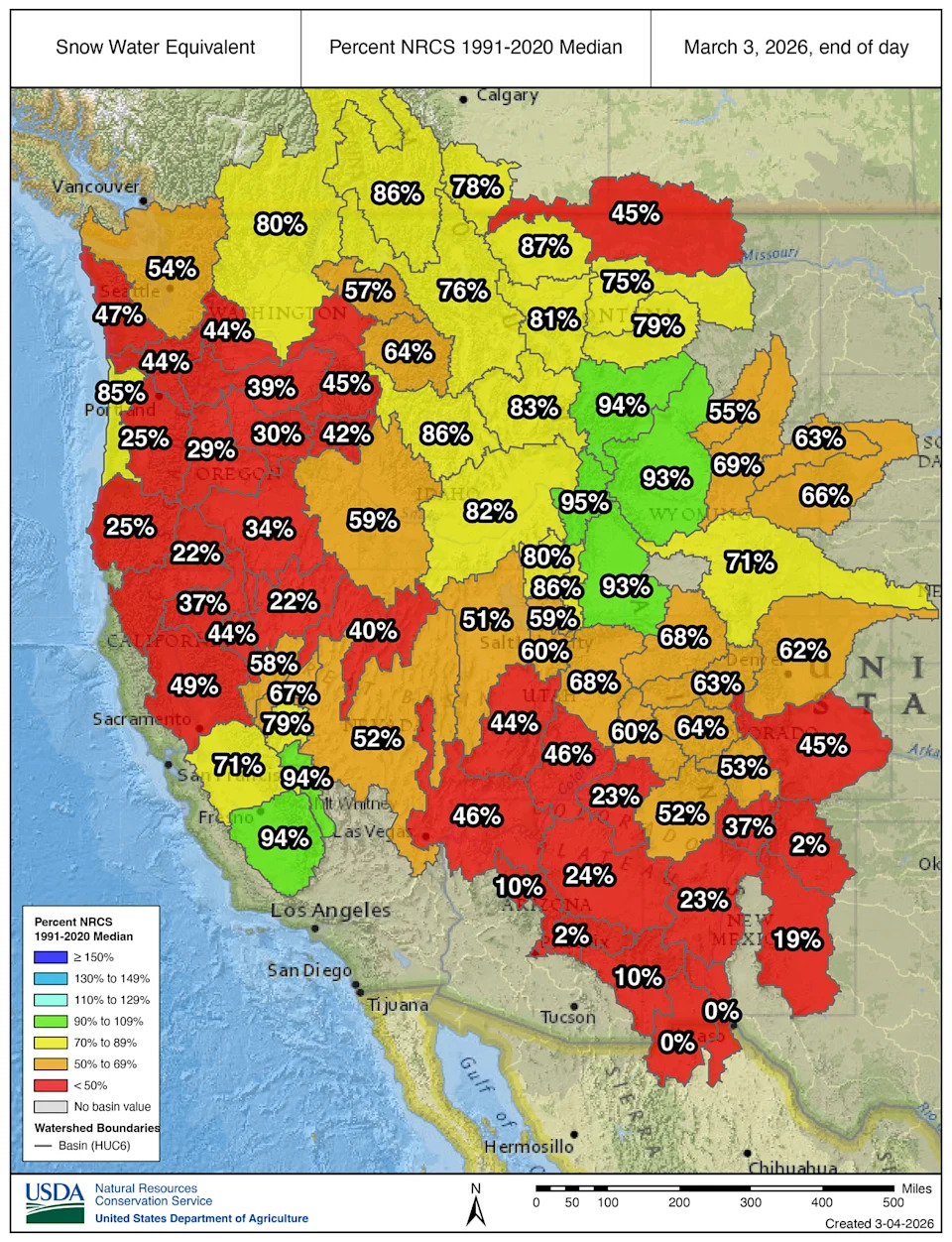
Only a handful of basins in the Western U.S. are near average snowpack levels. (Natural Resources Conservation Service)(Natural Resources Conservation Service)
Colorado Among The Hardest Hit
"The snowpack in Colorado’s mountains is the lowest it’s been in over 40 years," said Russ Schumacher, director of the Colorado Climate Center at Colorado State University. Colorado recorded its warmest October–February on record, and Fort Collins logged about 43 winter days at or above 60°F—nearly double the previous winter record of 22 such days.
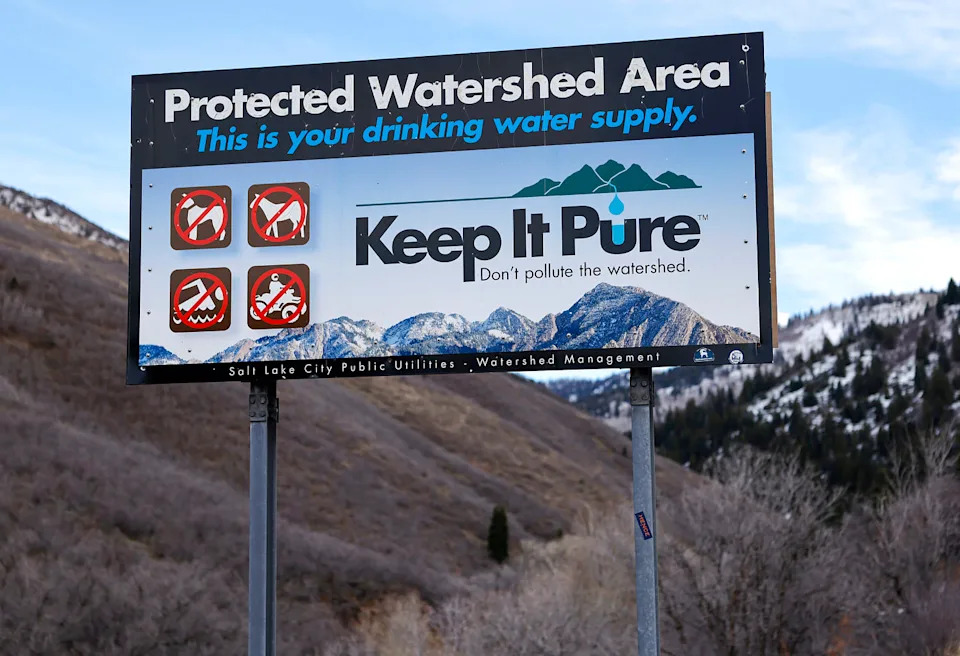
A "Protected Watershed Area" sign stands near hillsides with patchy snow near Salt Lake City on Feb. 8. Utah relies on mountain snowpack for around 95% of its water supply. (Mario Tama / Getty Images)(Mario Tama)
Noah Molotch, professor of geography at the University of Colorado Boulder: "When most places are at 50% of average or less, that means there would be twice the amount of snow or more almost everywhere on the map."
Implications For Wildfires And Water Supply
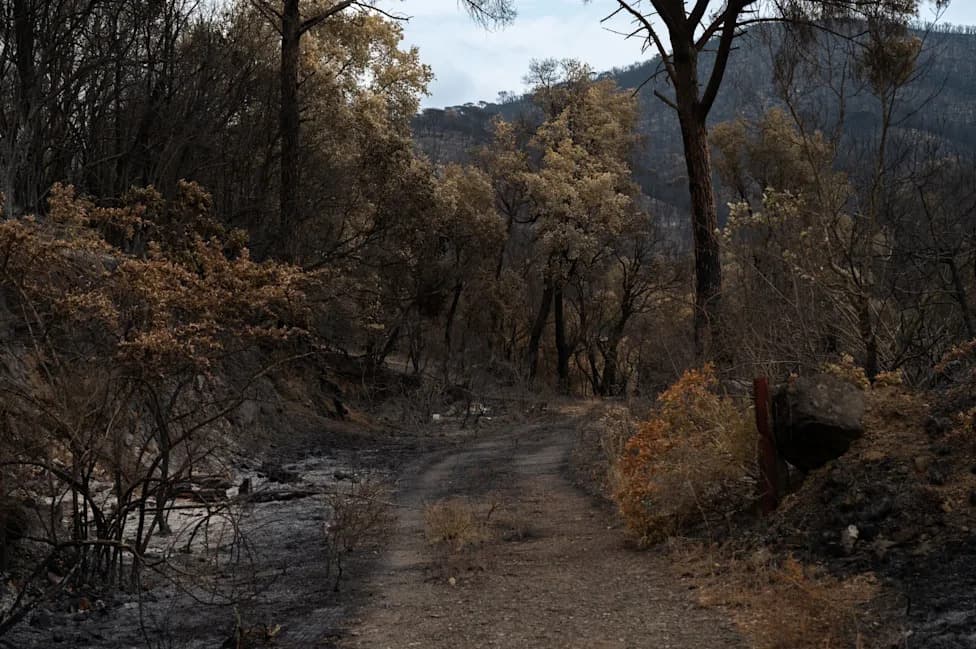
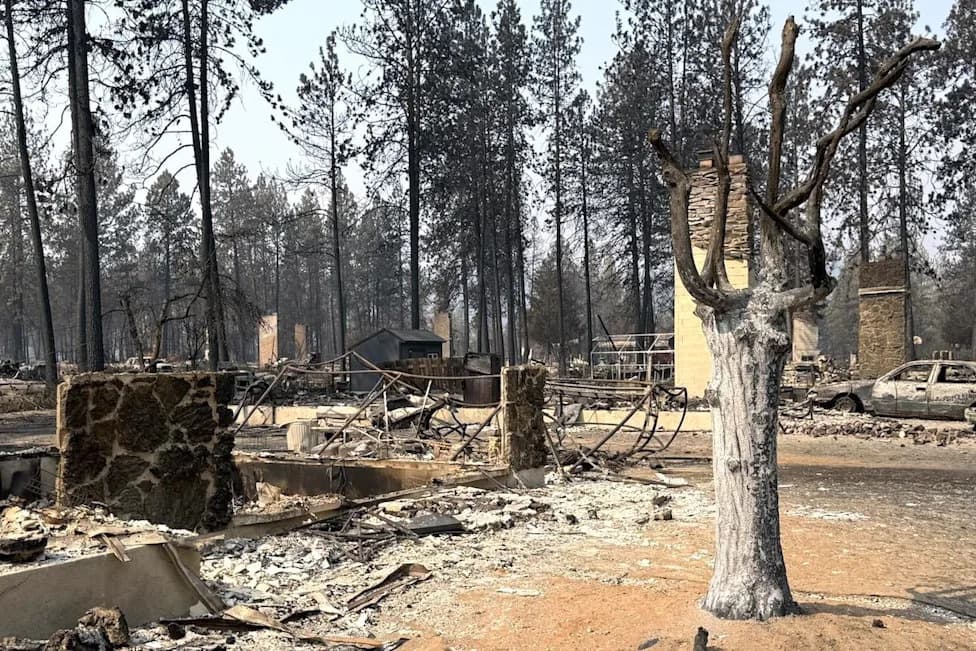
Research shows that snow droughts and earlier-than-normal snowmelt give vegetation more time to dry, increasing fuel availability and the likelihood of severe summer wildfires. The Bluebell Fire near Boulder, which burned roughly 1.5 acres and prompted evacuation warnings before crews contained it, is an early example of how vulnerable the region can be as conditions warm and dry.
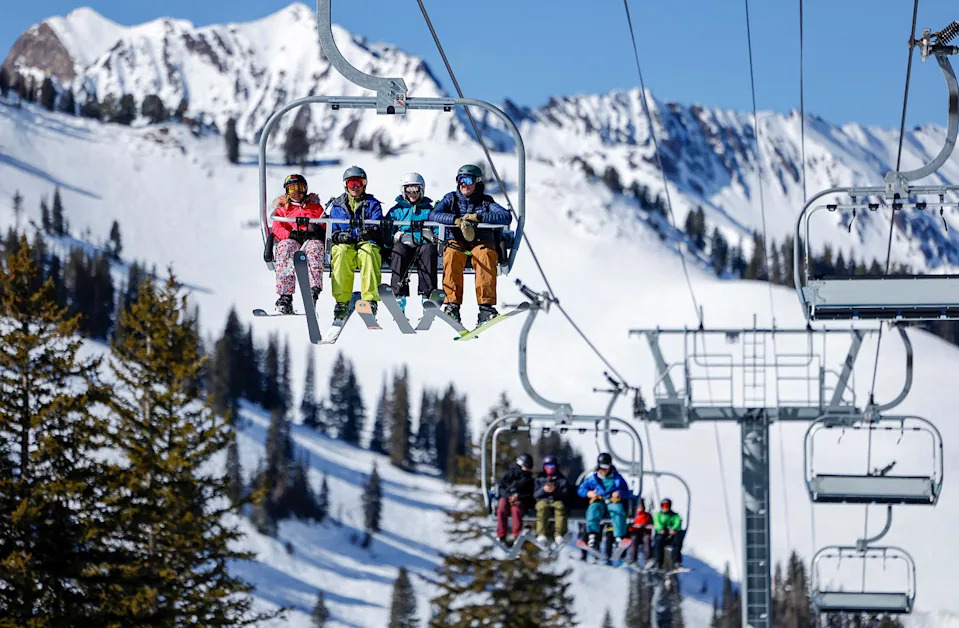
Skiers ride a chairlift at Alta Ski Area in the Wasatch Mountains in Alta, Utah, on Feb. 8. Ski resorts at higher elevations, such as Alta, have received sufficient snowfall, but those at lower elevations have been forced to make artificial snow. (Mario Tama / Getty Images)(Mario Tama)
Dwindling mountain snowpack also threatens spring and summer runoff that refill rivers, reservoirs, irrigation systems and hydropower facilities. The Colorado River basin is especially precarious because it is already over-allocated, forcing difficult management decisions about water deliveries.
Role Of Climate Change And Outlook
Scientists say climate change likely increases the odds of unusually warm winters, though attributing single-year precipitation deficits is more complex. Forecasters note there is still time for late-season storms to improve snow totals in some areas, but near-term forecasts offer little relief in many basins.
What To Watch: officials urge preparedness for an active fire season, close monitoring of reservoir levels, and attention to evolving forecasts as spring approaches.
Help us improve.