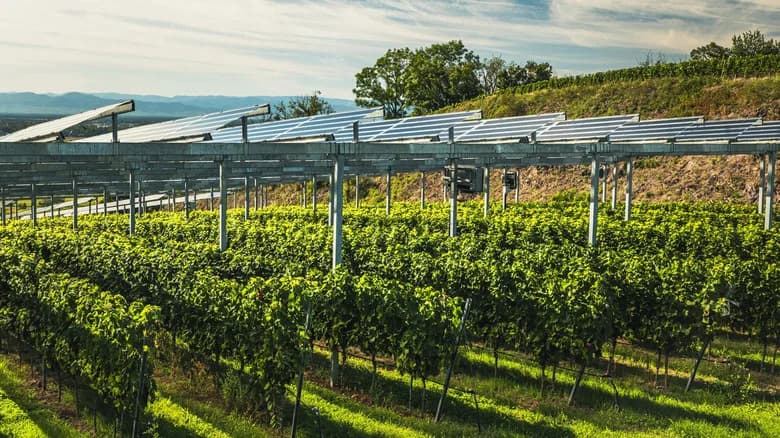
Australian farmers are combining sheep grazing with solar power to create productive, low-impact agrivoltaic sites. Near Dubbo, Tom Warren hosts more than 30,000 panels across roughly 50 hectares that generate about 20 megawatts while providing shaded pasture that has improved wool quality and cleanliness. Warren reports roughly a 15% lift in gross revenue from his sheep at the solar site. The agrivoltaics model is spreading across New South Wales as investments and policy targets drive broader adoption.
Solar Sheep: How Grazing Under Panels Is Helping Rural Australia Go Green
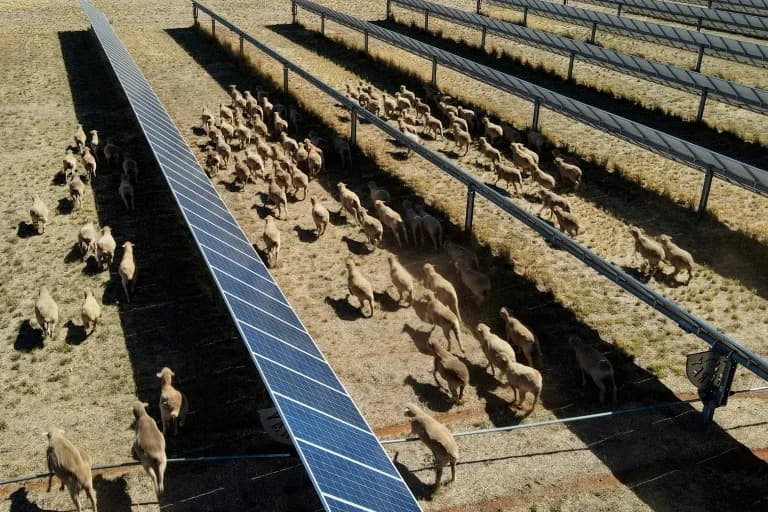
Australian farmers are helping with the transition to green energy by combining solar panels more traditional sheep farming (Gregory Plesse)(Gregory Plesse/AFP/AFP)
Australian farmer Tom Warren's solar installation looks ordinary at first—until you notice dozens of sheep resting and grazing in the shade beneath the arrays. That combination of pasture and photovoltaics is helping the region shift toward clean energy while giving Warren a reliable new income stream.
Small Pastures, Big Power
Warren's property on the outskirts of Dubbo, roughly 400 kilometres (250 miles) west of Sydney, hosts more than 30,000 solar panels across about 50 hectares. The site generates roughly 20 megawatts of electricity—enough to supply a substantial portion of local demand.
Sheep and Solar: A Natural Partnership
Warren, who has partnered with renewables firm Neoen for more than a decade, said he initially worried the panels would limit grazing options. Those concerns were soon dispelled: the flock now seeks shade beneath the arrays, finding a comfortable, sheltered environment.
"Normally they would seek out trees and camp under the trees, but you can see that the sheep are seeking out the shade of the panels," Warren told AFP. "So, it's a much better environment for them as well."
Better Pasture, Better Wool
The photovoltaic canopies have an unexpected agricultural benefit: they moderate exposure to weather extremes, producing more consistent pasture quality. That steadier feed has improved the wool—Warren reports cleaner fleece and an overall increase in gross revenue from his sheep of about 15 percent at the solar site.
Fellow grazier Tony Inder, who manages roughly 6,000 sheep on two blocks totalling about 4,000 hectares near Wellington, sees similar gains. He says constant shade and greener pasture under panels create a steadier diet that helps wool grow more evenly.
Practical Benefits For Landowners
Some landowners also benefit from lower maintenance demands: areas under panels need less frequent mowing, which helps keep equipment clear and reduces bushfire risk. In Inder's case he is allowed to graze on land he does not own at no charge—demonstrating how different arrangements can work for farmers and developers.
Agrivoltaics Is Catching On
Warren's Dubbo site was among the early agrivoltaic projects in New South Wales, and the model is spreading. "All of our solar farms in New South Wales now have sheep grazing on them," said Emily Walker, the company's state director, noting the industry is increasingly integrating traditional agricultural uses with solar deployment.
Policy And Investment Context
Australia has invested billions in solar, wind and green manufacturing and has set ambitious emissions targets—Canberra has pledged to cut greenhouse gas emissions by up to 70 percent from 2005 levels over the next decade. Yet the country still relies significantly on fossil fuels for economic growth.
Karin Stark of consulting firm Farm Renewables told AFP that more targeted funding would encourage combined farm-and-solar use of land. She said greater visibility of successful projects helps convince other farmers that they can host renewables while remaining productive.
What This Means
Agrivoltaics offers a practical win-win for many rural landowners: steady rental income from hosting arrays, reduced maintenance and bushfire risk, and agronomic benefits such as improved pasture consistency and higher-quality wool. As renewables expand, combining energy production with traditional farming may become a standard approach across Australia.
Help us improve.