Europe’s five largest defence spenders — France, Germany, Italy, Poland and Britain — agreed to launch the LEAP initiative to develop and procure low-cost autonomous interceptor drones. The move responds to lessons learned in Ukraine, where such drones have provided a cost-effective complement to air-defence missiles. Ministers also backed boosting European defence production capacity, welcomed EU fiscal flexibility for defence spending, and pledged closer cooperation via NATO and the EU to counter hybrid threats and support Ukraine.
Europe's Five Largest Militaries Launch Joint LEAP Drone Initiative to Boost Air Defence
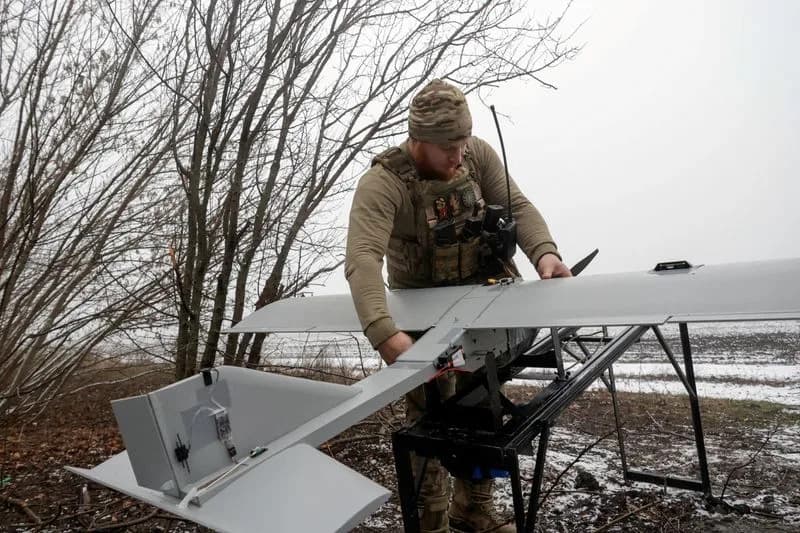
FILE PHOTO: A serviceman of the 66th Separate Mechanized Brigade named after Prince Mstyslav the Brave prepares to launch a Darts middle range strike unmanned aerial vehicle towards Russian troops from a position near a front line, amid Russia's attack on Ukraine, in Donetsk region, Ukraine December 16, 2025. REUTERS/Sofiia Gatilova/File Photo
By Barbara Erling
Krakow, Poland, Feb 20 — Europe’s five biggest defence spenders have agreed to launch a joint programme to develop low-cost autonomous interceptor drones, aimed at strengthening the continent’s defence industrial base and reducing reliance on expensive air-defence missiles.
Collaborative Push For Autonomous Systems
According to a document reviewed by Reuters and a source at the Polish defence ministry, France, Germany, Italy, Poland and Britain plan to cooperate on the development and procurement of autonomous drones under a new initiative called Low-Cost Effectors and Autonomous Platforms (LEAP).
Officials say lessons from the war in Ukraine — where interceptor drones have been used effectively as a cheaper complement to traditional air-defence systems — helped shape the push for increased European investment in unmanned capabilities.
What Ministers Pledged
The European Group of Five Defence Ministers, meeting in Krakow, said they "support a real increase in the production capacity of the European defence industrial base" and welcomed the EU’s commitment to provide member states with greater fiscal flexibility for defence spending and to create lending instruments to support procurement.
At the same time, the statement emphasized that core defence capabilities remain a national responsibility and that the EU’s role should be supportive rather than substitutive.
Working Through NATO And The EU
Ministers also pledged coordinated action within NATO and the EU to counter Russian hybrid threats, to continue supporting Ukraine, and to back diplomatic efforts to secure a peaceful resolution. The statement — which is still subject to change — said: "We agree to launch the Low-Cost Effectors and Autonomous Platforms (LEAP) initiative ... to increase our cooperation on the development and procurement of low-cost effectors and autonomous platforms to deliver military effect."
Note: In military terms, "effectors" are system components that produce a physical effect, while "autonomous platforms" are unmanned systems capable of operating with a degree of independent decision-making.
The ministers’ announcement signals a pragmatic, technology-focused approach to modernising European air defence and supply chains amid concerns about long-term strategic commitments from external allies.
Help us improve.