A German research team used ground-based lidar and atmospheric models to trace a roughly 10-fold increase in lithium atoms to an uncontrolled SpaceX Falcon 9 upper-stage re-entry on Feb. 19, 2025. Detected about 20 hours after the event over Germany, the lithium spike provides the first observational evidence of upper-atmospheric pollution from space-debris ablation. Researchers warn that rising launch and re-entry activity could produce cumulative changes to upper-atmospheric composition and call for improved monitoring and mitigation.
Study: Repeated Rocket Re-entries May Pollute the Upper Atmosphere — 10× Spike in Lithium Detected
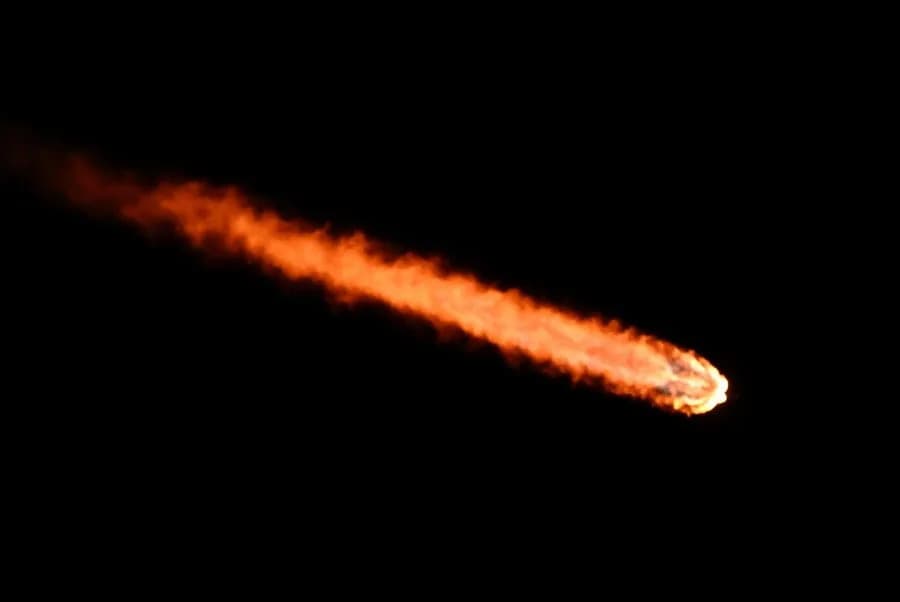
A SpaceX Falcon 9 rocket launches 29 Starlink satellites on November 22, and a study published on Thursday suggests environmental harm might occur due to frequent re-entries by rockets and satellites deployed by SpaceX and others. File Photo by Joe Marino/UPI
A German research team warns that the rising tempo of satellite launches and rocket re-entries could be leaving detectable traces in Earth’s upper atmosphere, with potential implications for atmospheric chemistry and long-term climate interactions.
In a study published in Communications Earth & Environment, lead author Robin Wing and colleagues report that roughly 20 hours after an uncontrolled re-entry of a SpaceX Falcon 9 upper stage on Feb. 19, 2025, ground-based instruments recorded a roughly tenfold increase in lithium atoms at high altitude above Germany.
How the Signal Was Traced
The team combined multiple observational and modeling approaches to identify the source and rule out natural causes:
- Ground-based lidar provided the first direct observational evidence of upper-atmospheric pollution from space-debris ablation.
- Atmospheric modeling using the Icosahedral Nonhydrostatic Circulation Model (INCA) helped map transport and dispersion of the plume.
- Ablation-process calculations estimated how materials vaporize and deposit during uncontrolled re-entry.
- Analyses of geomagnetic, atmospheric and ionospheric conditions supported the conclusion that the lithium enhancement was not a natural meteoric event.
What Was Observed
Observers reported a visible fireball and a persistent, high-altitude plume of lithium vapor following the Falcon 9 upper-stage re-entry. Instruments detected lithium concentrations about ten times the typical background level roughly 20 hours after the event, localized over Germany.
"This study presents the first measurement of upper-atmospheric pollution resulting from space debris re-entry and the first observational evidence that the ablation of space debris can be detected by ground-based lidar," the authors write.
Implications and Next Steps
The researchers call the finding an "emerging societal and scientific concern," noting that most previous work has focused on debris hazards to people and infrastructure rather than chemical changes in the upper atmosphere. They highlight the possibility that continued growth in launch cadence and uncontrolled re-entries could produce cumulative alterations in atmospheric composition and influence processes in the ionosphere and climate system.
The study emphasizes the need for systematic monitoring, improved modeling of re-entry ablation chemistry, and international coordination to mitigate potential environmental impacts from increasing space traffic.
Help us improve.