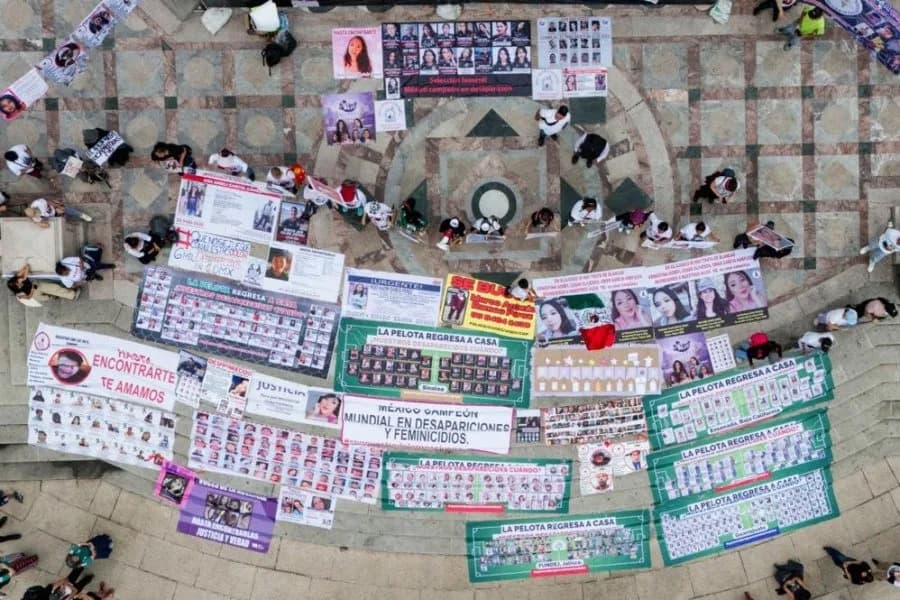
Disappearances in Mexico have surged in the past decade, with estimates pointing to more than 130,000 people recorded as missing and a México Evalúa report showing a rise of over 200% in ten years. Analysts link the spike to cartels' territorial expansion and diversification into crimes such as organ and human trafficking, while state institutions struggle to respond. Underfunded authorities and slow, corrupt investigations have pushed relatives — often mothers — into grassroots search efforts that have frequently uncovered mass graves.
Disappearances in Mexico Soar Over 200% in a Decade — Families Search in the Dark
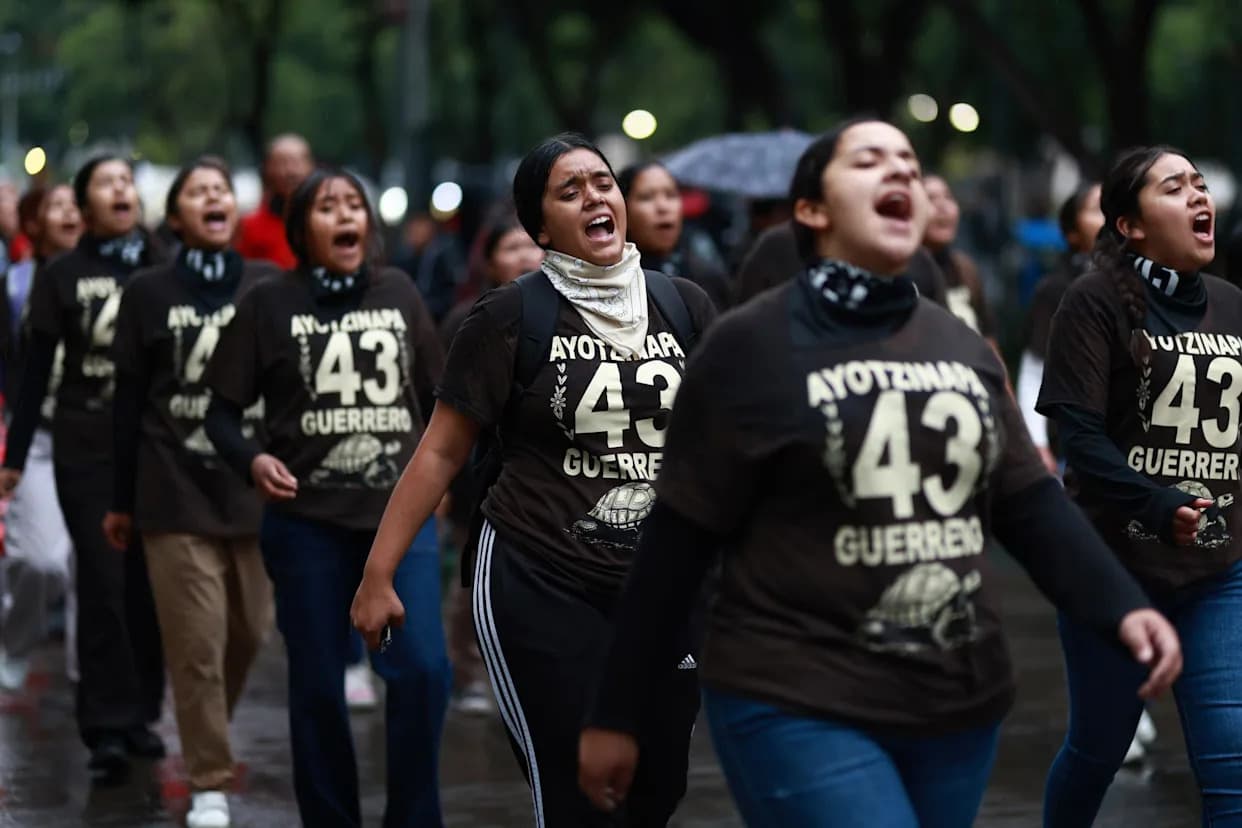
Demonstrators take part in a rally to demand justice for the 43 missing students from Ayotzinapa, in Mexico City on 26 September 2025.Photograph: Anadolu/Getty Images(Photograph: Anadolu/Getty Images)
On a clear morning in August 2022, 31-year-old construction worker Ángel Montenegro vanished while waiting for a bus in Cuautla. He had spent the previous night drinking with colleagues and was heading home to nearby Cuernavaca when a white van pulled up. Several men forced Montenegro and a co-worker into the vehicle; the co-worker was released a short distance away, but Montenegro was driven off and has not been seen since.
His mother, Patricia García, arrived at the bus stop with family and neighbours to find only his cap and a single tennis shoe. "The desperation started when night fell," García said. She has now spent more than three torturous years searching for her son.
Scale of the Crisis
Montenegro is one of more than 130,000 people recorded as missing or disappeared in Mexico. A recent report from public policy analysts México Evalúa found that disappearances have risen by more than 200% in the last decade, a surge that analysts link to the expanding power and diversification of criminal groups across the country.
Why Disappearances Are Rising
Security analyst Armando Vargas of México Evalúa says the increase mirrors how cartels have broadened their criminal portfolios beyond drug trafficking and extended territorial control. Forced recruitment and the elimination of rivals are part of that expansion, but openly killing rivals can attract authorities. As a result, gangs increasingly conceal victims by burying bodies in unmarked graves, burning remains, or destroying evidence with acid.
“By making bodies disappear, criminal groups invisibilize the violence, because that puts them under the radar,” Vargas said.
Cartels have also moved into criminal markets that commonly involve abductions and disappearances, including organ trafficking, sex and human trafficking, and migrant smuggling.
Government Response and Controversy
The federal government created a National Search Commission in 2018 and promoted an interactive public platform to register disappearances nationwide. However, the commission was chronically underfunded, and the register became politically contentious: ahead of the 2024 elections the administration that maintained the registry conducted a review that reduced the official total to 12,377, a cut that provoked outrage from activists and rights experts.
When asked about the México Evalúa findings, President Claudia Sheinbaum criticized the platform as flawed and promised a new government study. Analysts warn that official figures are likely an undercount given high levels of violence and limited capacity to locate and identify remains.
Investigations are frequently slow, ineffective and marred by corruption: according to United Nations figures, more than 96% of crimes in Mexico went unsolved in 2022. This institutional weakness has pushed many relatives — often mothers — to conduct their own searches.
Families on the Front Line
García joined a collective of 12 women who search weekly, probing fields with metal rods for signs of buried remains. The November after Montenegro disappeared, the group excavated a field where his phone had last pinged and uncovered six bodies; they returned four months later and found another five. None were Montenegro.
Despite the physical and emotional toll, García continues to search while caring for her family. "You’re left in broken pieces," she said. "It’s like when a vase shatters: you can glue it back together but the cracks are always there."
What This Means
The surge in disappearances highlights the intersection of expanding organized crime, weak state institutions and the human cost of violence in Mexico. Without sustained political will, funding for forensic and investigative capacity, and protections for affected communities, families will likely continue to bear the burden of searches and demands for accountability.
Help us improve.