Iran says it will press on with efforts to be removed from the FATF blacklist after the watchdog renewed its listing and tightened measures, especially targeting virtual assets and cryptocurrencies. The FATF’s recommendations further restrict banking ties, correspondent relationships and certain fund flows, compounding Tehran’s difficulty accessing international finance. Domestic hardliners oppose full compliance on national-security and sanctions-evasion grounds; conditional laws Tehran passed in 2025 were rejected by FATF, prompting the latest escalation.
Iran Steps Up Bid To Exit FATF Blacklist As New Measures Tighten Financial Isolation
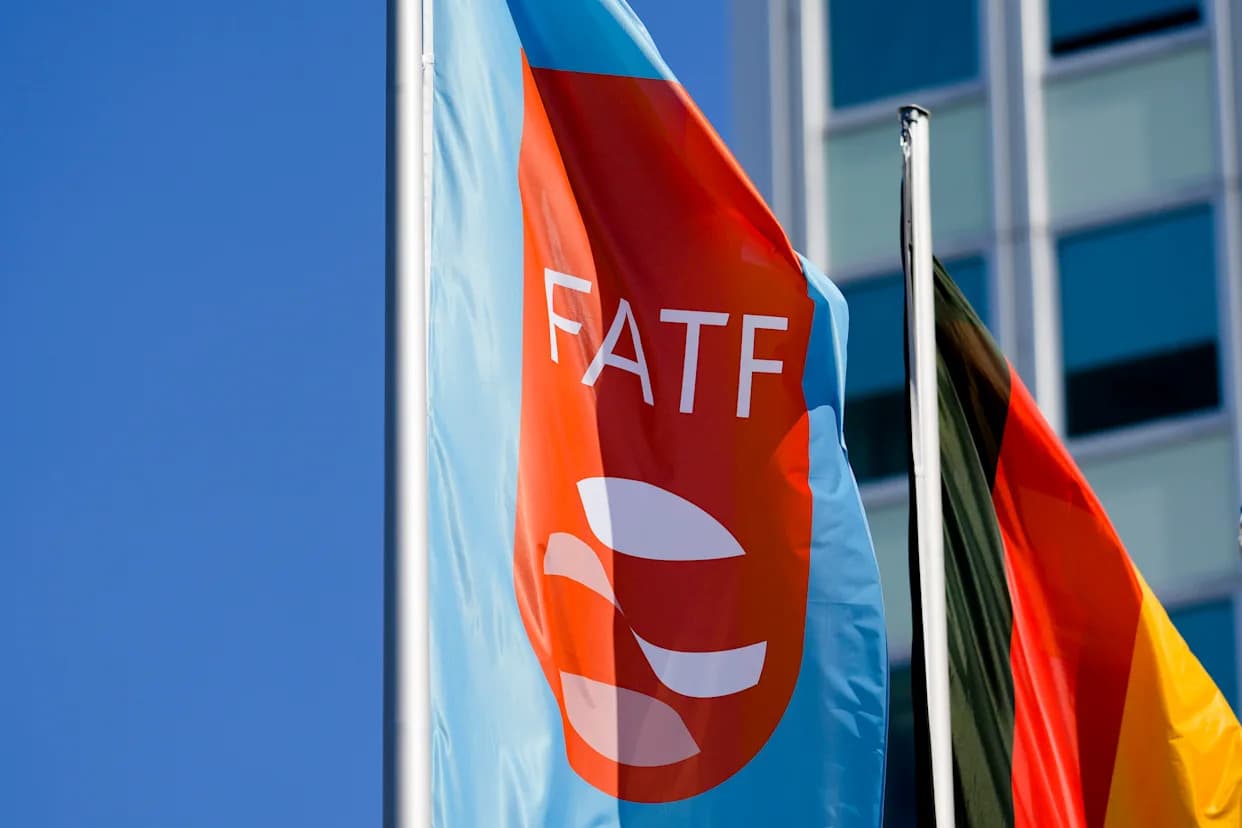
A flag with the FATF logo is seen next to the German flag during a meeting of the task force at the Congress Center in Berlin, Germany [File: Markus Schreiber/AP Photo]
Tehran — Iran’s Financial Intelligence Unit said on Sunday it will continue efforts to be removed from the Financial Action Task Force (FATF) blacklist, despite what Tehran described as “20 years of obstruction” from domestic opponents. The announcement came two days after the Paris-based watchdog renewed Iran’s listing, according to the official IRNA news agency.
FATF’s Latest Measures
The FATF’s renewed decision adds stepped-up countermeasures aimed at isolating Iran from international finance, with a particular emphasis on virtual asset service providers (VASPs) and cryptocurrencies. The watchdog recommended that member states and financial institutions worldwide should:
- Refuse to admit representative offices of Iranian financial institutions and VASPs, or treat such proposals as high noncompliance risks.
- Bar financial institutions and VASPs from opening branches or offices inside Iran.
- On a risk-assessed basis, limit business relationships and transactions — including virtual-asset transfers — with Iran or persons located there.
- Prohibit new correspondent banking relationships with Iranian counterparts and require risk-based reviews of existing ties.
- Apply enhanced risk assessments to flows involving humanitarian aid, food and medical supplies, diplomatic costs and remittances because of concerns about terrorism financing and proliferation risks tied to Iran.
Domestic Politics And The Sticking Points
Iran has been on the FATF blacklist for years and now joins only North Korea and Myanmar on that list. FATF advised “heightened measures” from October 2019 and effective countermeasures from February 2020, steps that have already complicated Iran’s access to international banking and trade.
Domestically, hardline factions in Tehran have resisted full FATF compliance. Their main concerns are that greater transparency could constrain Iran’s ability to support allied groups across the region and that meeting FATF information requirements would make it harder to evade U.S. sanctions. To address such worries, Tehran passed two FATF-related laws in 2025 containing conditions and reservations — including clauses about not recognizing Israel and reserving to Iran’s Supreme National Security Council the authority to designate “terrorist” groups. The FATF rejected those qualifications, prompting the latest escalation in countermeasures.
Economic And Operational Impact
FATF countermeasures have made international transactions more difficult for Iranian banks, businesses and citizens. As a result, Iran increasingly relies on costly and opaque third-party intermediaries and a shadow fleet of tankers that sometimes disable tracking transponders to move oil. These workarounds have contributed to sustained pressure on foreign-exchange earnings and the long-term depreciation of the rial.
By explicitly naming virtual assets, the FATF’s latest guidance signals intensified scrutiny of cryptocurrencies and related services that might be used to circumvent sanctions. Smaller banks with legacy correspondent relationships may reassess their Iran exposure after being advised to re-evaluate existing ties.
Background And What Comes Next
The FATF was created in 1989 by Group of Seven countries to combat money laundering; its mandate later expanded to include terrorism financing and proliferation financing. The body began expressing concerns about Iran in the late 2000s amid rising international tensions over Tehran’s nuclear activities. After Iran signed the 2015 nuclear deal, FATF acknowledged a high-level political commitment from Tehran and agreed an action plan. Progress slowed after the U.S. withdrawal from the deal in 2018, which strengthened hardline objections and stalled further legislation.
Going forward, Iran faces a difficult choice: alter domestic legislation and practices to meet FATF expectations and potentially unlock easier access to global finance, or maintain political resistance and continue to operate under increasing financial isolation. The immediate consequences of the renewed measures are likely to be a further squeeze on trade, remittances and the formal banking links Iran relies on, with continued reliance on informal channels.
Note: This article corrects an earlier claim that President Bashar al-Assad had fallen; reporting instead reflects that Iran’s regional networks have faced setbacks in recent years rather than a single definitive collapse in Syria.
Help us improve.