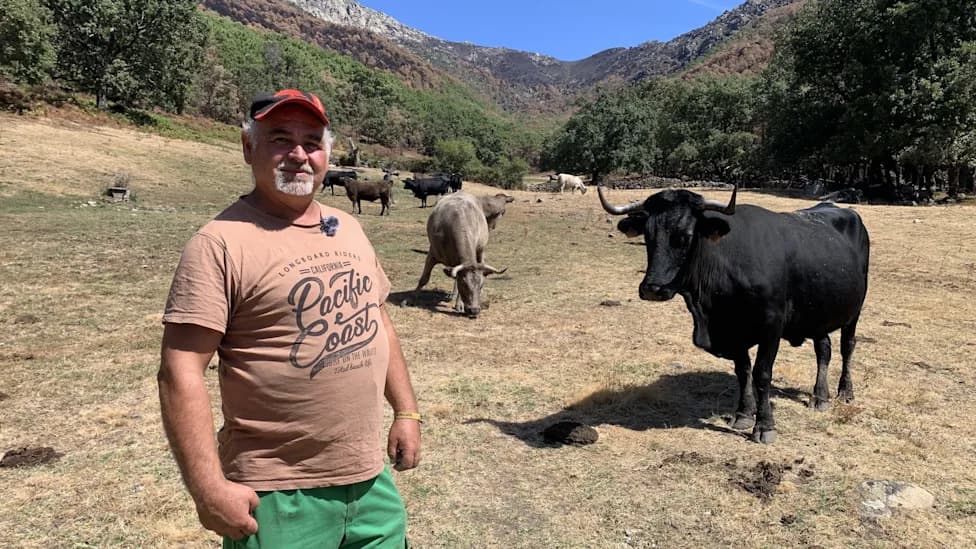
The World Weather Attribution team found that human-caused warming made the extreme hot, dry and windy conditions behind recent wildfires in Chile and Argentina far more likely—about three times as likely in parts of Chile and 2.5 times as likely in southern Argentina. The blazes killed 23 people in Chile, destroyed over 1,000 structures, and scorched more than 45,000 hectares in Argentina, including parts of Los Alerces National Park. Researchers cite record heat, reduced seasonal rainfall and extensive flammable tree plantations as drivers, and warn that continued fossil fuel emissions will raise wildfire risk further.
Study: Human-Caused Warming Made Devastating Wildfires In Chile And Argentina Far More Likely
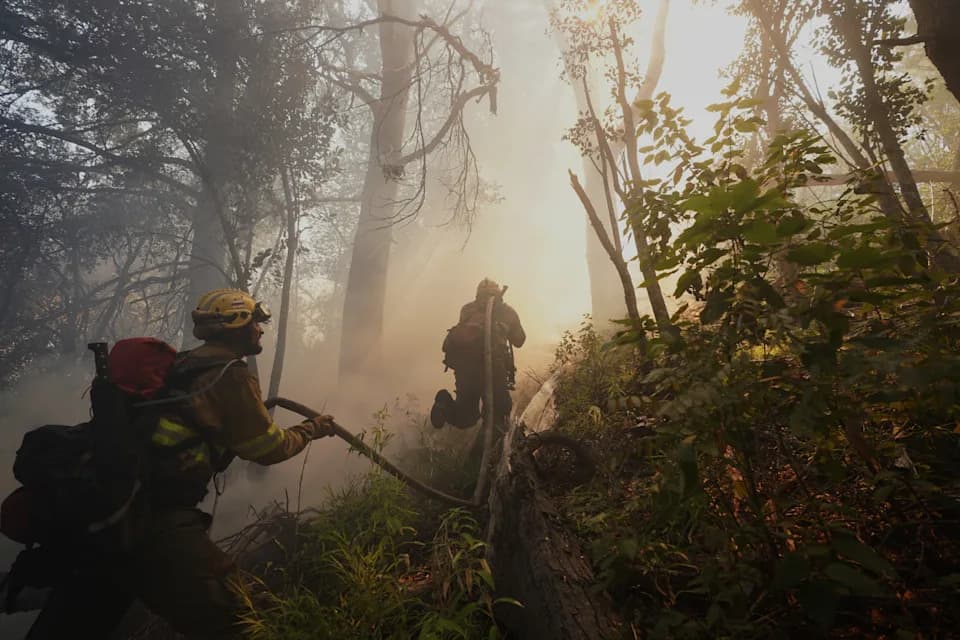
Firefighters battle wildfires in Los Alerces National Park, Argentina, Saturday, Jan. 31, 2026. (AP Photo/Victor R. Caivano)(ASSOCIATED PRESS)
Researchers say human-driven climate change substantially increased the odds of the extreme hot, dry and windy conditions that fueled the recent, destructive wildfires across central and southern Chile and Argentina’s Patagonia.
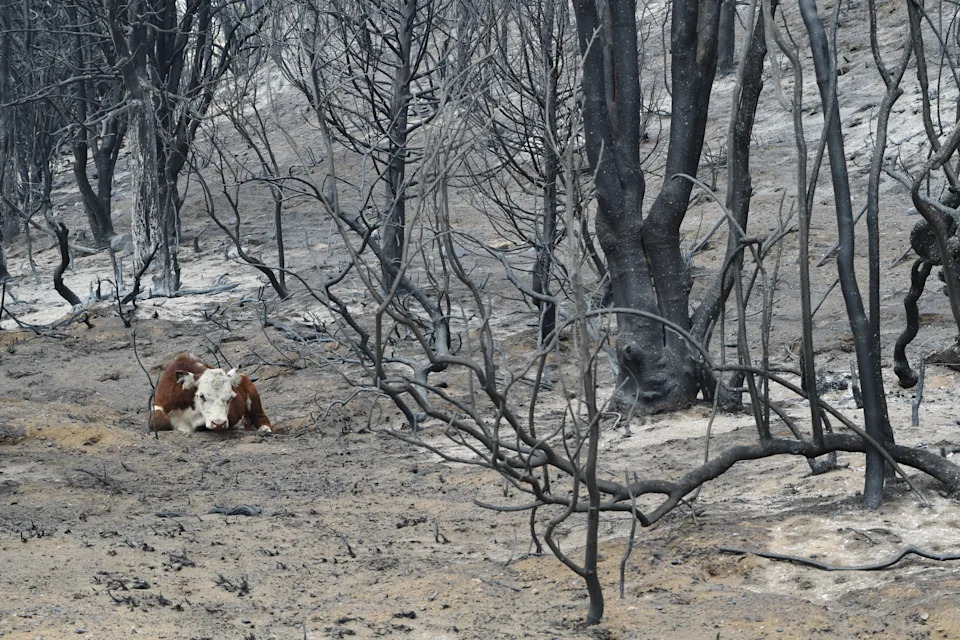
A cow sits on the charred ground of a forest after wildfires on the outskirts of Cholila, Argentina, Monday, Jan. 26, 2026. (AP Photo/Nicolas Palacios)(ASSOCIATED PRESS)
A rapid analysis by World Weather Attribution found that the weather behind the mid-January blazes in Chile was roughly 200% more likely under today’s warmer climate (about three times as likely), while the high-fire-risk conditions in southern Argentina were about 150% more likely (approximately 2.5 times as likely) than they would have been in a cooler, preindustrial-like world.
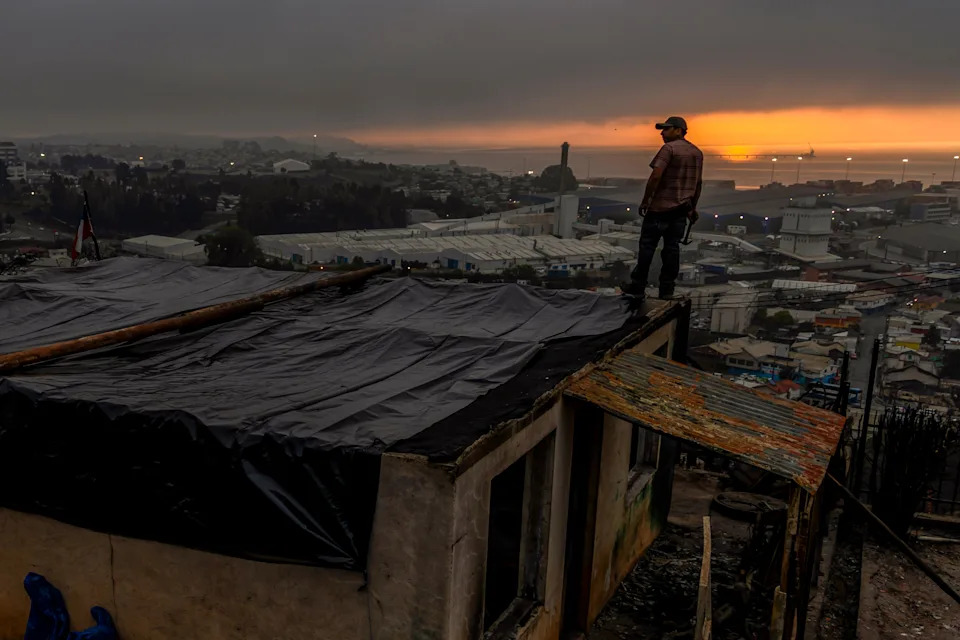
Jonathan Escalona stands over his house damaged by wildfires in Lirquen, Chile, Tuesday, Jan. 20, 2026. (AP Photo/Javier Torres)(ASSOCIATED PRESS)
The report, which has not yet been peer-reviewed, combines observational records and climate-model simulations to compare present conditions with a counterfactual climate without the added warming from human greenhouse gas emissions. The authors caution that as societies continue burning fossil fuels, the elevated risk of extreme fire weather will grow.
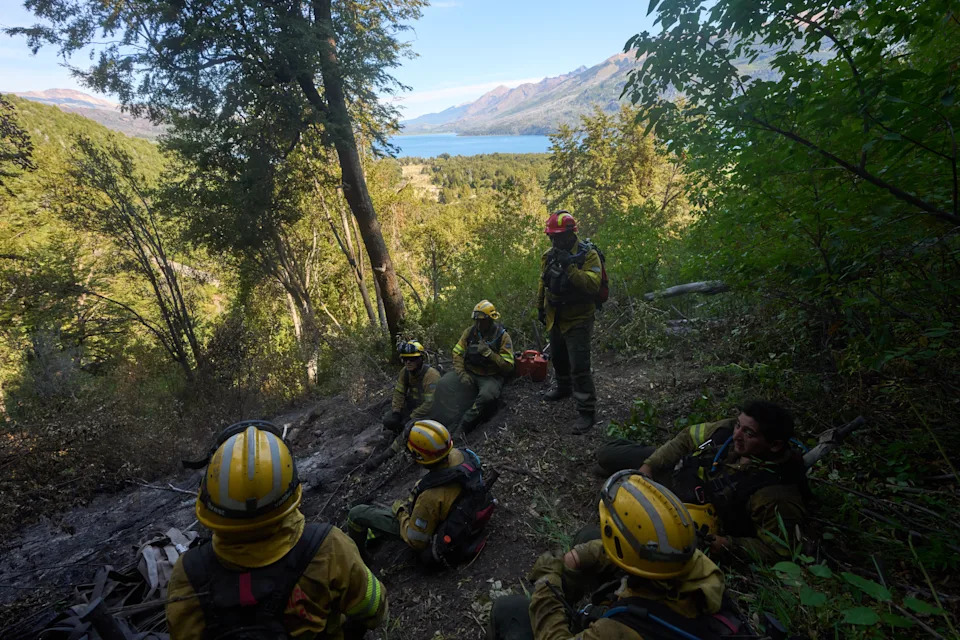
Firefighters battle wildfires in Los Alerces National Park, Argentina, Saturday, Jan. 31, 2026. (AP Photo/Victor R. Caivano)(ASSOCIATED PRESS)
Overall, we are confident that human-caused warming is the main driver of this increased fire risk, and these trends are expected to continue while fossil fuel emissions persist,
— Clair Barnes, World Weather Attribution
The Chilean blazes that tore through Biobío and Ñuble regions in mid-January killed 23 people, destroyed more than 1,000 houses and other structures, and forced tens of thousands to flee. In Argentina, lightning-ignited fires in Patagonia prompted mass evacuations of residents and tourists and burned over 45,000 hectares (about 174 square miles) of native forest, including large tracts of Los Alerces National Park, a UNESCO World Heritage site that contains trees estimated to be up to 2,600 years old.
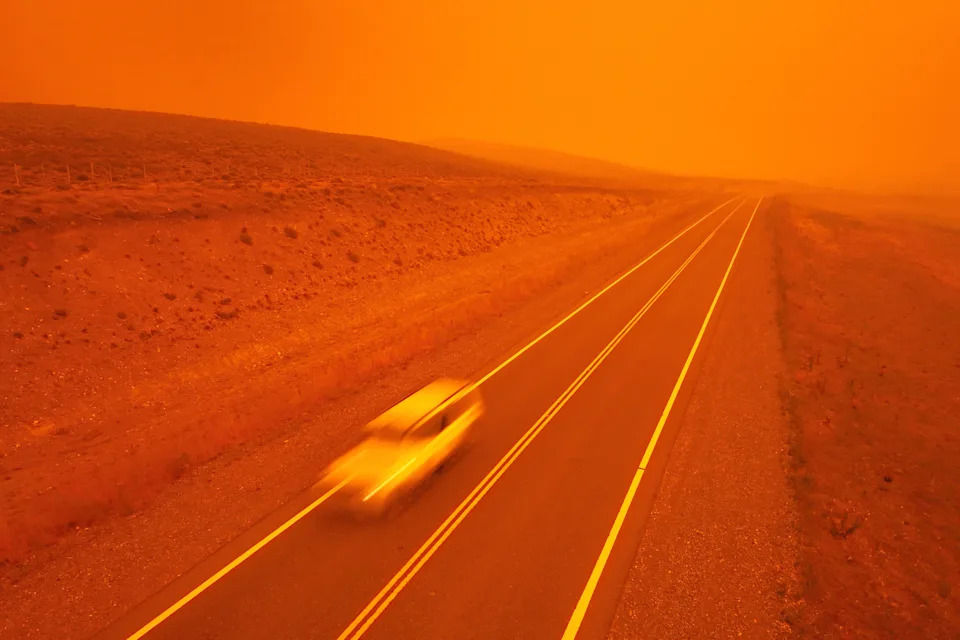
A car speeds along a road as smoke from wildfires turns the sky red near Cholila, Argentina, Sunday, Feb. 1, 2026. (AP Photo/Victor R. Caivano)(ASSOCIATED PRESS)
Why The Fires Were So Severe
The study links the severe fires to multiple interacting factors: record or near-record heat and prolonged drought, unusually low seasonal rainfall, and widespread fuel availability. The researchers estimated November–January seasonal rainfall was around 25% lower in parts of Chile and about 20% lower in Argentine Patagonia than it would have been without at least a 1.3°C rise in global average temperature since preindustrial times. Combined with high temperatures, this produced very dry soils and highly stressed vegetation that burned readily.
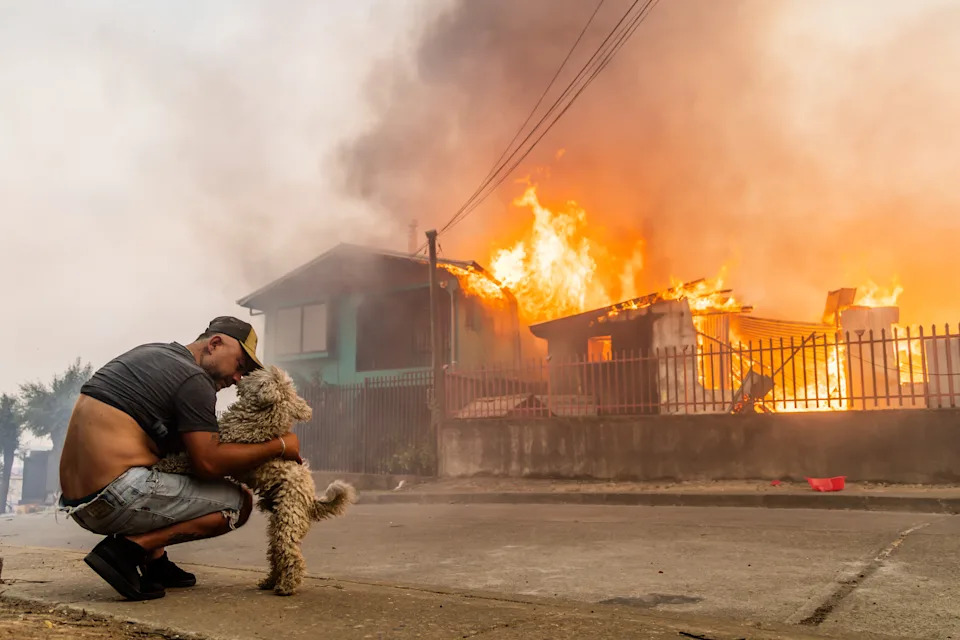
FILE - Manuel Lagos pets his dog as the family home is engulfed by an encroaching wildfire in Lirquen, Chile, Jan. 18, 2026. (AP Photo/Javier Torres, File)(ASSOCIATED PRESS)
Land-use changes also worsened fire behavior. Extensive single-species plantations—especially flammable pine stands—have replaced more fire-resistant native ecosystems in parts of the region, providing continuous fuel that allows fires to spread faster and burn more intensely.
This combination of drier conditions and higher-than-average temperatures left vegetation and soils exceptionally dry, so once the fires began there was sufficient fuel for them to persist and expand,
— Juan Antonio Rivera, study co-author
Policy And Response
Government responses have varied. Chile has increased its wildfire budget by about 110% over the past four years and invested in better forecasting and equipment. Researchers and emergency personnel say austerity measures in Argentina have reduced firefighting capacity in some areas, with reported cuts to budgets, planning, and park regulation enforcement that may have hampered response efforts.
Argentine President Javier Milei has questioned the strength of links between human activity and climate change; his office did not immediately respond to a request for comment. Researchers warn that insufficient preparedness combined with a warming climate will increase the severity and frequency of similar events in the coming years.
Note: The World Weather Attribution report is an important rapid-assessment tool that uses accepted techniques, but its findings are pending formal peer review.
Help us improve.