Copernicus reports that January 2026 was the fifth-warmest January on record, with a global average 1.47°C above preindustrial levels. While much of the Arctic and western North America were warmer than normal, Europe had its coldest January since 2010 at -2.34°C. A major U.S. winter storm from New Mexico to Maine was linked to more than 100 deaths, underscoring stark regional contrasts amid a continuing human-driven warming trend.
Copernicus: January 2026 Ranked Fifth-Warmest Globally Despite Northern Hemisphere Cold Snap
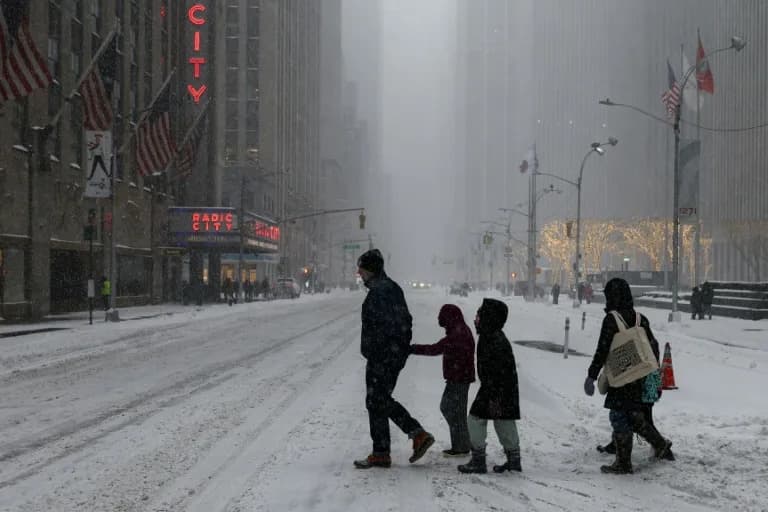
The United States was hit by a monster winter storm in January that dumped snow and crippling ice from New Mexico to Maine (CHARLY TRIBALLEAU)(CHARLY TRIBALLEAU/AFP/AFP)
The planet recorded its fifth-warmest January on record, even as a late-month cold snap brought severe winter weather to parts of the Northern Hemisphere, the European Union's Copernicus Climate Change Service reported on Tuesday.
Global and Regional Highlights
Copernicus calculated the global average temperature for January 2026 at 1.47°C above preindustrial levels, with monthly averages above normal across large areas of the globe — notably much of the Arctic and western North America. These regional warm anomalies helped lift the global ranking despite localized cold outbreaks.
In contrast, Europe experienced its coldest January since 2010, with an average temperature of -2.34°C, as a polar jet stream pushed icy air into both Europe and North America. The United States was battered by a powerful winter storm that dumped heavy snow and crippling ice from New Mexico to Maine; the event has been linked to more than 100 deaths.
"January 2026 delivered a stark reminder that the climate system can sometimes simultaneously deliver very cold weather in one region, and extreme heat in another,"
Samantha Burgess, strategic lead for climate at the European Centre for Medium-Range Weather Forecasts (ECMWF).
Long-Term Trend
Copernicus emphasized that these short-term regional contrasts sit against an ongoing, human-driven warming trend. Recent annual rankings underline that trend: 2024 was the warmest year on record, 2023 the second-warmest, and 2025 is now the third-warmest year on record.
While weather can produce severe cold in specific regions, the broader climate signal remains one of sustained warming driven by greenhouse gas emissions, the agency said.
Help us improve.