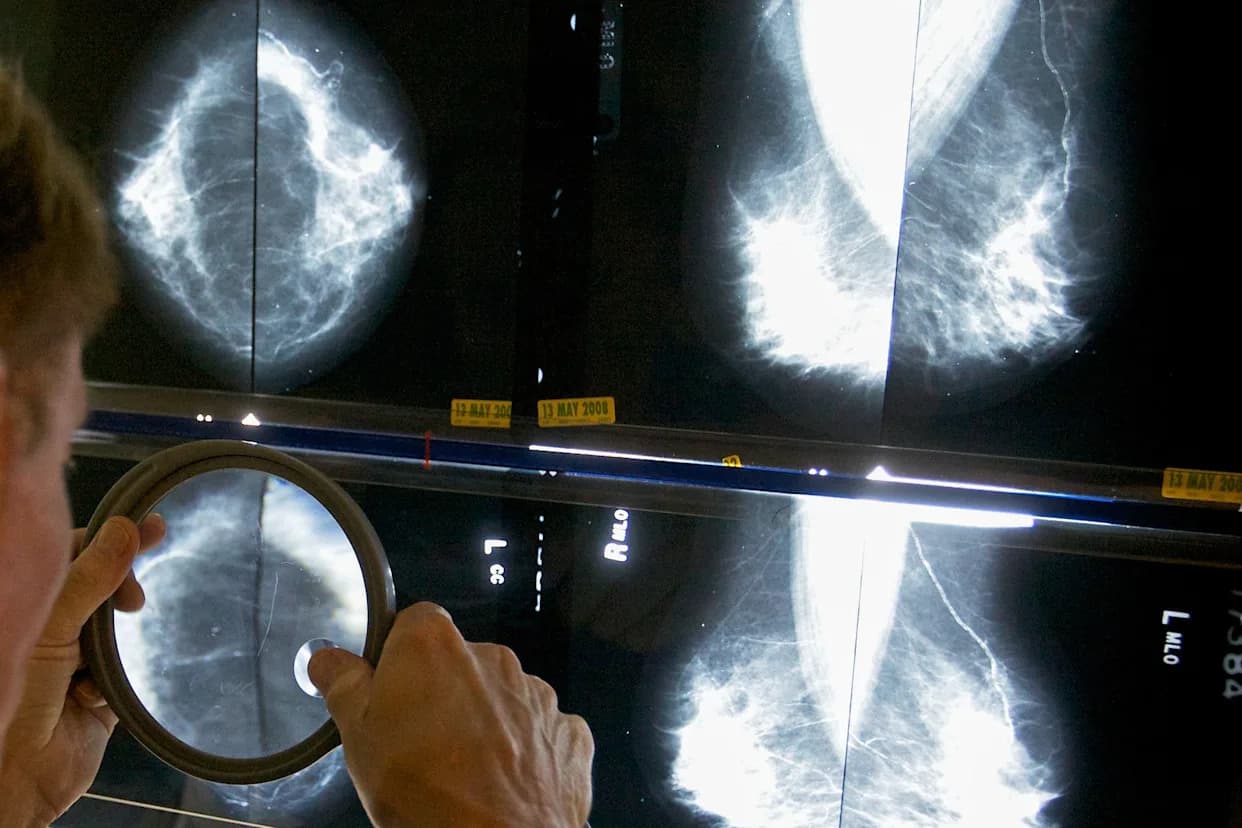
Study Overview: Analysis of about 1.6 million women aged 40–64 diagnosed with breast cancer from 2006–2021 found lower overall mortality in states that expanded Medicaid under the ACA. Hispanic women experienced the largest relative reduction in risk (19% lower mortality), while women with metastatic disease had the largest absolute declines in deaths. Gains were smaller for non-Hispanic Black women and residents of low-income neighborhoods, and higher-income areas and patients receiving immunotherapy had better survival—findings consistent with expanded coverage improving access to life‑extending care. The authors warn that proposed federal funding cuts could threaten these benefits.
Medicaid Expansion Tied To Better Breast Cancer Survival, Large Study Shows

A major multi-institution study has found that women diagnosed with breast cancer in U.S. states that expanded Medicaid eligibility under the Affordable Care Act had lower overall mortality than those in states that did not expand coverage. The analysis — published in JAMA Network Open — suggests that state policy choices about Medicaid can meaningfully affect cancer outcomes.
Study Details
Researchers from Howard University, the University of Alabama, Henry Ford Hospital and other institutions analyzed registry and outcome data for about 1.6 million women aged 40–64 diagnosed with breast cancer from 2006 through 2021. They compared outcomes for patients living in states that adopted Medicaid expansion beginning in 2014 with patients in states that did not.
Key Findings
Across the full cohort, living in a Medicaid expansion state was associated with lower overall mortality, a benefit that persisted regardless of cancer stage, race or ethnicity, and neighborhood income. Notable results included:
- Women with metastatic disease (cancer that had spread to other organs) experienced the largest absolute declines in death rates in expansion states.
- Hispanic women saw the largest relative improvement: a 19% lower risk of death if they lived in an expansion state.
- Non-Hispanic Black women and residents of low-income neighborhoods experienced smaller but measurable gains; the smallest difference was observed among white women.
- Patients living in the highest-income neighborhoods and those who received immunotherapy had lower mortality, consistent with expanded coverage improving access to advanced treatments.
Why The Benefits Differ
Dr. Oluwasegun Akinyemi, director of the Clive O. Callender Outcomes Research Center at Howard University College of Medicine and a study coauthor, noted that the large gains among Hispanic women may reflect higher rates of previously being uninsured in that population. He also pointed out that Black women benefited less overall in part because a disproportionate share live in Southern states that have not expanded Medicaid.
The study highlights several states that remained nonexpansion at the time of analysis, including major Southern holdouts: Alabama, Florida, Georgia, Mississippi, South Carolina, Tennessee, and Texas. Three additional nonexpansion states identified were Kansas, Wisconsin, and Wyoming.
Policy Context and Risk
The authors caution that federal policy changes could threaten coverage gains. A recent federal budget and spending package has been projected by the Center on Budget and Policy Priorities to reduce federal Medicaid funding by more than $900 billion over the next decade — a change that, according to the center's estimates, could put coverage for roughly 15 million people at risk and potentially jeopardize the improvements documented in this study.
Bottom Line
The analysis of 1.6 million patients indicates that Medicaid expansion under the ACA is associated with lower breast cancer mortality across stages and populations, with the largest relative benefit seen in Hispanic women and the largest absolute benefit in those with advanced disease. The findings underscore how state coverage decisions and federal funding policies can influence real-world cancer outcomes.
Contact: Stateline reporter Nada Hassanein at nhassanein@stateline.org.
Help us improve.