Scientists analysed volatile organic compounds (VOCs) from residues in four canopic jars linked to Lady Senetnay (c. 1450 BC) and recreated plausible fragrances used in ancient Egyptian mummification. An interdisciplinary team developed multiple ~20‑ingredient formulations, substituting safe modern equivalents where necessary. Museums now offer scented cards in Hanover and a fixed scent station in Aarhus to help visitors experience embalming practices in a multisensory way. The study appears in Frontiers in Environmental Archaeology and highlights the value of combining biomolecular data with olfactory expertise.
Scientists Recreate 3,500‑Year‑Old Egyptian Fragrances — Museums Add Scented Displays
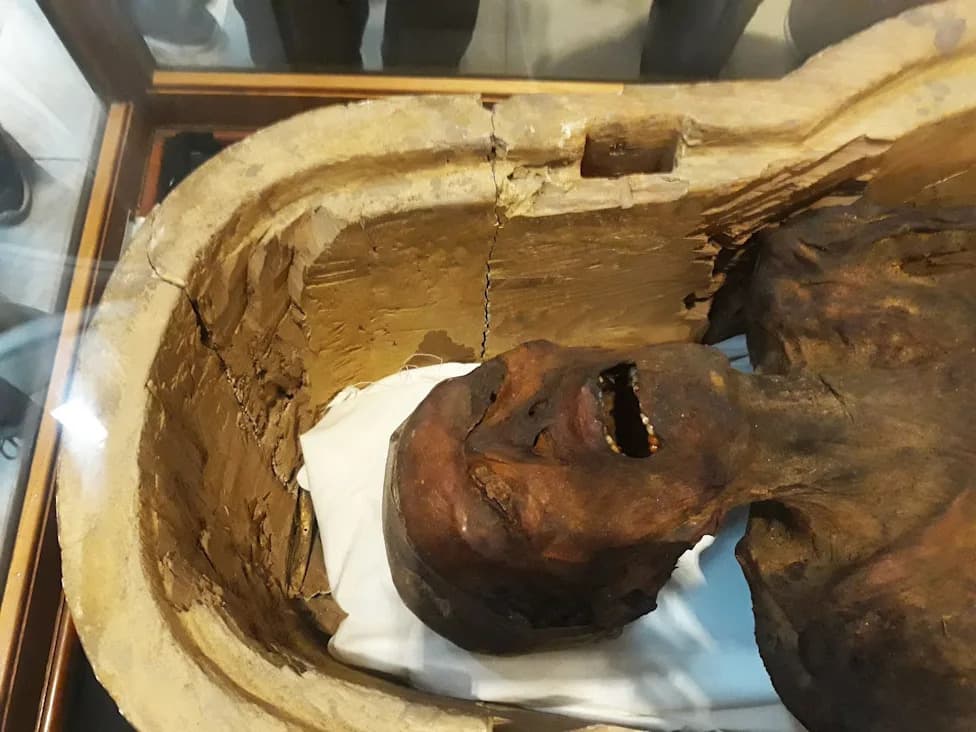
Archaeologists bring 3,500-year-old fragrances used by ancient Egyptians back to life
Researchers have recreated perfumes used in ancient Egyptian mummification by analysing chemical traces and translating them into safe, evocative scents for public display. The work combines advanced biomolecular analysis with artisanal perfumery to bring a new sensory dimension to museum interpretation.
How the fragrances were recovered
Archaeologists and archaeochemists used improved methods to analyse volatile organic compounds (VOCs) preserved in archaeological residues. The key material came from four canopic jars associated with Lady Senetnay, a high‑ranking noblewoman who lived around 1450 BC. Scientists at the Max Planck Institute and collaborators identified molecular signatures that point to ingredients and processing methods used in ancient embalming balms.
From molecules to smell
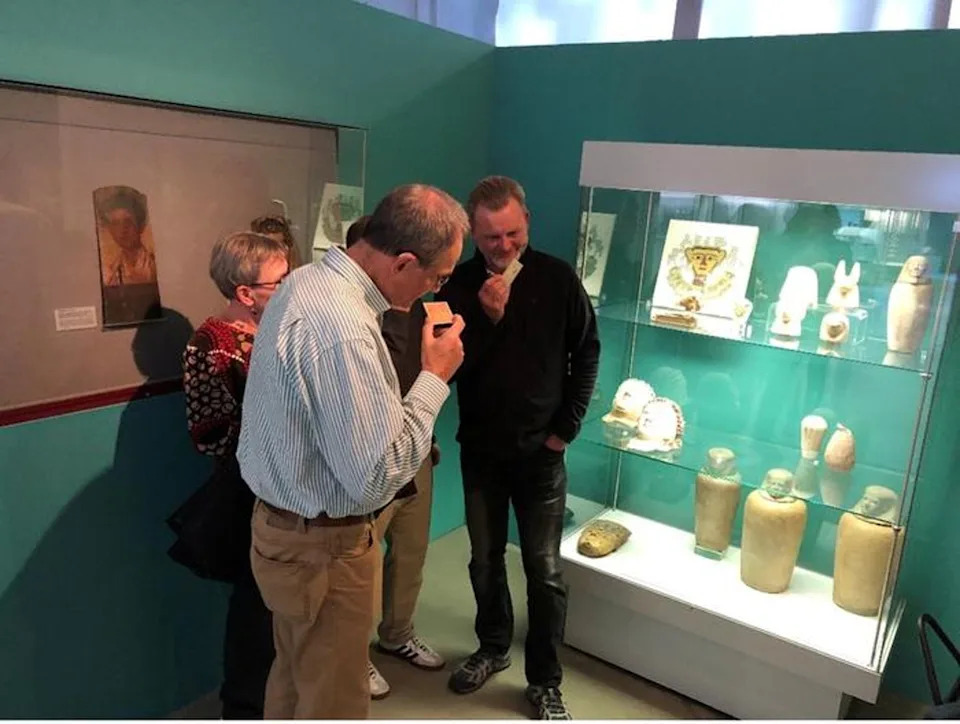
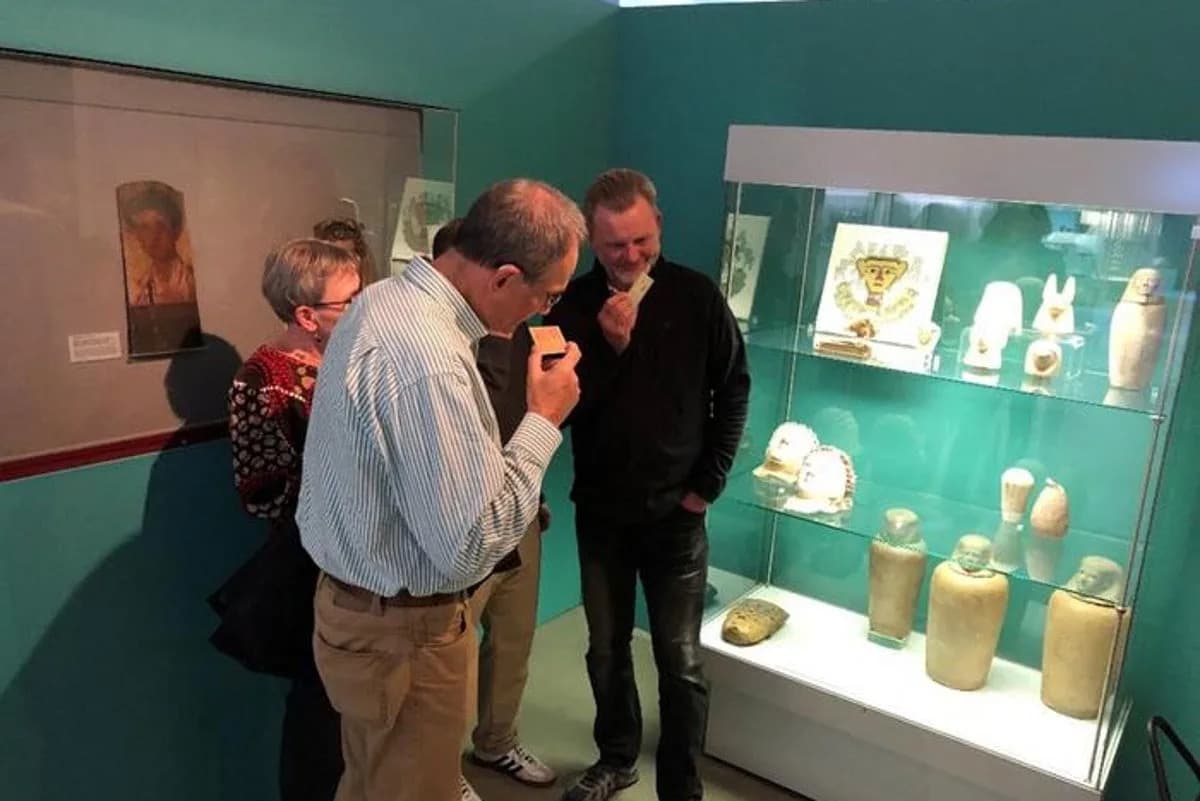
Visitors sniff a Scent of the Afterlife card at the Museum August Kestner in Hannover, Germany (Ehrich SC, Calvez C, Loeben CE, Dubiel U, Terp Laursen S and Huber B)
Turning chemical data into a plausible smell required interdisciplinary collaboration. The team — including a perfumer, an archaeochemist, an archaeologist and an olfactory heritage consultant — produced several formulations, each containing about 20 ingredients. Because many ancient raw materials are unavailable or unsafe today, the group selected modern olfactory equivalents that align with the biomolecular evidence while remaining suitable for public use.
“Biomolecular data provide essential clues but the perfumer must translate chemical information into a complete and coherent olfactory experience that evokes the complexity of the original material rather than just its individual components,” said archaeochemist Barbara Huber of the University of Tübingen.
Museum applications: scented cards and fixed scent stations
The study, published in Frontiers in Environmental Archaeology, outlines two visitor‑facing concepts: scented cards and fixed scent stations. Scented cards — paper or other diffusive objects prepared with the recreated aromatic mixtures — are handed to visitors on The Scent of the Afterlife tours at the Museum August Kestner in Hanover, Germany. A fixed scent station, installed at the Ancient Egypt – Obsessed With Life exhibition at the Moesgaard Museum in Aarhus, Denmark, dispenses a controlled aroma for visitors to experience in situ.
Why scent matters
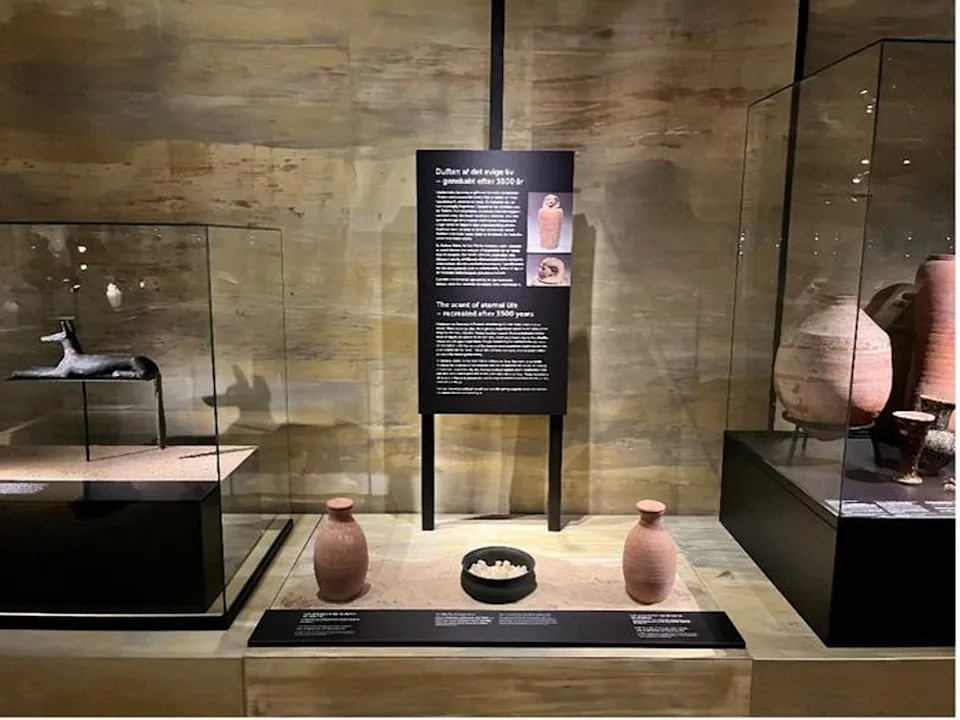
Museum display for the Scent of the Afterlife at the Moesgaard Museum in Denmark (Ehrich SC, Calvez C, Loeben CE, Dubiel U, Terp Laursen S and Huber B)
Museum curators report that smell adds emotional and contextual depth that text and images alone cannot provide. Christian E. Loeben and Ulrike Dubiel emphasize that scent helps move public interpretation beyond sensationalist tropes toward a clearer understanding of ancient motivations and techniques. Curator Steffen Terp Laursen noted that the scent station changed how visitors perceived embalming — it made the practice more immediate and human.
Implications and future directions
Beyond compelling visitor experiences, reconstructing ancient fragrances offers insights into historical perfumery, medicine, trade networks and ritual practice. The authors stress the importance of interdisciplinary work and transparent documentation so that scent reconstructions remain scientifically grounded and culturally sensitive. As these methods spread, multisensory exhibits could become a standard tool for engaging audiences with the material past.
Credits
The research involved scientists at the Max Planck Institute, the University of Tübingen and partner museums; the published study appears in Frontiers in Environmental Archaeology. Featured collaborators include Barbara Huber and Sofia Collette Ehrich among others; exhibitions implementing the results include Museum August Kestner (Hanover) and Moesgaard Museum (Aarhus).
Help us improve.