The study found that adding nitrogen fertilizer nearly doubled tree biomass (95% increase) in former pasture plots less than a year old and increased growth by 48% in 10-year-old recovering forests. A four-year field experiment across the Panama Canal watershed tested nitrogen, phosphorus and combined treatments and found no response in older forests or to phosphorus alone. Authors recommend prioritizing nitrogen-fixing tree species in restoration projects rather than widescale fertilization to speed biomass accumulation and carbon capture.
Nitrogen Boosts Young Tropical Forest Recovery — Study Shows Nearly Double Growth In Former Pastures

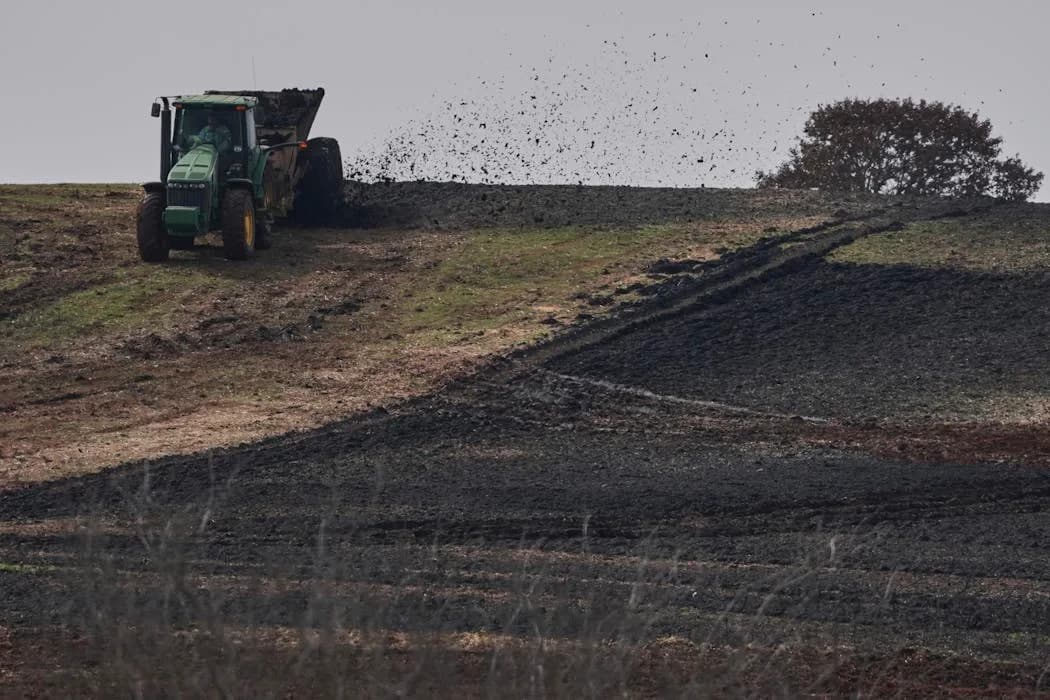
Many tropical forests are regenerating on land where forests have previously been chopped down for cattle grazing. Practices like these cause nitrogen to be lost from the soil, which can slow the regrowth of forests. . | Credit: Sarah Batterman / Cary Institute of Ecosystem Studies
An added supply of nitrogen can dramatically accelerate early regrowth in tropical forests, potentially increasing carbon uptake for years, a new field experiment suggests.
What the Study Did
Researchers from the Smithsonian Tropical Research Institute (STRI) and partners ran a four-year field experiment across the Panama Canal watershed to test how nutrient availability affects forest recovery. They applied three nutrient treatments — nitrogen (N), phosphorus (P) and a combined N+P — to plots representing a gradient of forest ages: lands that had been cattle pasture for less than a year, forests recovering for 10 and 30 years, and long-established stands (~600 years).
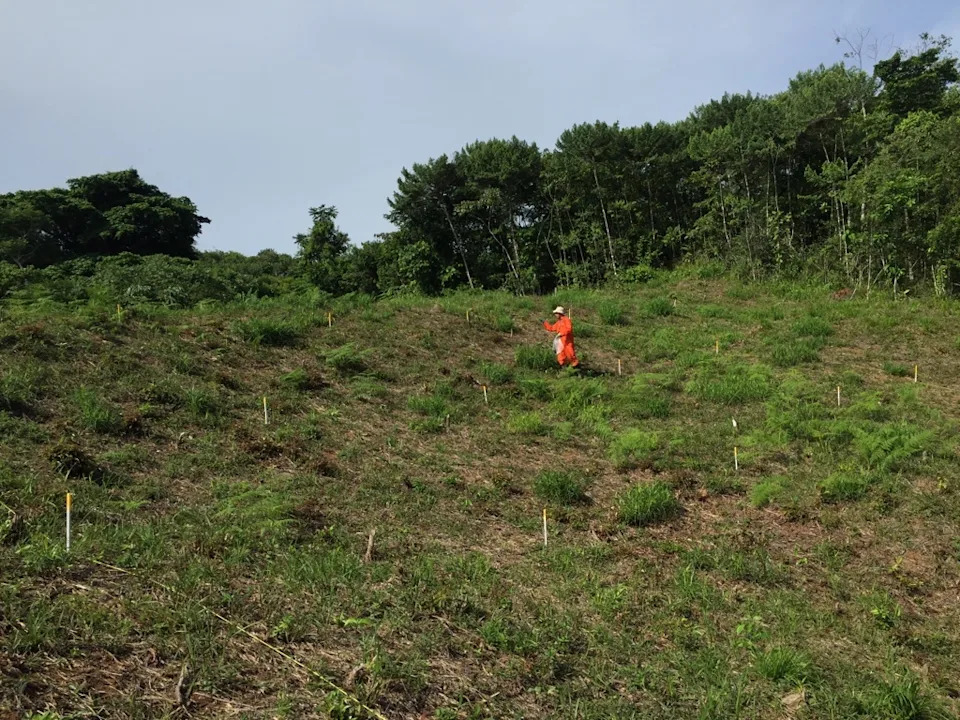
A team member spreads fertilizer on a recently abandoned pasture plot. White tubes mark locations in the plot so researchers can locate trees as they grow back. After four years, the trees in this plot were taller than the researchers, and the forest stored twice as much carbon when they had sufficient nitrogen compared to when they did not. | Credit: Sarah Batterman / Cary Institute of Ecosystem Studies
Methods
Field teams fertilized plots during three months each year and measured tree trunk diameters and woody-liana growth at regular intervals. Trunk-diameter measurements were converted to aboveground biomass estimates to quantify growth and carbon storage changes caused by the nutrient treatments.
Key Findings
Nitrogen Strongly Enhances Early Regrowth: Adding nitrogen nearly doubled aboveground tree biomass (a 95% increase) in plots that had been pasture for less than a year and increased growth by about 48% in 10-year-old recovering forests compared with unfertilized controls.
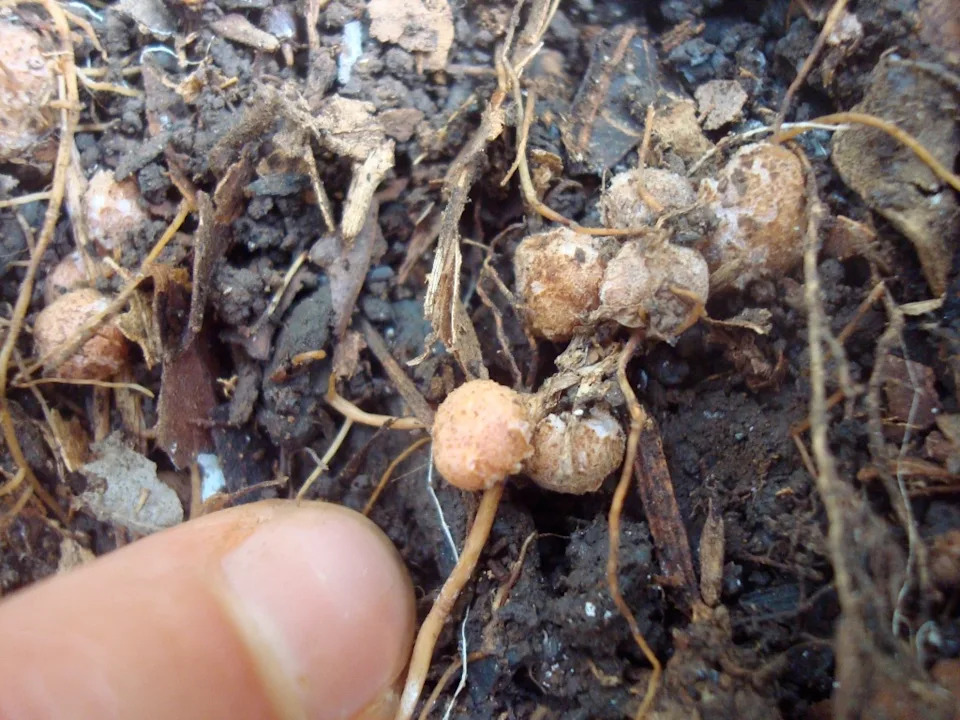
A root nodule on a legume tree where symbiotic bacteria fix nitrogen from the atmosphere into a form of nitrogen that the trees can use to grow. Legume trees are abundant in tropical forests and can be used in reforestation efforts to naturally enrich the soil with nitrogen that speeds up carbon sequestration and storage. | Credit: Sarah Batterman / Cary Institute of Ecosystem Studies
No Benefit In Older Forests: Forests recovering for 30 years and long-established stands (~600 years) showed no measurable response to added nitrogen. Plots treated with phosphorus alone showed no significant growth gains at any age class.
Implications For Restoration
Soil nutrients such as nitrogen and phosphorus are depleted when tropical forests are cleared, and that depletion can persist for decades, slowing natural regrowth even when trees recolonize. Rather than recommending large-scale fertilization — which would be impractical and ecologically risky — the authors suggest prioritizing tree species that naturally fix atmospheric nitrogen to rebuild soil fertility and speed biomass accumulation in young stands.
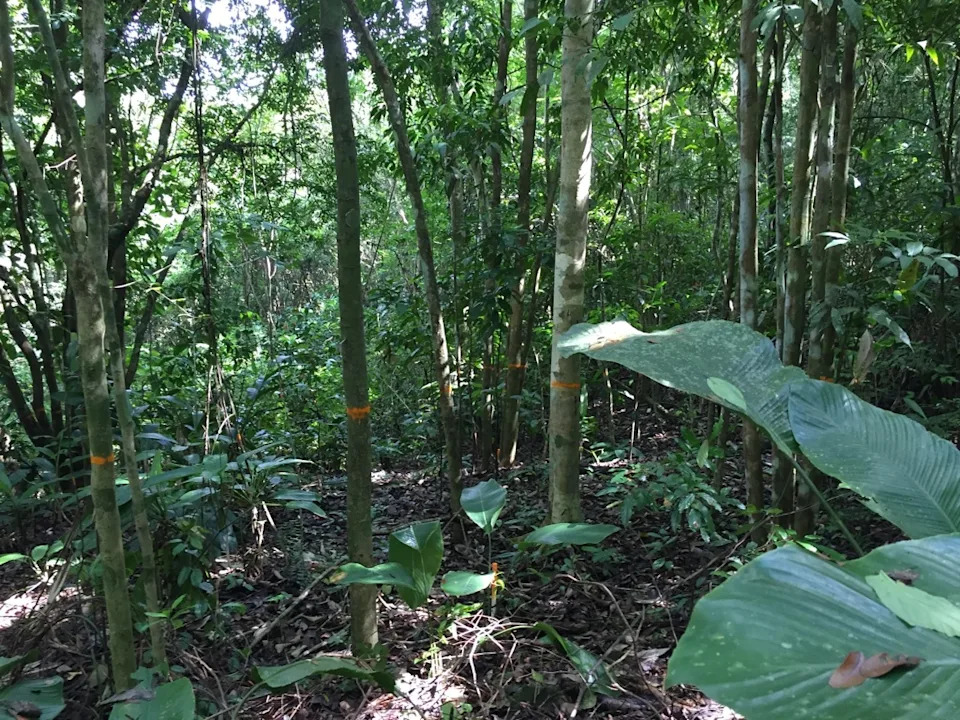
A tropical forest that is about thirty years old following deforestation and agricultural use. By thirty years, the forests show no evidence of nutrient limitation on carbon accumulation. Orange paint on tree trunks allows researchers to find and measure the same trees every year to track their growth and carbon storage. | Credit: Sarah Batterman / Cary Institute of Ecosystem Studies
"We all rely on tropical forests to stabilize our climate," said study co-author Sarah Batterman (University of Leeds). "One of the key uncertainties is the role of nutrients in supporting more carbon sequestration and recovery from disturbance."
Co-author Jefferson Hall (Agua Salud project, STRI) added that planting nitrogen-fixing species offers a natural, scalable way to enhance soil nitrogen without widespread fertilization.
Why It Matters
Regenerating tropical forests are a major global carbon sink. Independent scientists noted these experimental results confirm long-held observations that nutrient depletion constrains early forest recovery and that restoring soil fertility — for example, by encouraging nitrogen-fixing trees — can accelerate carbon capture in recovering landscapes.
Study published Jan. 13 in Nature Communications. Fieldwork and findings reflect plots in the Panama Canal watershed and apply to early succession stages of tropical forest recovery.
Help us improve.