Key Point: Russian officials are invoking an alleged "Anchorage Formula"—an apparent U.S.–Russia understanding from the August Anchorage summit—as leverage in Abu Dhabi peace talks, but there is no public record of any such agreement. Analysts say Moscow uses the ambiguity to claim reasonableness while portraying Ukraine as the obstacle to peace. The move complements other contested Kremlin claims and highlights how high-profile U.S.–Russia engagement can be exploited for propaganda.
Beware the 'Anchorage Formula': How Russia Is Using a Phantom U.S.–Russia Agreement to Shape the Peace Narrative
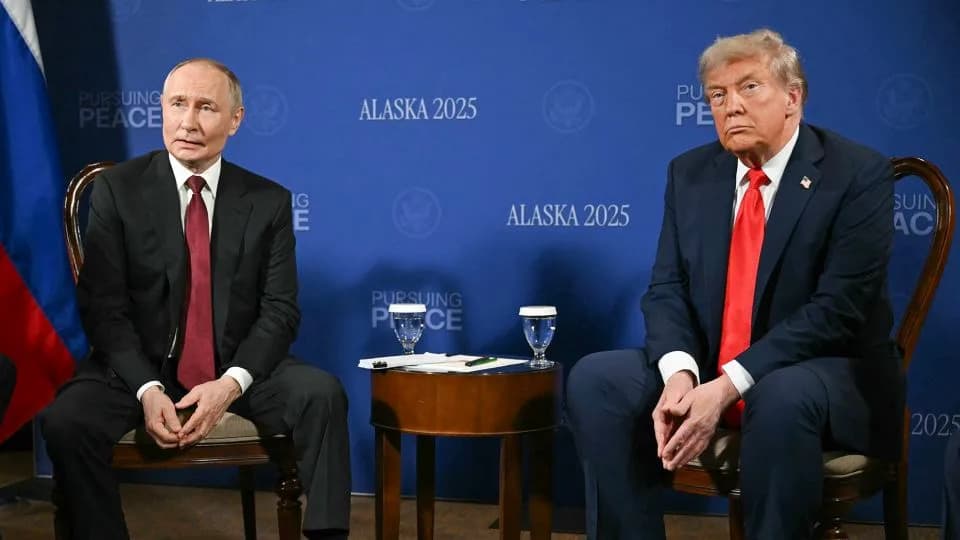
US President Donald Trump, right, and Russian President Vladimir Putin meet during a US-Russia summit on Ukraine at Joint Base Elmendorf-Richardson in Anchorage, Alaska, on August 15, 2025. - Andrew Caballero-Reynolds/AFP/Getty Images
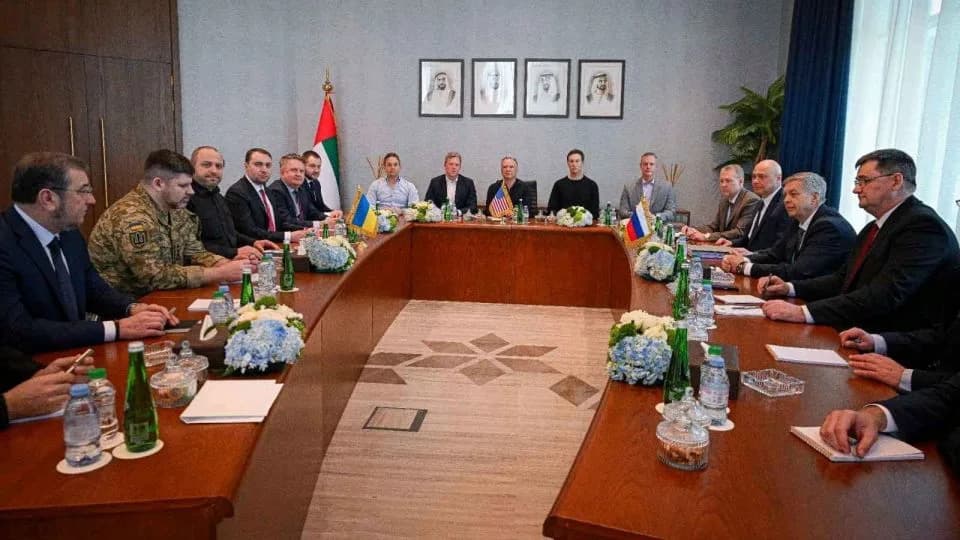
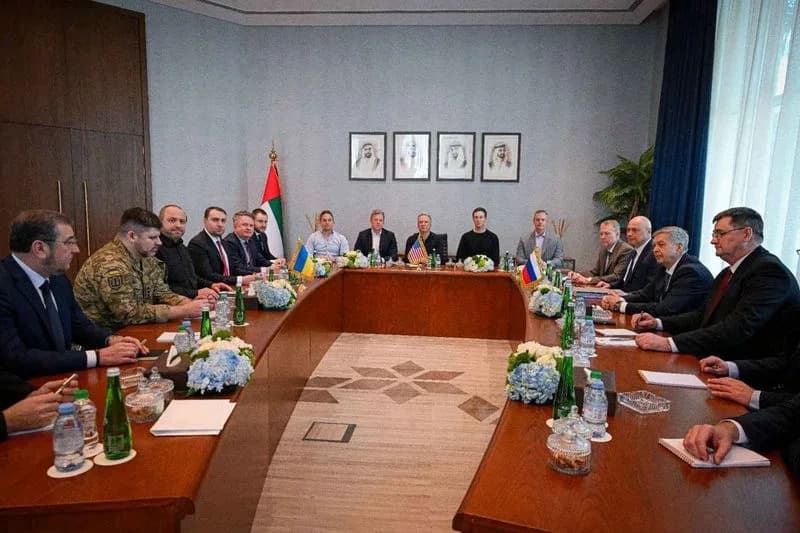
Russian officials have begun invoking a new phrase — the "Anchorage Formula" — during talks in Abu Dhabi, suggesting it represents a U.S.–Russia understanding reached at the August Anchorage summit. Kremlin spokespeople are using the term to bolster Moscow's negotiating posture and to portray itself as willing to make concessions while blaming Ukraine for blocking a settlement.
What Moscow Is Claiming
Kremlin spokesman Dmitry Peskov said the "territorial question, which is part of the 'Anchorage Formula,' of course carries particular significance for the Russian side," and emphasized that "our negotiators continue to defend our position." Deputy Foreign Minister Sergey Ryabkov also referenced the Alaska meeting, saying Moscow sought a deal "that fully corresponds to the fundamental understandings reached by the presidents of Russia and the US during their meeting in Anchorage." Foreign Minister Sergey Lavrov has similarly warned that any amended peace plan must reflect the "spirit and letter of Anchorage."
But There Was No Agreed Formula
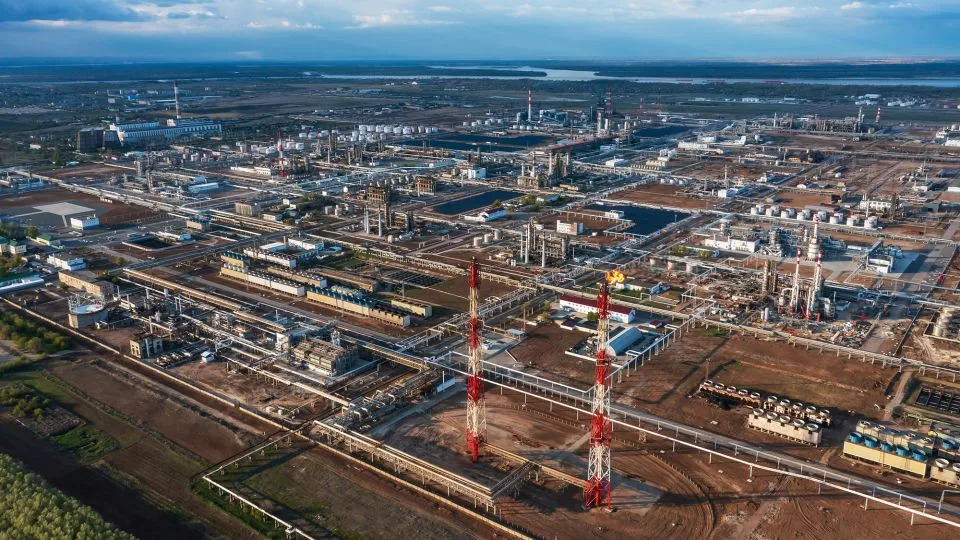
A Lukoil oil refinery in Volgograd, Russia, on April 22, 2022. - Reuters
There is no public record that the Anchorage summit produced joint, binding understandings or any formally agreed "Anchorage Formula." President Donald Trump himself said after the talks that "there's no deal until there's a deal." Analysts note that invoking a non-existent framework allows Moscow to claim it is negotiating in good faith while shifting responsibility for stalled talks onto Kyiv.
"By exploiting uncertainty about the outcome of the August 2025 U.S.–Russia Alaska summit, Russia can portray itself as cooperative and attempt to obscure its own actions that impede the peace process," wrote analysts at the Institute for the Study of War.
Evidence, Disinformation and Diplomatic Signaling
Moscow has also circulated other contested claims as talks progress. Less than a month ago it alleged—without evidence—that Ukraine attacked one of President Putin's residences; the CIA later assessed that the attack had not occurred. Such claims feed a wider information campaign that analysts say is meant to shape domestic and international perceptions.
When pressed by reporters about whether the "Anchorage Formula" implies Russian control of the entire Donbas, Peskov declined to provide details, saying it would be "impractical" to discuss precise provisions publicly.
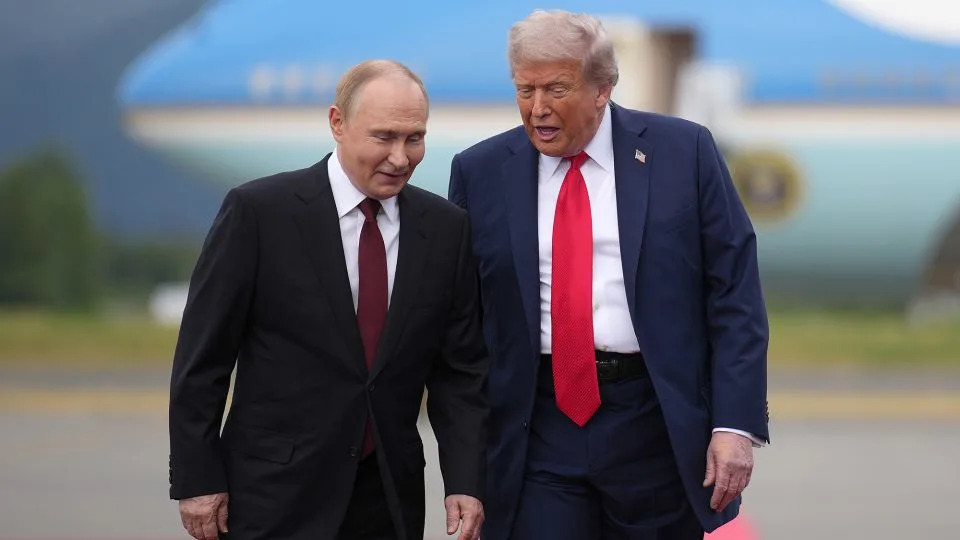
US President Donald Trump walks with Russian President Vladimir Putin as they arrive at Joint Base Elmendorf-Richardson on August 15, 2025 in Anchorage, Alaska. - Andrew Harnik/Getty Images
Private Flexibility vs. Public Maximalism
U.S. officials have suggested Moscow's private negotiating posture may be more flexible than its public statements. "They usually say their maximalist demands and then allow their private negotiating teams to work with flexibility," one White House official said. When asked directly whether an "Anchorage Formula" exists, White House spokesperson Anna Kelly replied: "You'll have to ask them."
Why This Matters
The invocation of Anchorage comes amid sustained battlefield and political pressures on Moscow. Analysts estimate Russian forces control roughly 20% of Ukrainian territory—up from the pre-2022 figure of about 7%—and the conflict has generated very heavy casualties and material costs for all sides. These facts, combined with the propaganda value of high-profile U.S.–Russia engagement, make the Anchorage narrative politically valuable for the Kremlin regardless of its factual basis.
Bottom Line
By referencing a supposed "Anchorage Formula," Moscow appears to be attempting to reframe negotiations in its favor: creating an impression of bilateral agreement that eases its domestic messaging and complicates Western and Ukrainian efforts to negotiate from a common factual baseline. Observers warn the tactic is part of a broader strategy of exploiting ambiguity and controlling the narrative.
Help us improve.