Common myths about earthquakes—from "earthquake weather" to the idea that small quakes always prevent larger ones—persist despite scientific evidence. Recent swarms around San Ramon produced more than 300 small quakes, but experts say these swarms historically have not led to major Bay Area earthquakes. Damage depends heavily on local soil and building vulnerability, and officials recommend practical preparedness such as "Drop, cover and hold on" and keeping several days of supplies.
What Californians Get Wrong About Earthquakes — Myths, Facts and How To Prepare

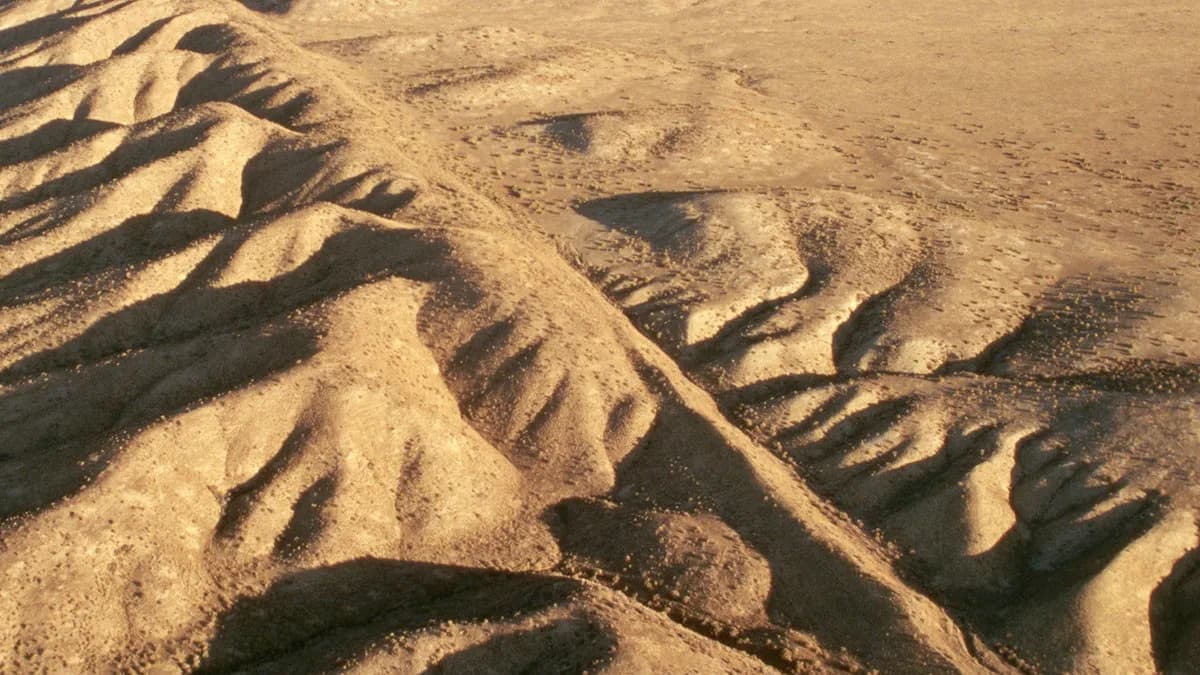
In an aerial view, the course of Wallace Creek is altered by the San Andreas Fault as part of it is on the Pacific and the other on the North American tectonic plates, which are slipping at a rate of 1.3 inches, or 34 millimeters, per year at Carrizo Plain National Monument on April 14, 2023, near Santa Margarita, Calif. (David McNew/Getty Images)
Superstitions about earthquakes — from the old idea of "earthquake weather" to the fear that California could fall into the ocean — resurface every time the ground starts to shake. While some of these beliefs are harmless jokes, others are persistent misconceptions that can shape how people respond to seismic activity.
Why Recent Swarms Don’t Mean a Major Quake Is Imminent
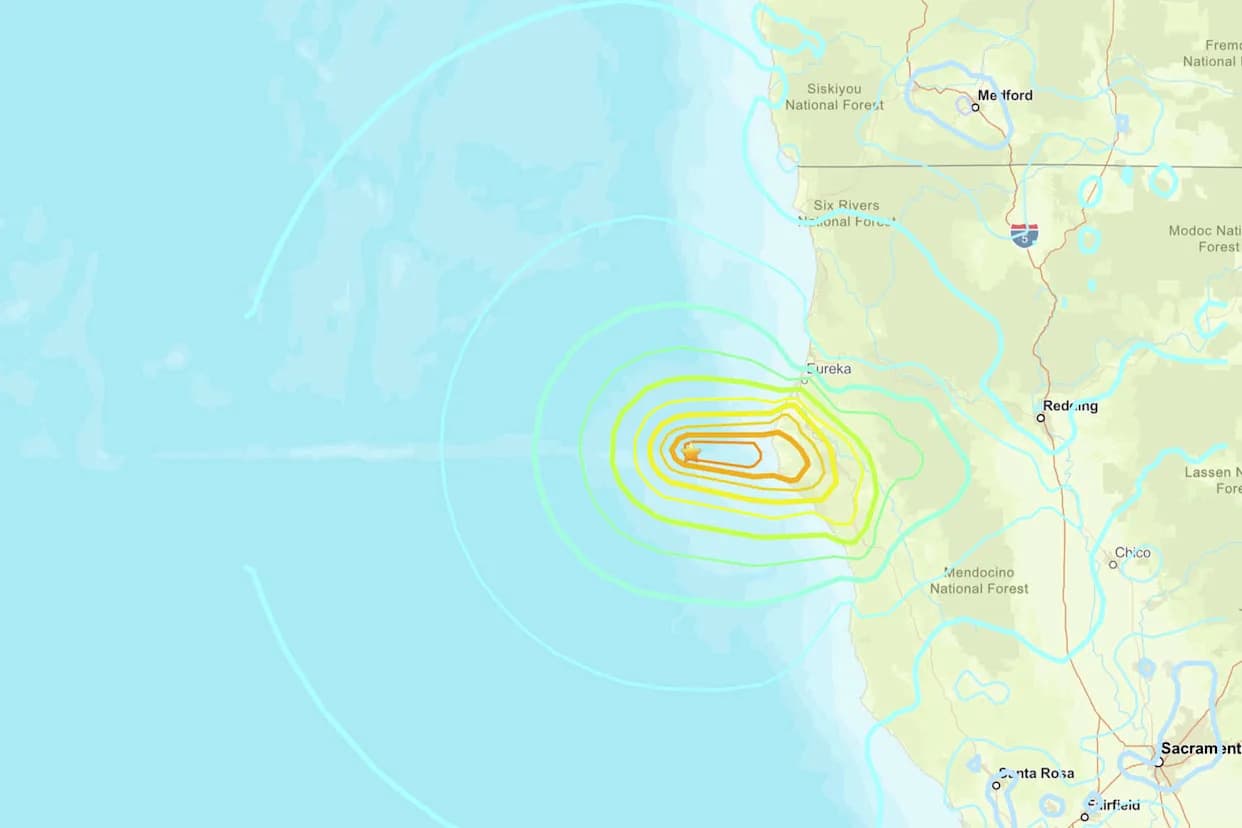
Since November, the San Ramon area has experienced more than 300 small earthquakes, some up to magnitude 4.0. These events have occurred on and near the Calaveras Fault and are part of a pattern of seismic swarms that the region has seen repeatedly. UC Berkeley seismologist Roland Burgmann and USGS research geophysicist Tim Clements note that at least eight swarms have occurred near San Ramon since the 1970s, and none of them were followed by a large, damaging quake.
While small earthquakes can sometimes precede larger ones in other regions — as in the Ridgecrest sequence in 2019 — that pattern has not been observed consistently in the Bay Area. Statistically, there is about a one-in-20 chance that a smaller quake will trigger a larger rupture, but an uptick in small events is not a reliable short-term predictor of a major temblor.
Why Small Quakes Don’t 'Release' Enough Energy
There is a common hope that many small quakes act like a safety valve, releasing stress and preventing a big quake. The reality is more complex: both small and large earthquakes release elastic strain, but California does not experience nearly enough small events to offset the energy that would be released in a major earthquake. For context, a magnitude 7 earthquake releases energy roughly equivalent to about 10,000 magnitude 3 quakes. The Bay Area records only about 50 earthquakes of magnitude 3 or greater per year, far fewer than would be needed to significantly relieve long-term strain.
Damage Depends On More Than Proximity To A Fault
Major damage often extends well beyond an earthquake’s epicenter. The 1906 San Francisco quake on the San Andreas Fault and the 1989 Loma Prieta quake (epicentered in the Santa Cruz Mountains) both caused severe damage in cities some distance from the rupture. Local ground conditions—soft soils, reclaimed land, and loose fill—can greatly amplify shaking; the Marina District in San Francisco experienced liquefaction in 1989, for example. In short, what a building sits on matters as much as how close it is to a fault.
Buildings, Infrastructure, And Everyday Hazards
Building codes have improved, but many houses built before 1980 remain vulnerable. Common weaknesses include wood-framed upper stories not bolted to foundations and soft-story designs (living space above garages). Even in standing buildings, unsecured furniture, glass, and heavy objects are major hazards and a frequent cause of injuries.
Earthquakes also threaten infrastructure: power, water, transportation and communications can be disrupted even if a structure remains intact. Officials urge residents to think beyond shaking—consider how you will cope if services are down.
Practical Advice: Prepare Now
Experts recommend a few straightforward steps to reduce risk and improve safety:
- Practice "Drop, Cover, and Hold On" during shaking: get under a sturdy table or desk, protect your head, and stay sheltered until shaking stops.
- Secure tall furniture, bookcases, and heavy appliances; bolt water heaters and other large items to studs or anchors.
- Prepare an emergency kit with at least three days of water, food, and basic supplies, and designate a family meetup spot in case you are separated.
- Know your home’s vulnerabilities—especially if it was built before 1980—and consider retrofit options for soft-story or unbolted foundations.
"Drop, cover and hold on," recommended Tim Clements of the USGS. He also advises households to have a plan and supplies ready in advance.
Researchers continue to study the San Ramon activity and other regional swarms to better understand their causes and implications. For now, science confirms that while small earthquakes are worth monitoring, they do not by themselves make a large quake inevitable or prevent one from occurring. Preparedness, improved building practices, and attention to local ground and structural conditions remain the most effective ways to reduce harm.
Reporting contributions by Anna FitzGerald Guth. For guidance on emergency kits and preparedness, see resources from the USGS and California Earthquake Authority.
Help us improve.