The article examines a growing crisis facing humanities programs at US universities, illustrated by a mock funeral protest at Montclair State and wider cutbacks in states and institutions nationwide. Causes include budget shortfalls, long-term disinvestment, partisan pressure, and reliance on consultant-driven, market-focused evaluations. Notable examples include Indiana’s mandate to cut ~400 programs, Portland State’s layoffs and subsequent partial reinstatements, and more than 9,000 higher-education job cuts last year. Advocates argue the civic and intellectual value of the humanities cannot be reduced to financial metrics.
‘Just Not Monetizable’: How US Universities Are Scaling Back the Humanities
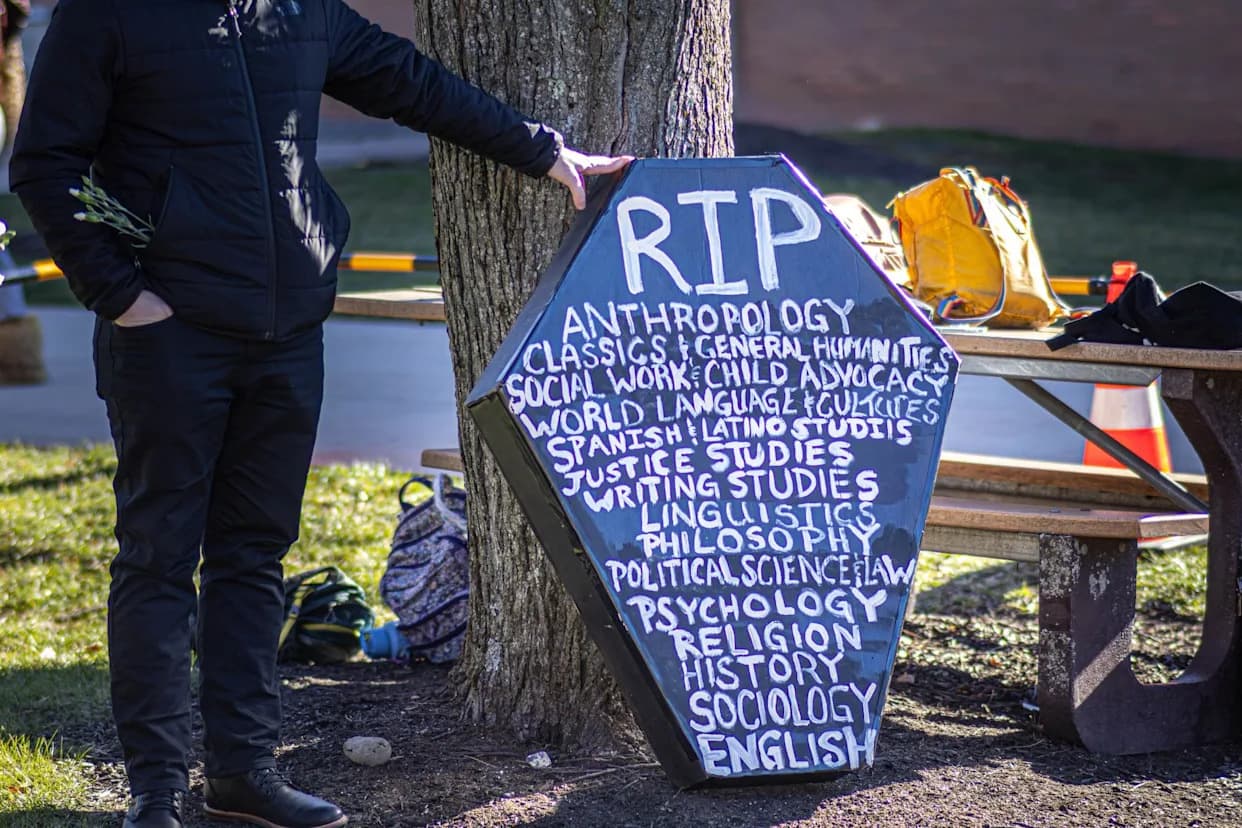
Montclair State University students hold a mock funeral.Photograph: David Bien-Aime(Photograph: David Bien-Aime)
Last month at Montclair State University in New Jersey, students staged a mock funeral outside the College of Humanities and Social Sciences, carrying bouquets and standing beside a gravestone etched with the names of the college’s 15 departments, including English, history and sociology.
"We are gathered here today, in front of the humble home of CHSS, Dickson Hall, to mourn the death of the social sciences and humanities at the hands of the MSU administration," read Miranda Kawiecki, a junior and protest organiser. "I coordinated this demonstration because I have dreams that cannot be monetized. I have a problem with our society that cannot be solved with an algorithm. I have words to write and say that cannot be generated artificially."
A National Pattern, Not An Isolated Event
The Montclair protest reflects a broader, intensifying trend across the United States: restructurings, consolidations and program cuts that disproportionately affect humanities and some social-science fields. State mandates, budget shortfalls, consultant-led reviews and partisan pressures have combined to put many programs at risk.
In Indiana, lawmakers required public universities to cut or consolidate roughly 400 academic programs — nearly 20% of the system’s degrees — with the bulk of reductions in humanities and social sciences. At the University of Texas at Austin and the University of North Carolina, officials have signaled or planned cuts that could impact ethnic, regional and gender studies. The University of Chicago paused graduate admissions for nearly all its humanities programs.
Money, Metrics And Mission
Universities cite enrollment declines and budget pressures. Administrations increasingly use corporate-style metrics and external consultants to evaluate programs on measures such as student demand, market alignment and financial contribution. Inside Higher Ed found more than 9,000 higher-education job cuts nationwide last year, including positions in the sciences.
Montclair State’s administration framed its reorganisation as a "strategic effort" to "maximize faculty impact, enhance student success, and ensure the vitality of every academic program," and officials said the plan would not require layoffs and would keep faculty in charge of curriculum. Critics say the process’s corporate language masks an erosion of departmental autonomy and a disregard for the humanities’ broader civic and intellectual mission.
Consultants, AI And "Program Vitality" Reviews
Portland State University cited an $18 million shortfall when it laid off 17 non-tenure-track faculty (15 from the College of Liberal Arts). The university subsequently contracted Gray Decision Intelligence for a program-review process called "Pivot," which deploys data analytics and AI-generated reports to inform which programs might be "sunset." After union challenges and an arbitrator’s ruling, Portland State reinstated 10 of the laid-off instructors.
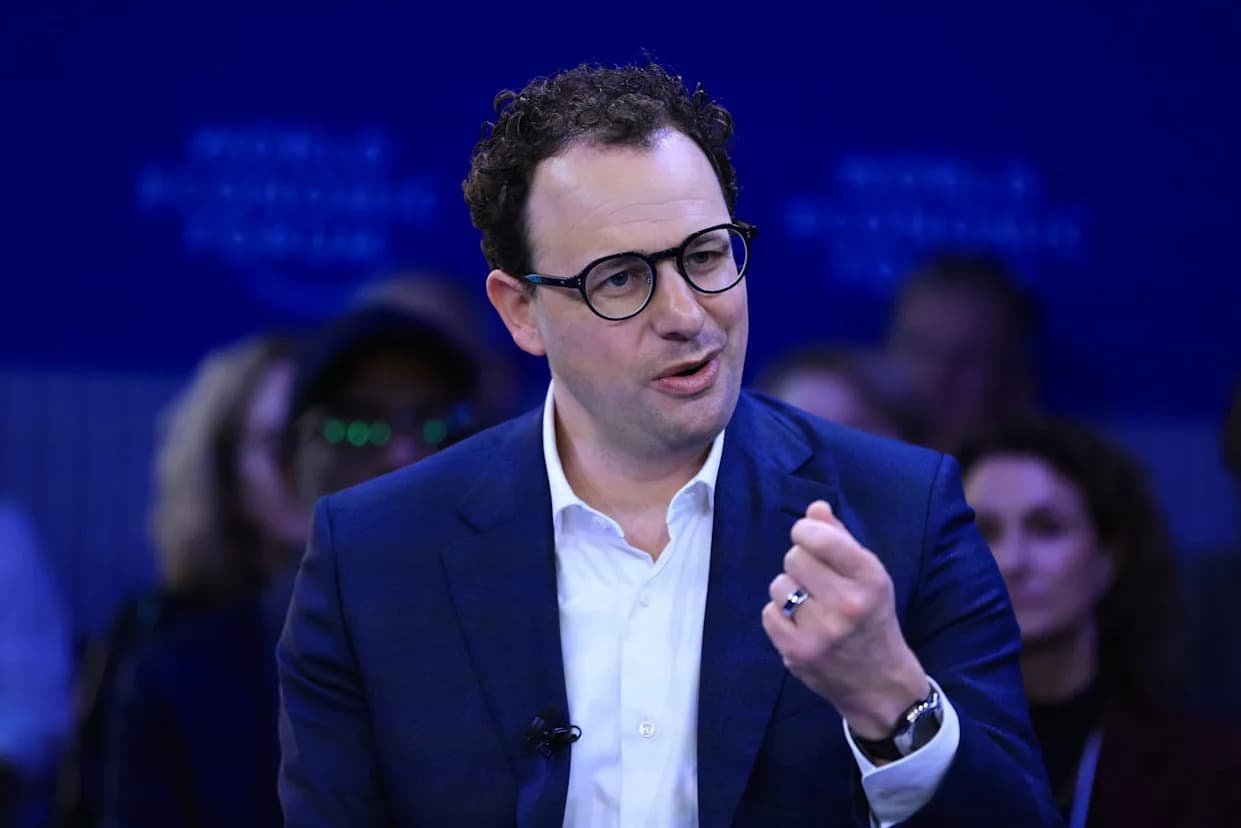
Gray Decision Intelligence’s founder insists the firm provides tools and training rather than direct cut recommendations, arguing that decisions should be "data-informed, not data-driven," and that qualitative mission factors matter. Faculty and unions counter that data-centered, consultant-led reviews often fail to capture the public-good and democratic dimensions of humanities teaching and research.
Why The Humanities Matter
Defenders of humanistic education stress skills such as critical thinking, ethical reasoning and cultural literacy — capacities essential to democratic citizenship but difficult to quantify on balance sheets. Public confidence in higher education has declined sharply in recent years: surveys show trust dropping from about 57% in 2015 to 36% in 2023, intensifying debates over the purpose of college.
Scholars warn that continued disinvestment risks creating an educational bifurcation: elite students retaining access to humanistic learning while the majority are redirected toward vocational training. Faculty leaders say hasty cuts are often irreversible and urge more transparent, mission-driven deliberation about university priorities.
Voices From Both Sides
Montclair State spokesperson Andrew Mees said the reorganisation would "change bureaucracy, not dictate course content," and noted enrollment declines in some majors. Portland State spokesperson Katy Swordfisk called program reviews necessary to "optimize for the future" and respond to student demand. Faculty leaders like Adam Rzepka and Bill Knight argue that the humanities do not fit neatly into corporate models and that their public value extends beyond immediate market metrics.
The struggle playing out on campuses nationwide is not only about budgets: it is a clash of values over what higher education should prioritize and how society measures knowledge, citizenship and civic responsibility.
Help us improve.