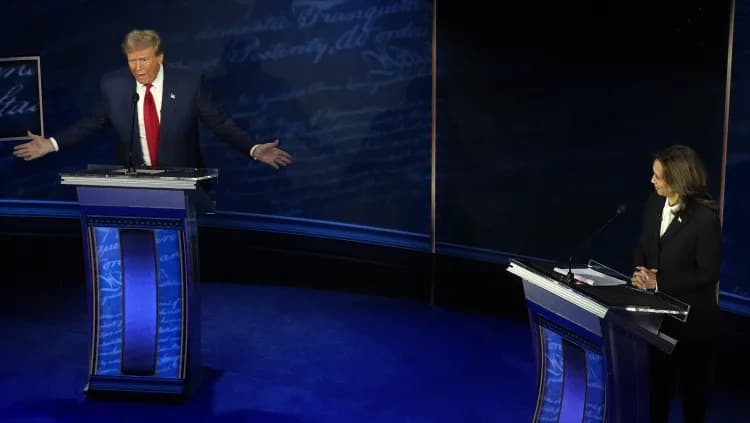
Summary: A long-term political realignment — amplified by Donald Trump — shifted many lower-income White voters toward the GOP. New research by Shakked Noy and Akaash Rao finds that cable-era competition pushed news outlets to prioritize culture-war stories because they retain casual viewers better than economic reporting. Using TV transcripts, smart-TV switching data, and a channel-number natural experiment, the study links greater cable exposure to increased public focus on social issues and more culture-focused campaign ads. Economic issues still matter electorally, but media incentives make cultural controversies harder to displace.
Why Politics Feels Broken: How Cable News and the Attention Economy Rewrote Voter Coalitions
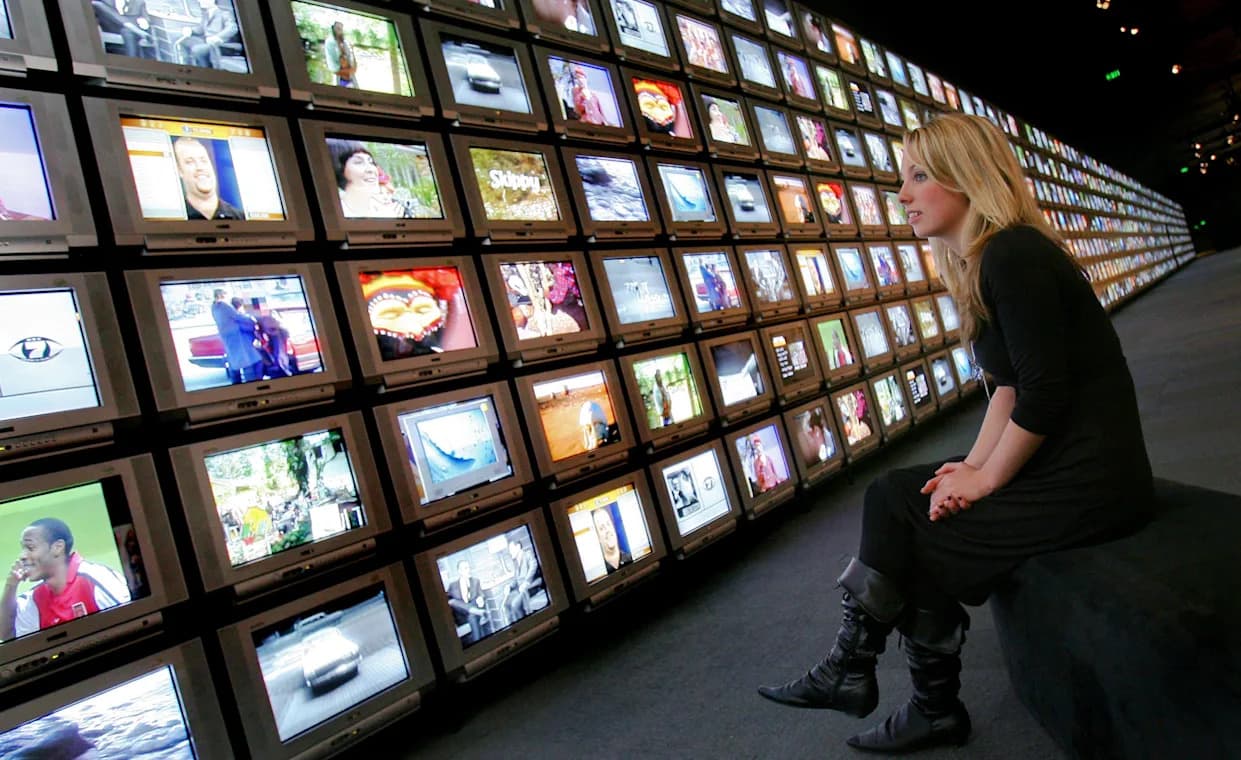
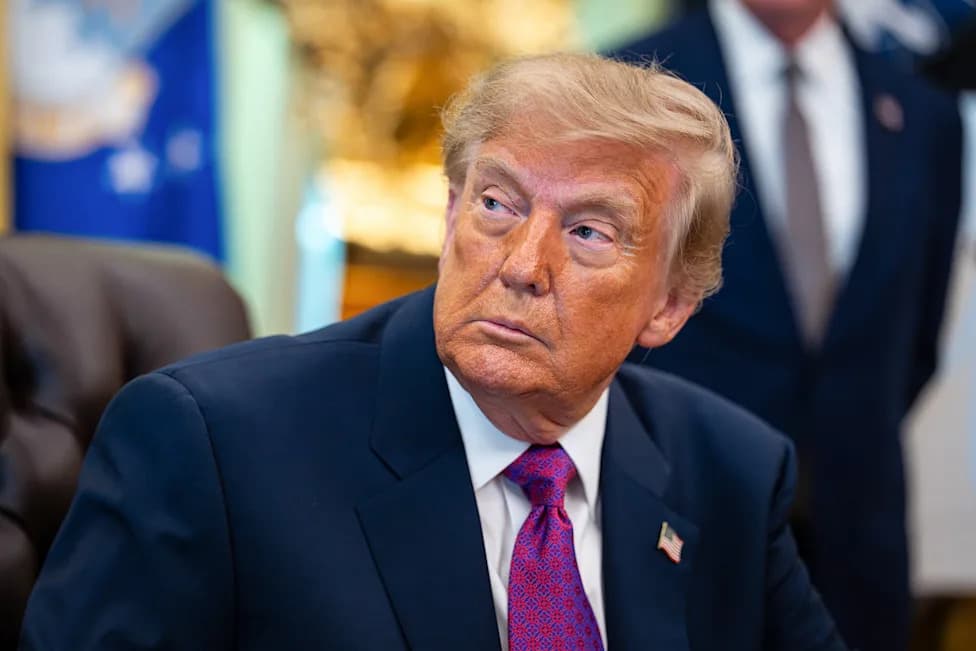
A new study presents evidence that cable news causes voters — and thus, politicians — to put a greater premium on social issues. | William West/AFP via Getty Images
In contemporary America, many lower-income White voters now back Donald Trump at higher rates than richer White voters backed Democrats — a reversal of a pattern that held for most of the 20th century. New research suggests that this realignment reflects both Trump’s political imprint and deeper structural changes in media incentives: as television and later digital platforms competed for attention, news programming shifted toward culture-war stories that hold casual viewers better than economic reporting.
Historical Pattern and Its Reversal
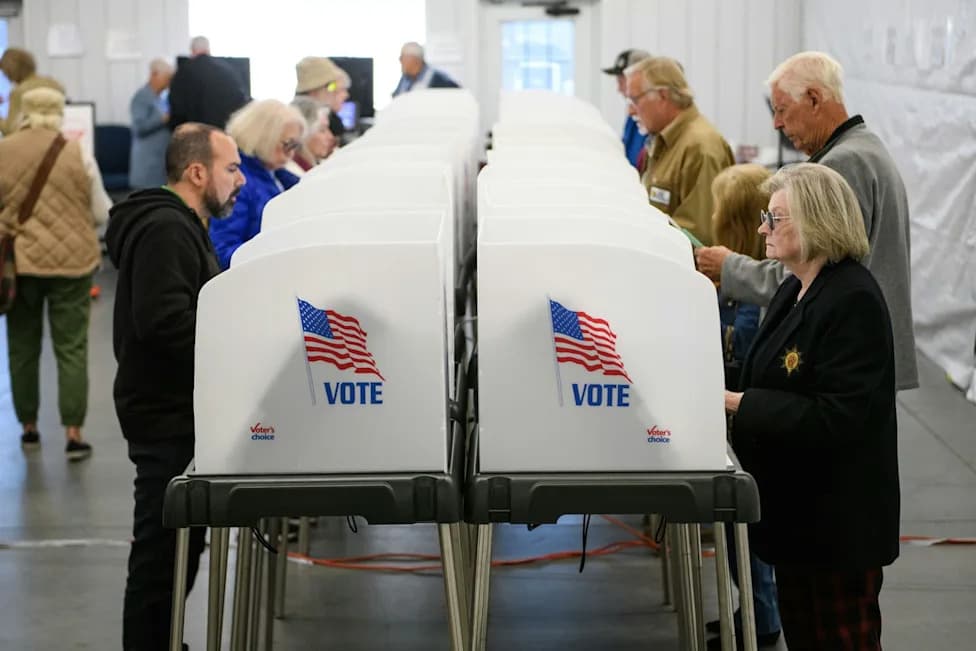
For decades — from 1948 through 2012 — poorer White voters generally leaned left of wealthier Whites in presidential contests. That changed beginning in 2016 and accelerated by 2024: American National Election Studies data show Whites in the bottom 10 percent of the income distribution broke for the GOP nominee by large margins in 2024, while those in the top 5 percent were much likelier to back the Democratic ticket.
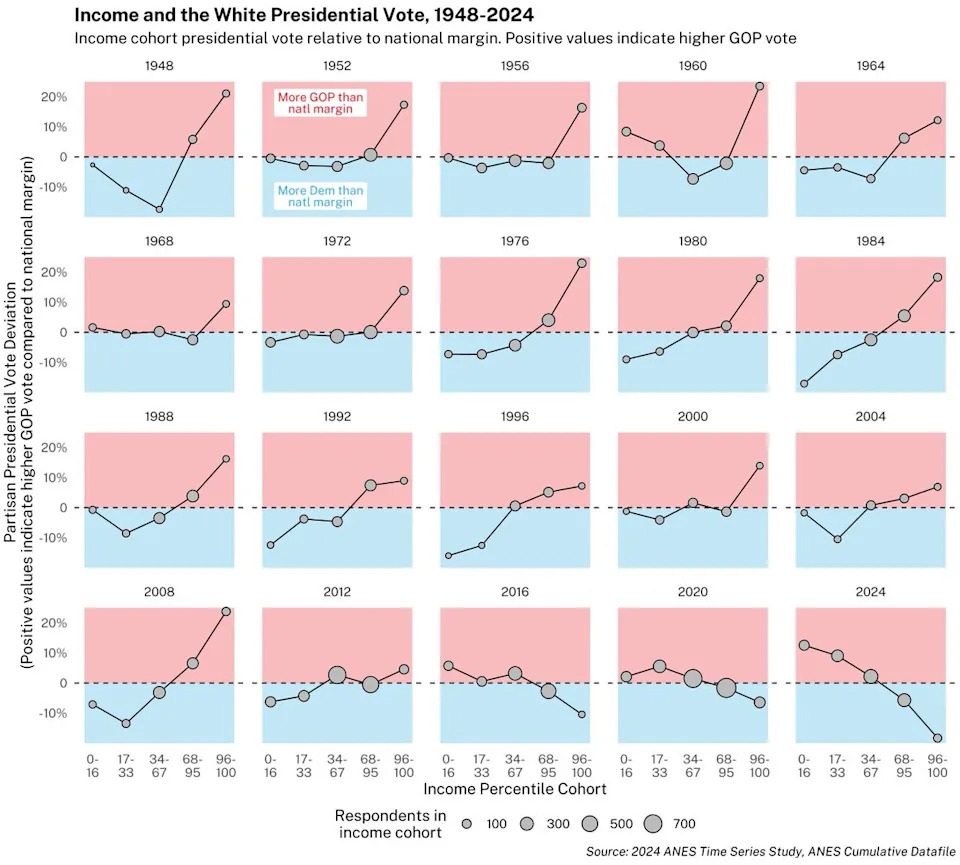
Income and the white presidential vote from 1948 to 2024
Why Culture Mattered
Two long-term trends made culture-war issues politically powerful. First, over the past 50 years debates about immigration, crime, abortion, religion, race, and gender rose to the forefront of public life. Second, voters began to sort more by social attitudes than by economic preferences. College-educated Americans tend to lean left on many social issues while less-educated voters lean right — a shift that eroded working-class Democrats' traditional ties and altered the parties' coalitions.
The Media Story: Noy and Rao’s Findings
Economists Shakked Noy (MIT) and Akaash Rao (Harvard) argue in 'The Business of the Culture War' that changes in the television industry helped accelerate this realignment. When three broadcast networks dominated (mid-1950s to mid-1980s), nightly news could emphasize 'hard' economic reporting because networks had relatively captive audiences and prestige incentives. As cable expanded and dozens of channels competed for viewers, news outlets faced stronger entertainment pressures.
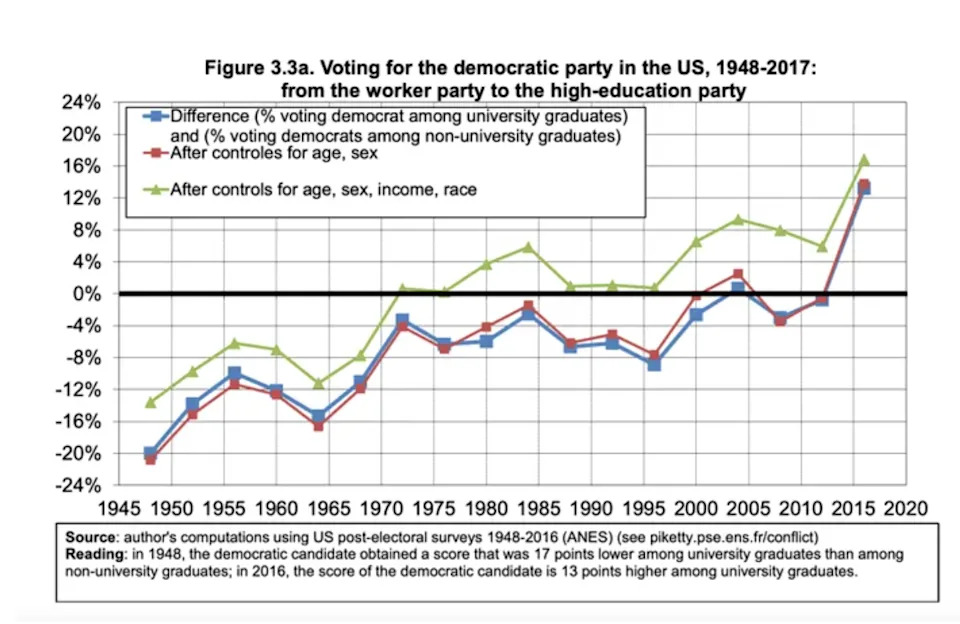
Voting for the democratic party int he US from 1948 to 2017 from the work party to the high-education party
Key empirical claims: Cable news allocates a large majority of issue-based coverage to cultural topics; cultural segments reduce channel-switching by about 2.2 percent; and areas with greater cable-news exposure report social issues as the nation's 'most important problem' more often, changing campaign messaging.
Noy and Rao draw on six decades of TV recordings and transcripts, matched with smart-TV switching data and a clever natural experiment: cable channel numbers are effectively assigned at random across markets, and viewers prefer lower-numbered channels. Comparing places where Fox or MSNBC occupy low numbers to places where they have high numbers, the authors find that higher cable-news exposure causally raises public attention to social issues and increases the share of campaign ads that emphasize culture-war topics.
Attention Economics and the Digital Era
The authors focus on cable, but the logic extends to online platforms. In an era when viewers can instantly switch to streaming shows, games, or social feeds, publishers and broadcasters have even stronger incentives to foreground identity, immigration, and gender controversies that capture casual attention. That makes it harder for economic debates to dominate public discourse, even though material concerns still drive many voters' choices.
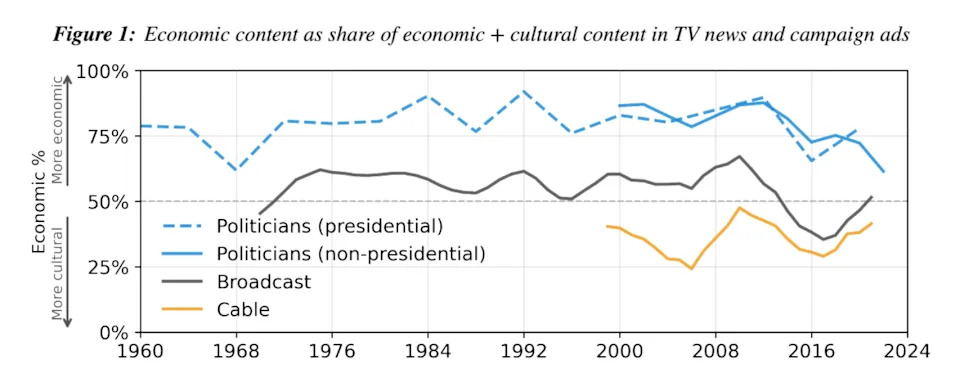
Economic content as share of economic and cultural content in TV news and campaign ads
Implications
Important caveats remain. Noy and Rao also find that bread-and-butter messaging tends to perform better with swing voters electorally, and most Americans still list economic issues as top concerns. But whether voters trust Democrats or Republicans on the economy increasingly depends on their culture-war alignments — helping explain the 2024 split between working-class and college-educated White voters.
Policy and political responses are possible: parties can de-emphasize polarizing cultural positions, better represent working-class economic interests, or do both. Yet any effort to repolarize politics around economic issues faces rising headwinds from a hypercompetitive attention market shaped by influencers, video games, and AI-driven content.
Bottom line: Changing media incentives — especially the rise of cable news and the digital attention economy — helped elevate cultural controversies and reshaped partisan coalitions. That media-driven shift made economic interests less decisive in many voters' political choices, contributing to the fractured politics we see today.
Help us improve.