Dr. Martin Luther King Jr.'s most memorable lines—centered on nonviolence, justice, and the transforming power of love—remain central to his legacy. This piece presents 17 of his most influential quotes, each attributed to its original speech or writing, from the 1950s through the 1960s. Highlights include excerpts from the "I Have a Dream" address, "Letter from Birmingham Jail," and his Nobel Lecture in Oslo. Together, they underscore King's insistence on moral courage and persistent action in the face of injustice.
17 Powerful Martin Luther King Jr. Quotes That Still Inspire Today
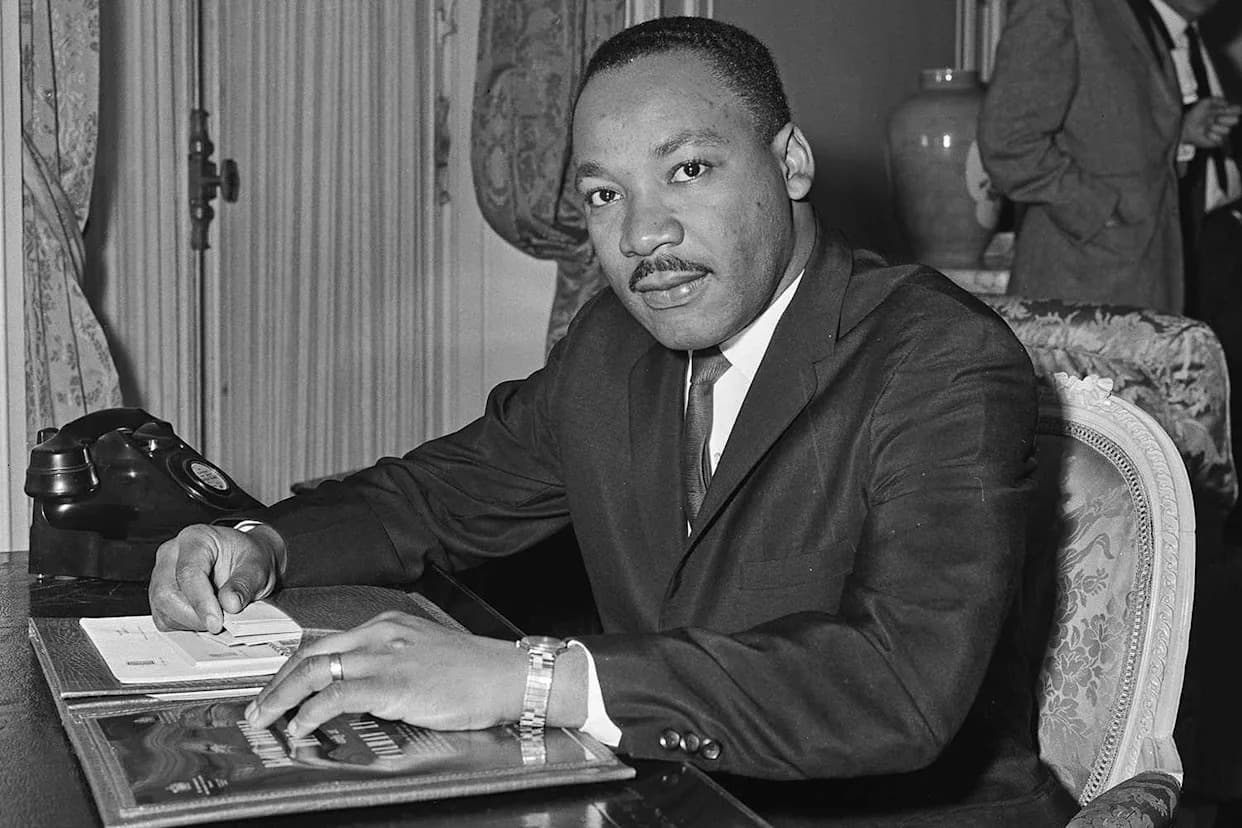
Evening Standard/Hulton Archive/GettyMartin Luther King Jr. holds a press conference at the Savoy Hotel in London, U.K., in September 1964
When people recall Dr. Martin Luther King Jr., the stirring "I Have a Dream" address delivered at the March on Washington for Jobs and Freedom on Aug. 28, 1963, is often the first thing that comes to mind.
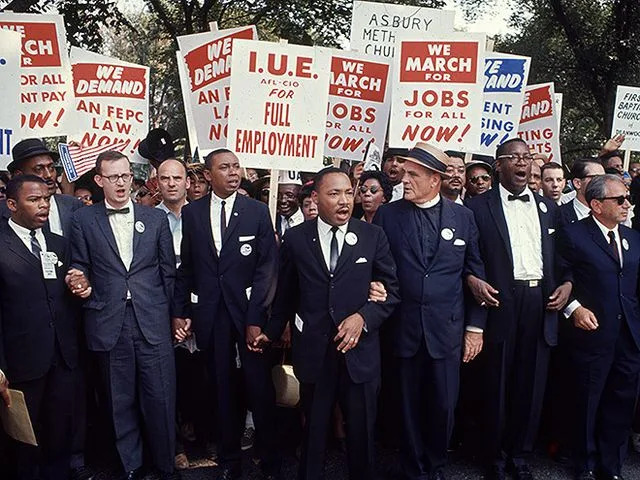
Robert w. Kelley Rev. Martin Luther King Jr. (center) at the March on Washington for Jobs and Freedom on Aug. 28, 1963
Before his assassination on April 4, 1968, at age 39, the Nobel Peace Prize laureate spent roughly a decade delivering courageous speeches and offering deep reflections that continue to move and motivate people. As the nation observes Martin Luther King Jr. Day—on the third Monday of January in honor of his Jan. 15, 1929 birthday—we revisit a selection of his most resonant lines, each dated and attributed to its original speech or writing.
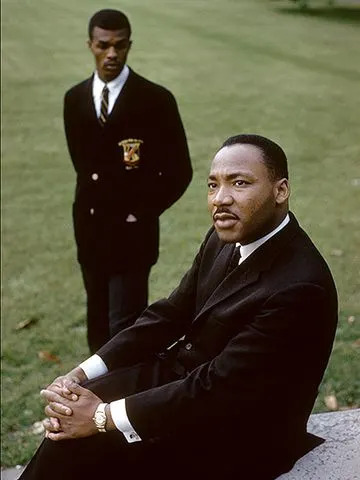
Howard Sochurek Dr. Rev. Martin Luther King Jr. and future Washington, D.C., mayor Marion Barry during a civil rights strategy and planning conference at Atlanta University in mid-May 1960
17 Memorable Quotes
01 of 17
"We must learn to live together as brothers or perish together as fools."
— From a speech in St. Louis, March 22, 1964.
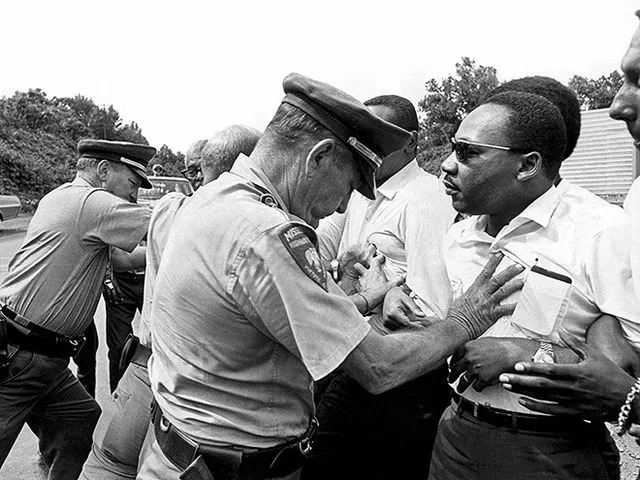
Underwood Archives/Getty ImagesDr. Martin Luther King being shoved back by Mississippi patrolmen during the 220-mile March Against Fear from Memphis, Tenn., to Jackson, Miss., on June 8, 1966
02 of 17
"If a man hasn't discovered something that he will die for, he isn't fit to live."
— Spoken during an address in Detroit, June 23, 1963.
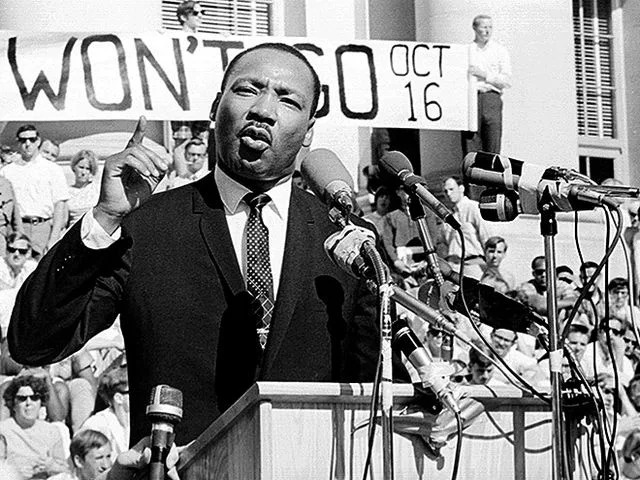
Michael Ochs Archives/Getty ImagesMartin Luther King Jr. delivers a speech at UC Berkeley's Sproul Plaza in Berkeley, Calif., on May 17, 1967
03 of 17
"On some positions cowardice asks the question, 'Is it safe?' Expediency asks, 'Is it politic?' And vanity asks, 'Is it popular?' But conscience asks, 'Is it right?' There comes a time when one must take a position that is neither safe, nor politic, nor popular; he must do it because conscience tells him it is right."
— From a speech in Washington, D.C., Feb. 6, 1968.
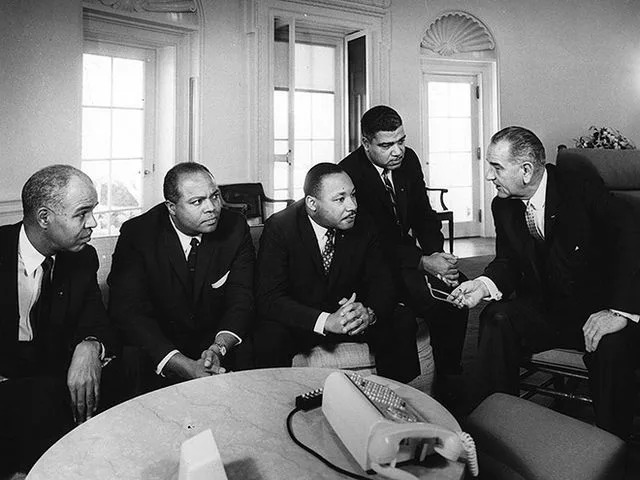
PhotoQuest/Getty ImagesU.S. President Lyndon Johnson (far right) meets (from left to right) NAACP Executive Secretary Roy Wilkins, co-founder of the Committee of Racial Equality James L. Farmer Jr, Dr. Martin Luther King Jr. and Executive Director of National Urban League Whitney Young on Jan. 28, 1964
04 of 17
"We must accept finite disappointment, but never lose infinite hope."
— Appears in In My Own Words, a collection of King's sermons, speeches and writings selected by Coretta Scott King.
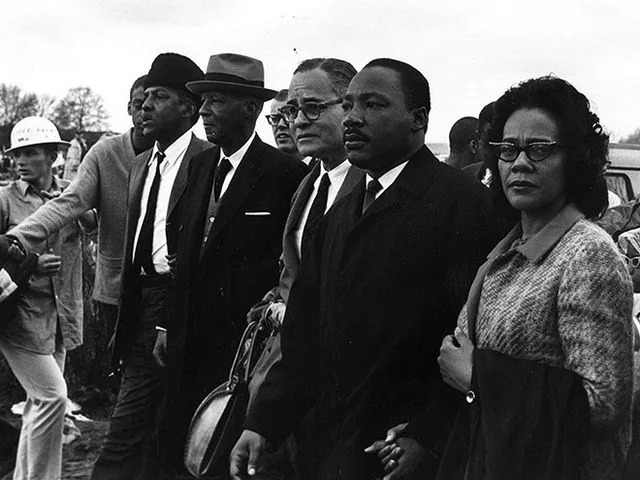
William Lovelace/Express/Getty ImagesAmerican civil rights leader Martin Luther King (center) with his wife, Coretta Scott King (right), and colleagues during a civil rights march from Selma, Ala., to the state capital in Montgomery in March 1965
05 of 17
"We must use time creatively, in the knowledge that the time is always ripe to do right."
— From "Letter from Birmingham Jail," April 16, 1963.
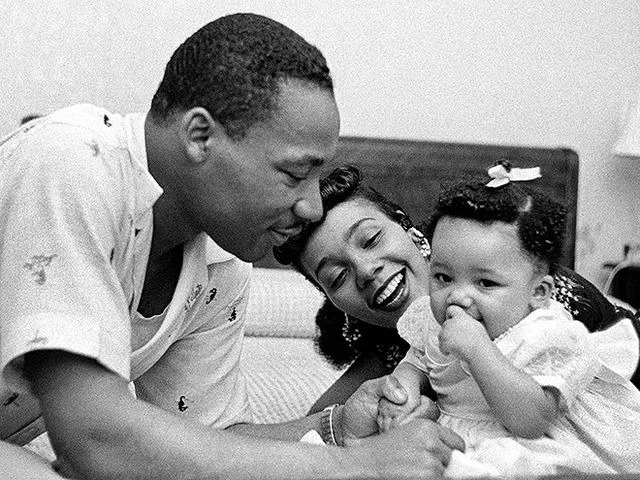
Michael Ochs Archives/Getty ImagesRev. Martin Luther King Jr. relaxes at home with his wife Coretta and first child Yolanda in Montgomery, Ala., in May 1956
06 of 17
"The beauty of genuine brotherhood and peace is more precious than diamonds or silver or gold."
— From King's Nobel Peace Prize acceptance speech, Oslo, Dec. 10, 1964.
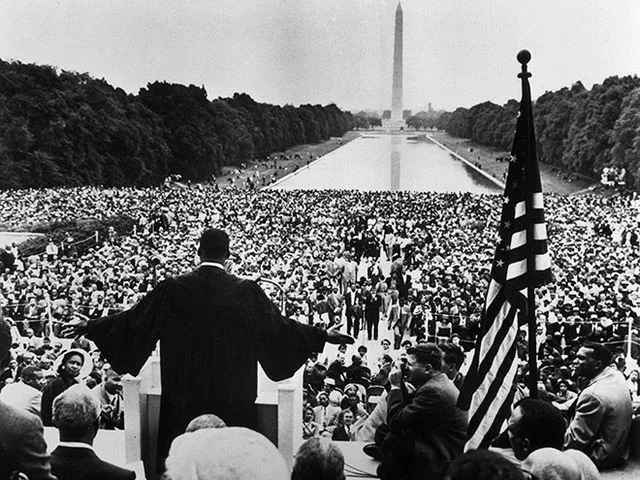
Hulton Archive/Getty ImagesMartin Luther King Jr. dressed in black robes and holding out his hands toward the thousands of people who have gathered to hear him speak near the Reflecting Pool in Washington, D.C.
07 of 17
"Let us be dissatisfied until integration is not seen as a problem but as an opportunity to participate in the beauty of diversity."
— Delivered at a Southern Christian Leadership Conference meeting, Atlanta, Aug. 16, 1967.
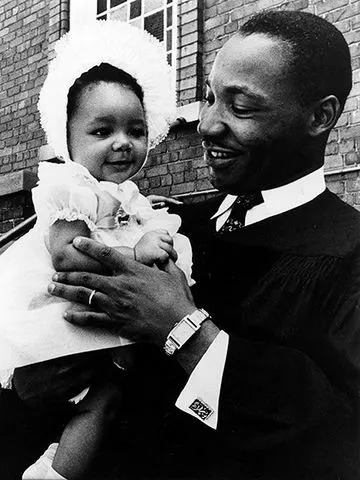
Afro American Newspapers/Gado/Getty ImagesDr. Martin Luther King Jr. holds his infant daughter, Yolanda, in his arms in 1956
08 of 17
"Violence is impractical because it is a descending spiral ending in destruction for all. It is immoral because it seeks to humiliate the opponent rather than win his understanding; it seeks to annihilate rather than convert. Violence thrives on hatred rather than love. It destroys community and makes brotherhood impossible. It leaves society in monologue rather than dialogue. Violence ends up defeating itself. It creates bitterness in the survivors and brutality in the destroyers."
— From King's Nobel Lecture, University of Oslo, Dec. 11, 1964.
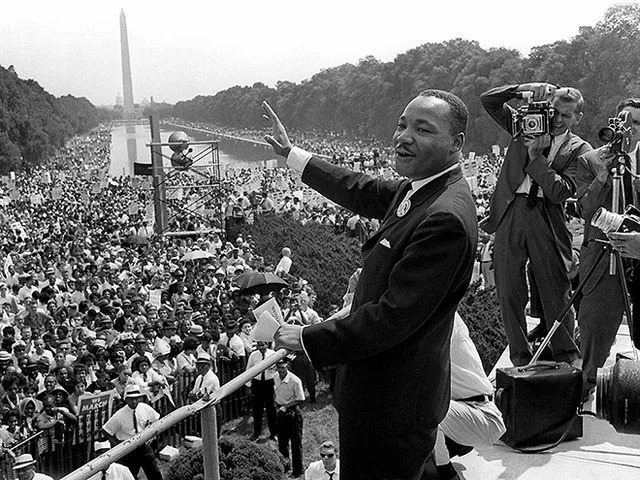
AFP/Getty Martin Luther King Jr. waves to supporters from the steps of the Lincoln Memorial in Washington, D.C., during his famous 'I Have a Dream' speech on Aug. 28, 1963
09 of 17
"Darkness cannot drive out darkness; only light can do that. Hate cannot drive out hate; only love can do that."
— From Strength to Love (1963).
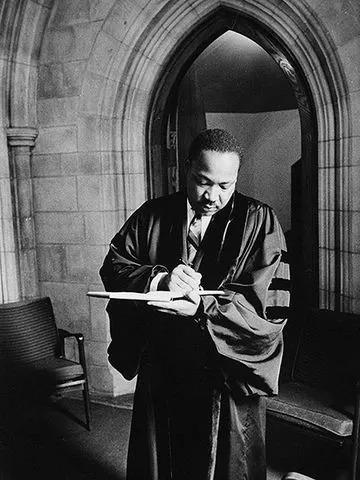
Morton Broffman/Getty ImagesMartin Luther King Jr. in the offices of the National Cathedral in Washington D.C., on March 31, 1968
10 of 17
"I have a dream that my four little children will one day live in a nation where they will not be judged by the color of their skin but by the content of their character."
— From the "I Have a Dream" speech at the Lincoln Memorial, Aug. 28, 1963.
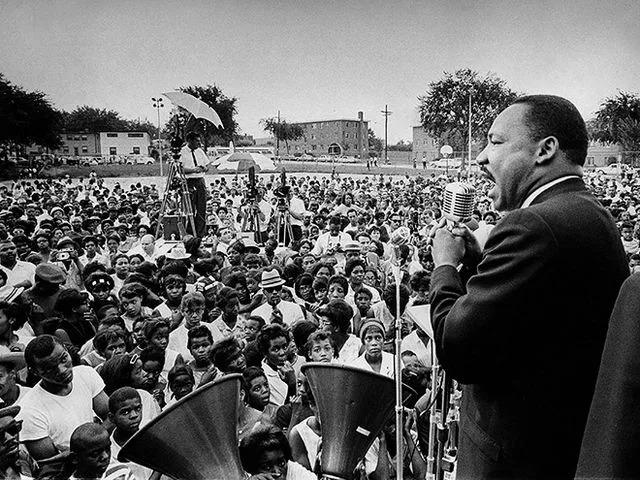
Ellsworth Davis Dr. Martin Luther King Jr. addresses a crowd on Aug. 4, 1965
11 of 17
"I must confess, my friends, the road ahead will not always be smooth. There will be rocky places of frustration and meandering points of bewilderment. There will be inevitable setbacks. There will be moments when the buoyancy of hope is transformed into the fatigue of despair. Our dreams will sometimes be shattered and our ethereal hopes blasted. Yet, difficult and painful as it is, we must walk on with an audacious faith in the future."
— From a speech at the Southern Christian Leadership Conference, Atlanta, Aug. 16, 1967.
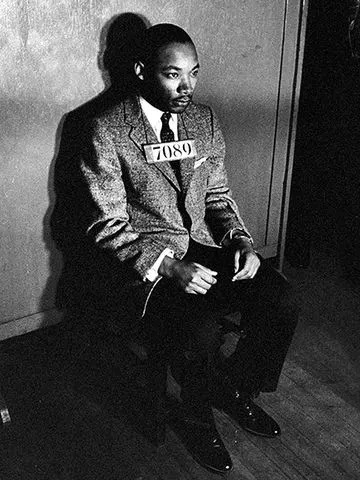
Don Cravens/The LIFE Images Collection/Getty ImagesMartin Luther King Jr. with a 7089 sign across his chest for a police mug shot, sitting on a chair against the wall in a station house after his arrest for directing a city-wide boycott of segregated buses
12 of 17
"In the process of gaining our rightful place, we must not be guilty of wrongful deeds. Let us not seek to satisfy our thirst for freedom by drinking from the cup of bitterness and hatred."
— From the "I Have a Dream" speech, Aug. 28, 1963.
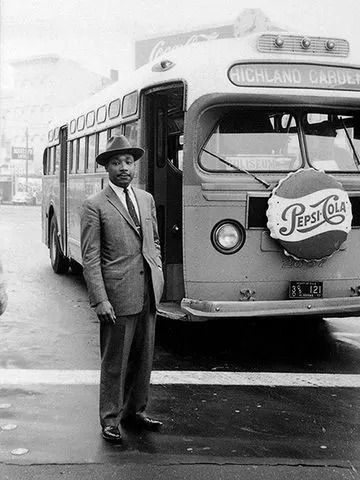
Don Cravens/The LIFE Images Collection/Getty ImagesMartin Luther King Jr. stands in front of a bus at the end of the Montgomery bus boycott in Montgomery, Ala., on Dec. 26, 1956
13 of 17
"Injustice anywhere is a threat to justice everywhere."
— From "Letter from Birmingham Jail," April 16, 1963.
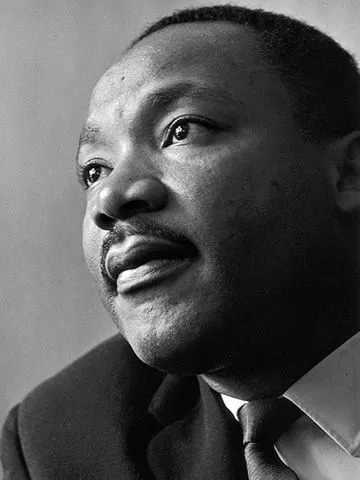
Reg Lancaster/Express/Getty ImagesMartin Luther King Jr. in 1964
14 of 17
"What is needed is a realization that power without love is reckless and abusive, and that love without power is sentimental and anemic. Power at its best is love implementing the demands of justice, and justice at its best is love correcting everything that stands against love."
— From a speech at the Southern Christian Leadership Conference, Atlanta, Aug. 16, 1967.
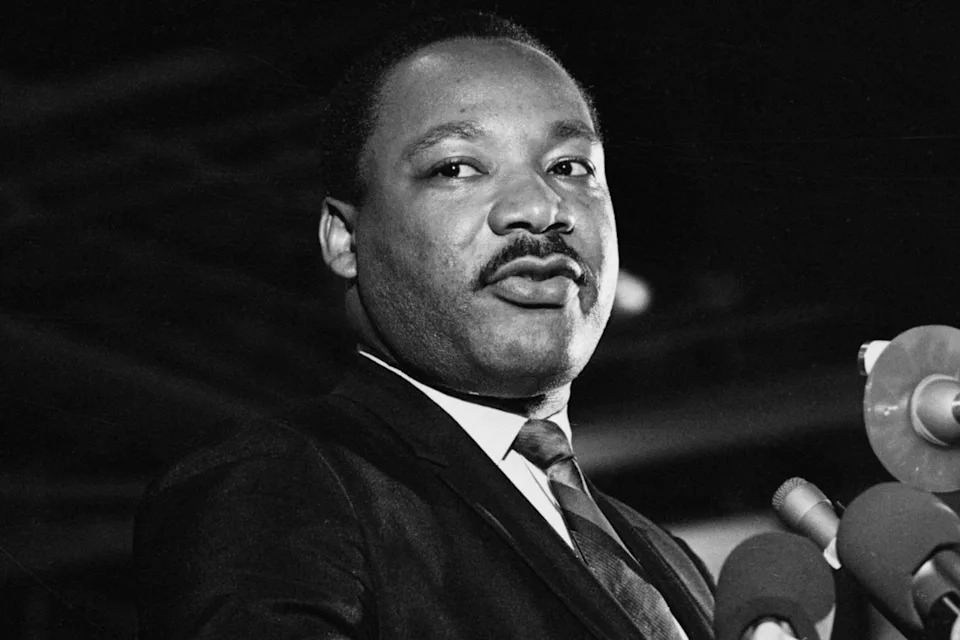
Bettmann ArchiveMLK
15 of 17
"The ultimate measure of a man is not where he stands in moments of comfort and convenience, but where he stands at times of challenge and controversy."
— From Strength to Love (1963).
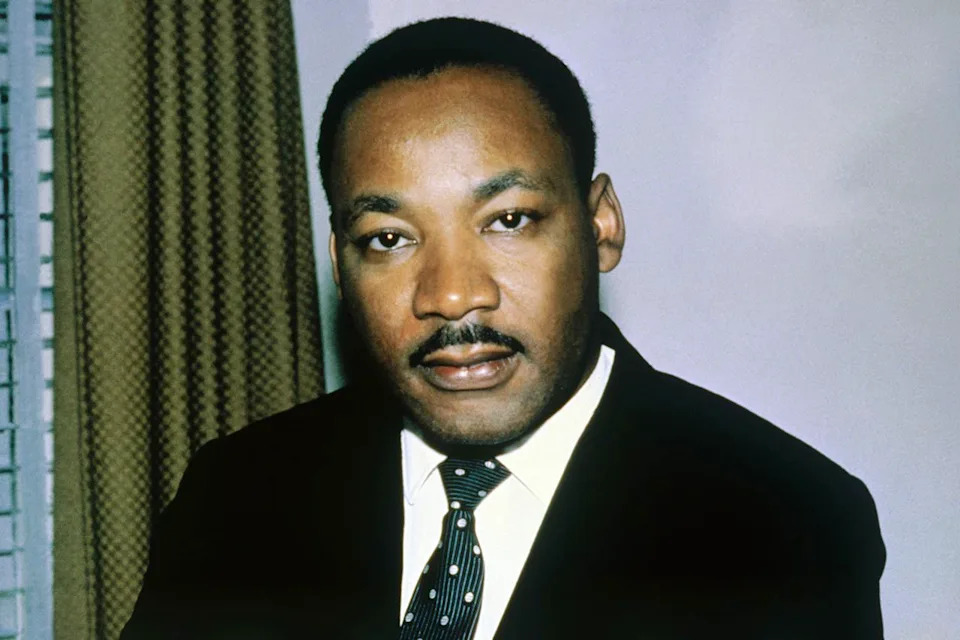
Getty ImagesMartin Luther King, Jr.
16 of 17
"If you can't fly, then run. If you can't run, then walk. If you can't walk, then crawl — but whatever you do, you have to keep moving forward."
— From a commencement speech at Spelman College, 1960.
17 of 17
"Let no man pull you so low as to hate him."
— From the sermon "The Most Durable Power," 1956.
These selections highlight recurring themes in King's work: the power of nonviolence, moral courage, the urgency of justice, and a persistent belief that love and hope can transform society. Each quote is grounded in a specific moment of his life and helps explain why his words remain central to global conversations about equality and human dignity.
Help us improve.