Dr. Martin Luther King Jr. is widely admired, but the popular image often overlooks his urgent calls for economic justice and his outspoken opposition to the Vietnam War. As King grew more vocal about how war drained resources from domestic programs, his public approval fell and critics accused him of harming both civil-rights and peace causes. The article argues that King’s insistence that peacemaking and economic justice are inseparable remains vital today amid debates over military interventions and large defense budgets.
Reviving King’s Call: Why Peace And Economic Justice Must Be Central To His Legacy
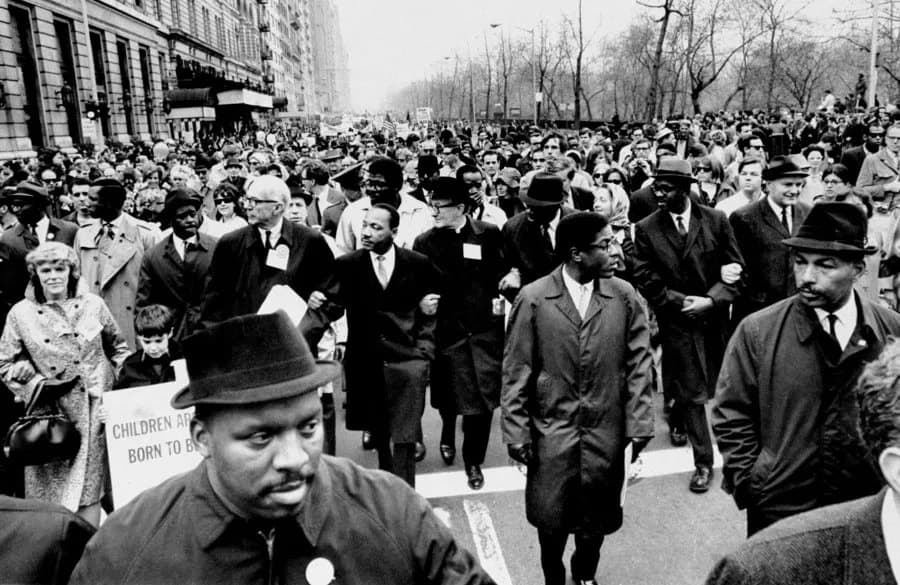
Dr. Benjamin Spock and Rev. Martin Luther King Jr. (center) protest against the Vietnam War along Central Park West on April 16, 1967.Frank Hurley/NY Daily News Archive via Getty Images
American memory often reduces Dr. Martin Luther King Jr. to a single, inspiring moment: the "I Have a Dream" speech. That portrait is powerful, but incomplete. King’s insistence on economic justice and his forceful opposition to the Vietnam War were integral to his moral vision — and those elements deserve a prominent place in how we remember and apply his legacy today.
King’s Broader Message
King occupied an almost sacred place in modern American memory. Recent polls capture that reverence: a 2023 Pew Research Center survey found that 81% of Americans view his impact positively, and a 2011 Gallup poll reported 94% favorable views of King more broadly. Yet those numbers mostly reflect a sanitized memory focused on the most famous passages of 1963’s March on Washington, not the full sweep of King’s political arguments.
Costs of Speaking Out
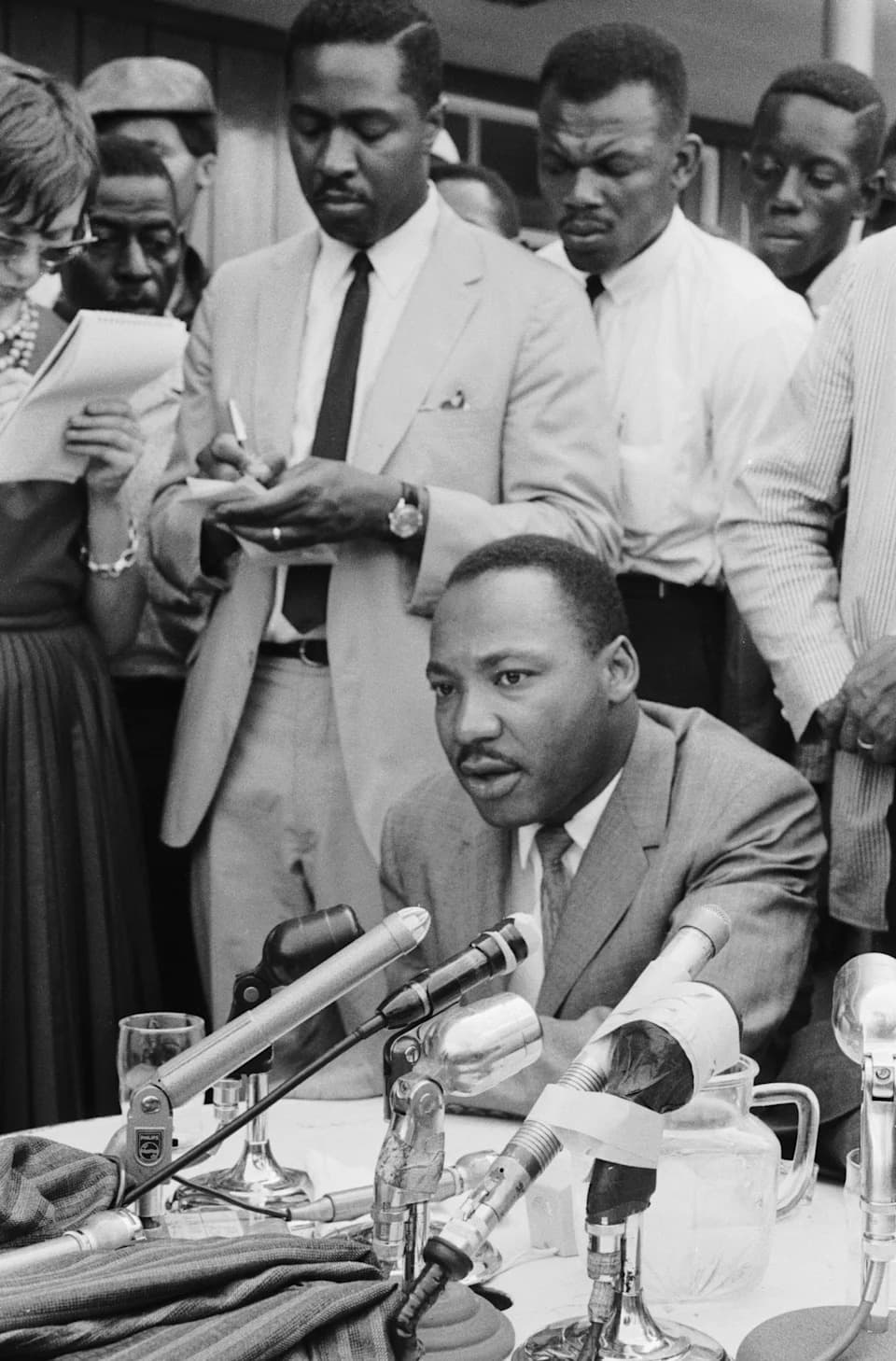
During his lifetime, King’s approval was far less uniform. He reached peak public recognition after the March on Washington, but a May 1965 Gallup poll recorded only 45% of Americans viewing him favorably. As King grew more outspoken about the escalating war in Vietnam, his popularity declined markedly. By August 1966, Gallup found respondents were nearly twice as likely to view him negatively (63%) as positively (33%) — a reflection of broad public support at the time for a larger war effort.
Linking War and Poverty
King increasingly argued that the war abroad undercut progress at home. He warned that funds, people and political will were being drained from domestic programs that could address poverty and inequality. Leading his first explicit anti-war march in 1967, he declared, "The bombs in Vietnam explode at home — they destroy the dream and possibility for a decent America."
"I knew that America would never invest the necessary funds or energies in rehabilitation of its poor so long as adventures like Vietnam continued to draw men and skills and money like some demonic, destructive suction tube. So I was increasingly compelled to see the war as an enemy of the poor and to attack it as such."
"Perhaps a more tragic recognition of reality took place when it became clear to me that the war was doing far more than devastating the hopes of the poor at home. It was sending their sons and their brothers and their husbands to fight and to die in extraordinarily high proportions relative to the rest of the population... So we have been repeatedly faced with the cruel irony of watching Negro and white boys on TV screens as they kill and die together for a nation that has been unable to seat them together in the same schools."
Backlash And Courage
King’s April 4, 1967 "Beyond Vietnam" speech at Riverside Church drew immediate condemnation. The New York Times editorialized that he had fused two distinct public problems to their detriment; The Washington Post asserted he had "diminished his usefulness" to multiple causes. Even some civil-rights allies, including the NAACP, criticized his tactical decision to link the movements. Yet King persisted, continuing to expose how militarism and domestic neglect reinforced one another until his assassination a year later.
Why It Matters Today
King’s critique — that military spending and intervention can sap resources and moral focus from domestic uplift — has contemporary resonance. Polling from the Associated Press–NORC Center for Public Affairs found 56% of U.S. adults believed President Trump had overstepped on military interventions abroad, with majorities disapproving of his foreign-policy handling in general and his approach to Venezuela specifically. Among Republicans surveyed, only about one in ten supported further escalations.
The present debate over large defense budgets (figures as high as $1.5 trillion have been cited in public discourse) while cutting programs for the poor echoes the very contradiction King condemned. Reviving his argument — that peacemaking and economic justice are inseparable — would reframe contemporary policy debates in moral as well as fiscal terms.
Conclusion
King’s moral courage was not universally celebrated in his lifetime; his willingness to speak on unpopular causes cost him public approval. That history should caution us against a narrowed memory of King that leaves out his anti-war and economic-justice commitments. To honor his legacy faithfully, public leaders and citizens should treat peace advocacy and domestic justice as mutually reinforcing aims, not competing priorities.
Originally published on MS NOW.
Help us improve.