The Department of Homeland Security says a U.S. immigration officer shot and wounded a Venezuelan man in Minneapolis after the man allegedly assaulted the officer and two others attacked the officer with a shovel and broom handle. The incident set off late-night clashes between protesters and federal agents, with reports of rocks, fireworks and law enforcement use of tear gas. The shooting occurs amid heightened tensions after last week’s fatal ICE shooting of Renee Good and as the federal government bolsters an ongoing deployment of agents to the city.
Immigration Officer Wounds Venezuelan in Minneapolis; Protests and Tear Gas Follow Amid ICE Surge
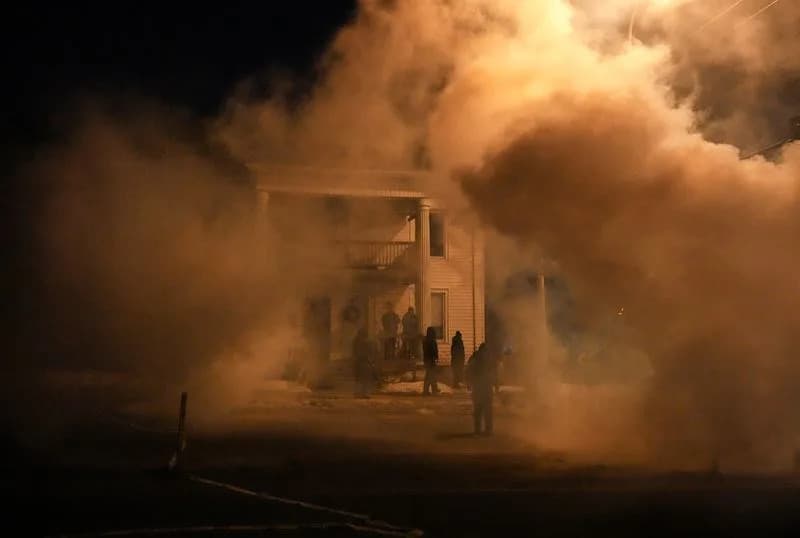
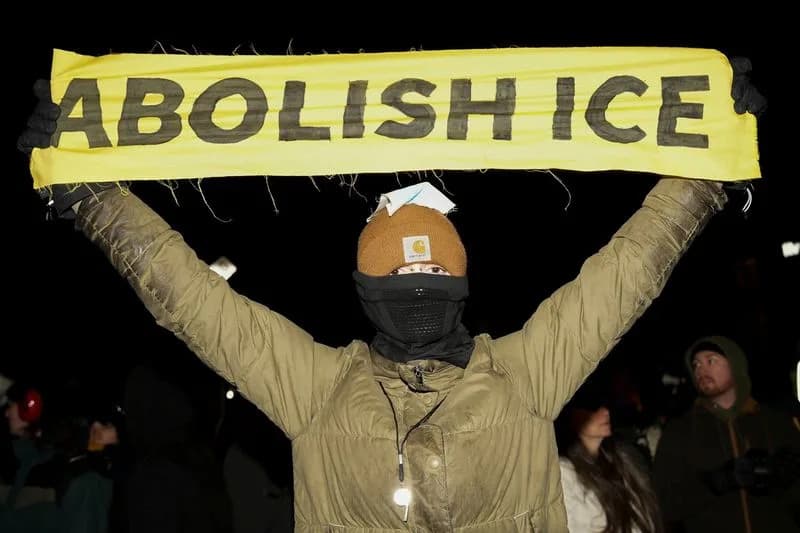
Members the community stand outside a building amidst tear gas used by law enforcement, as tensions rise after federal law enforcement agents were involved in a shooting incident, a week after a U.S. Immigration and Customs Enforcement (ICE) agent fatally shot Renee Nicole Good, in north Minneapolis, Minnesota, U.S., January 14, 2026. REUTERS/Leah Millis
MINNEAPOLIS, Jan 14 (Reuters) - A U.S. immigration officer shot and wounded a Venezuelan man who fled a traffic stop in Minneapolis on Wednesday, the Department of Homeland Security (DHS) said, intensifying unrest over a controversial deployment of militarized federal agents in the city.
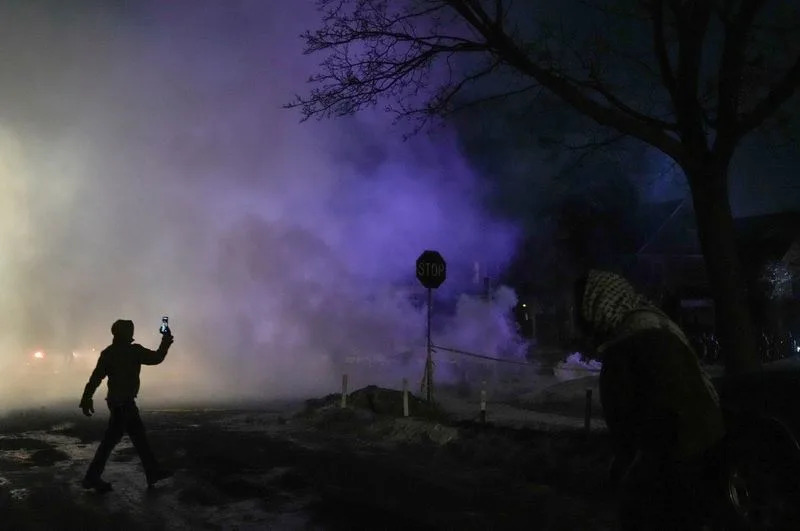
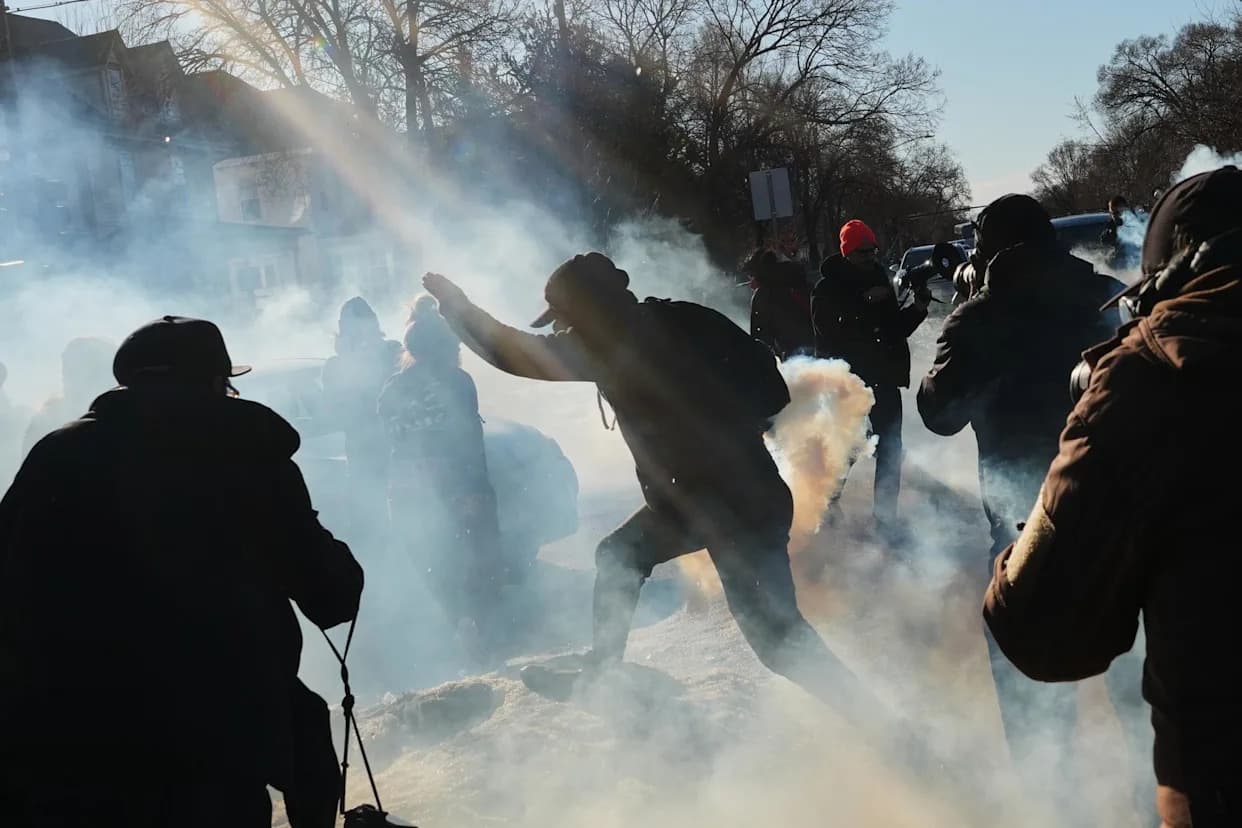
A member of the community walks near rising tear gas smoke as federal agents (not pictured) employ munitions and tear gas against protesters, as tensions rise after federal law enforcement agents were involved in a shooting incident, a week after a U.S. Immigration and Customs Enforcement (ICE) agent fatally shot Renee Nicole Good, in north Minneapolis, Minnesota, U.S., January 14, 2026. REUTERS/Leah Millis
Shooting and Arrests
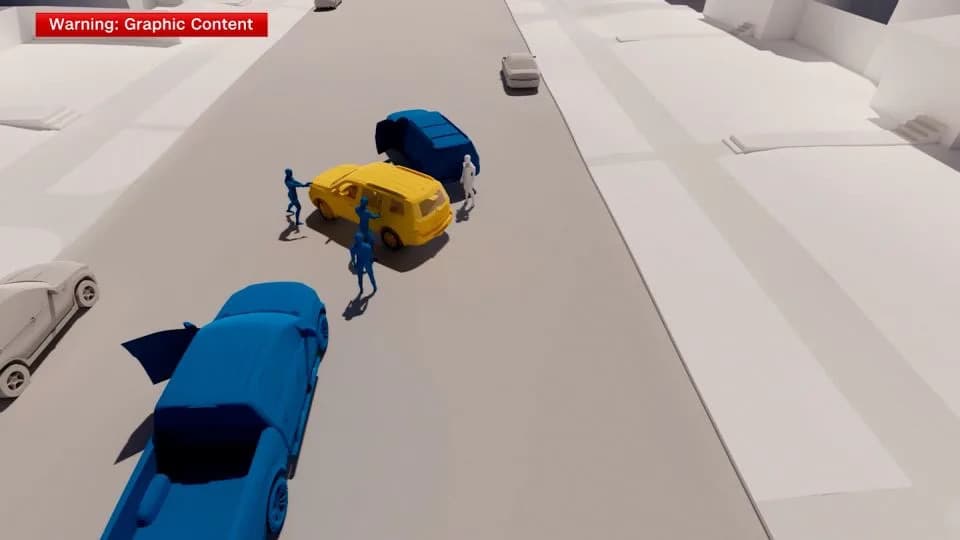
DHS said the incident began when the vehicle targeted in the traffic stop crashed into a parked car and the driver fled on foot. A pursuing federal officer caught up with the man and, according to DHS, the suspect "began to resist and violently assault the officer." Two people then emerged from a nearby apartment and struck the officer with a snow shovel and a broom handle, DHS said. The Venezuelan reportedly broke free, assaulted the officer with one of the implements and was then shot in the leg. All three later barricaded themselves in the apartment and were taken into custody.
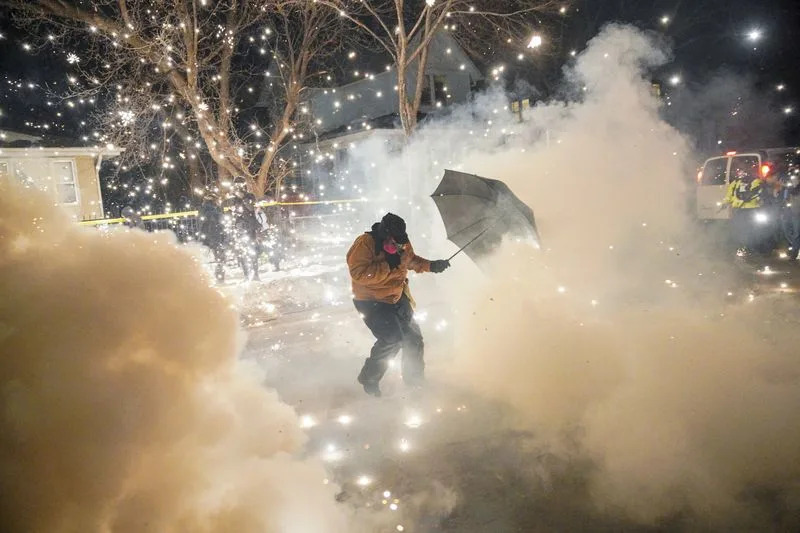
A protesting community member attempts to protect themselves as federal agents fire munitions and pepper balls, as tensions rise after federal law enforcement agents were involved in a shooting incident, a week after a U.S. Immigration and Customs Enforcement (ICE) agent fatally shot Renee Nicole Good, in north Minneapolis, Minnesota, U.S., January 14, 2026. REUTERS/Ryan Murphy
Both the officer and the wounded man were hospitalized; a source familiar with the situation said the suspect was in stable condition. DHS described the officer's actions as taken "fearing for his life and safety."
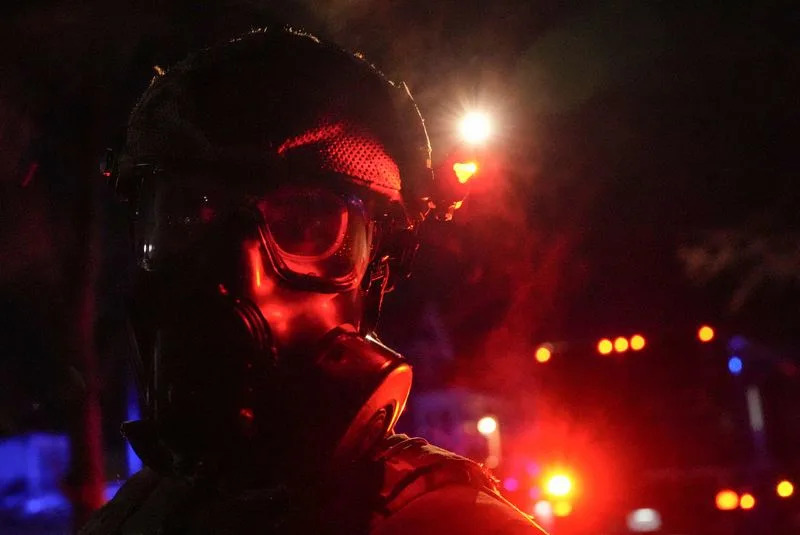
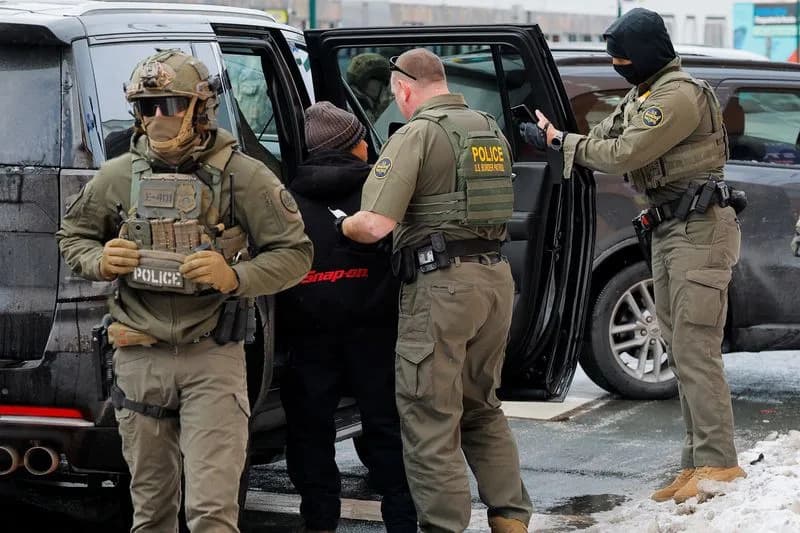
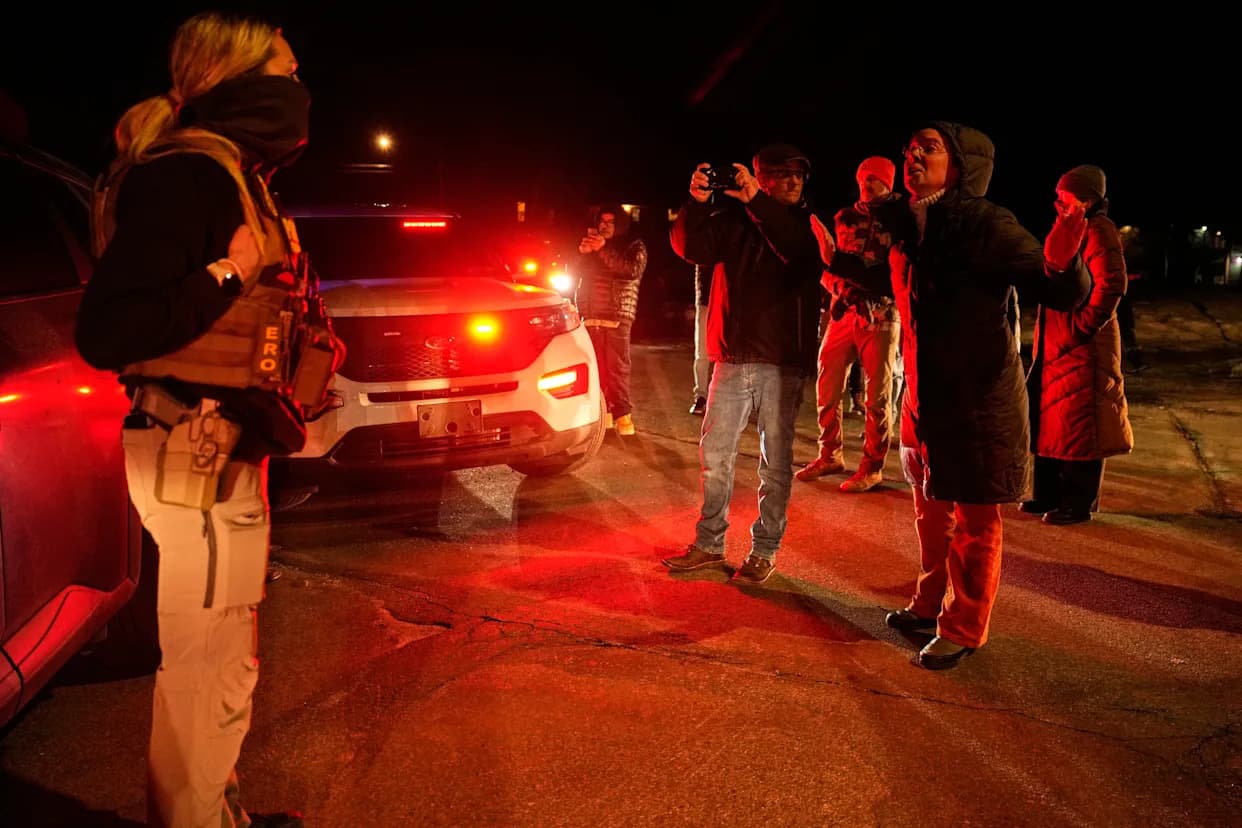
A member of law enforcement stands near a vehicle, as tensions rise after federal law enforcement agents were involved in a shooting incident, a week after a U.S. Immigration and Customs Enforcement (ICE) agent fatally shot Renee Nicole Good, in north Minneapolis, Minnesota, U.S., January 14, 2026. REUTERS/Leah Millis
Nighttime Clashes
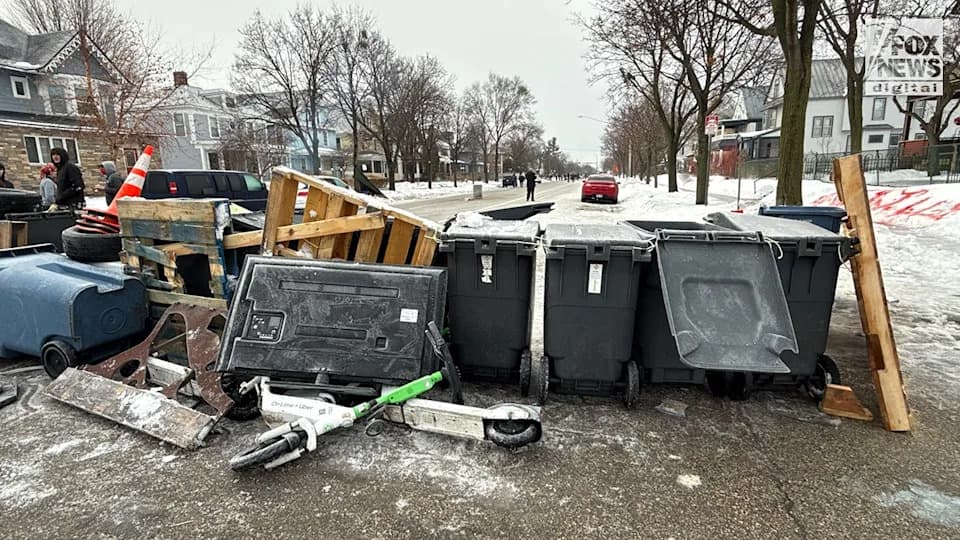
Following the shooting, protesters and law enforcement clashed late into the night. Reuters journalists photographed scenes of dark streets filled with tear gas, intermittent headlamp beams from agents and flashes from crowd-control munitions. Demonstrators threw rocks, ice and fireworks, and officers used tear gas to disperse crowds, officials said.
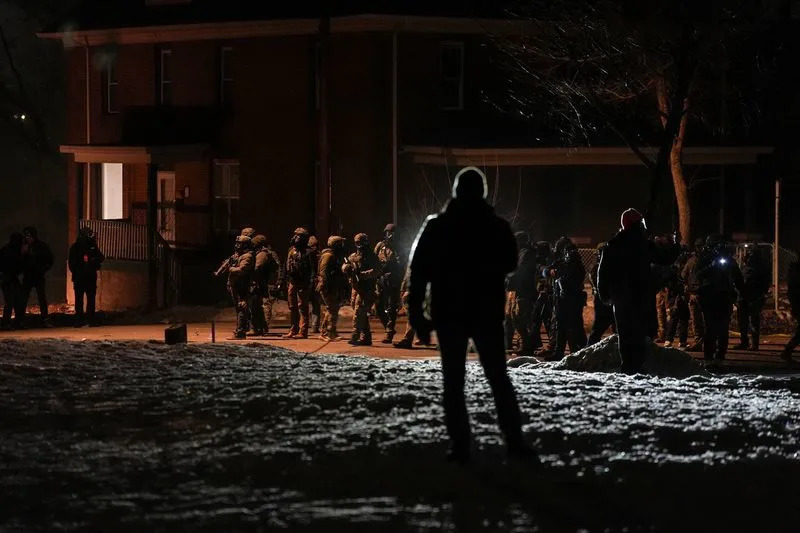
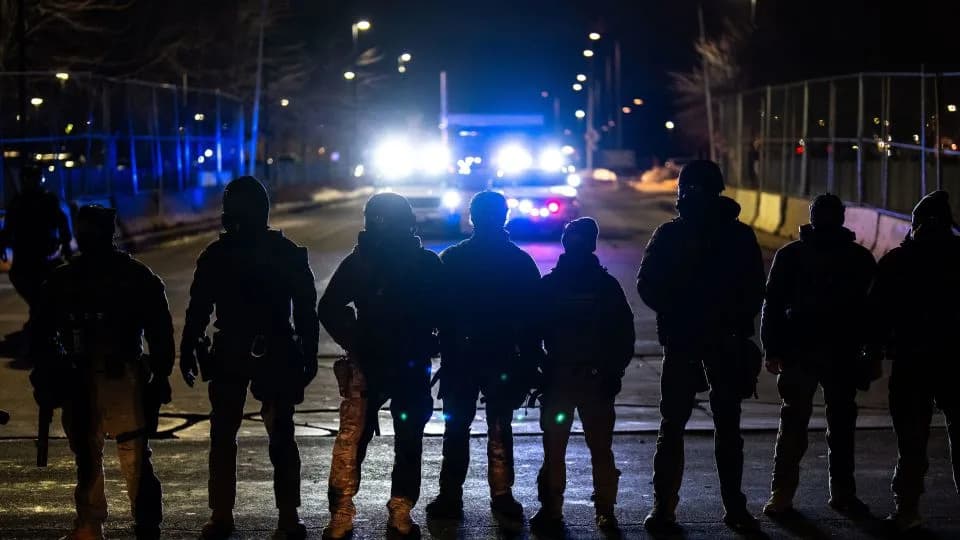
Federal agents stand guard, as tension rise after federal law enforcement agents were involved in a shooting incident, a week after a U.S. Immigration and Customs Enforcement (ICE) agent fatally shot Renee Nicole Good, in north Minneapolis, Minnesota, U.S., January 14, 2026. REUTERS/Leah Millis
Context: Tensions After Fatal ICE Shooting
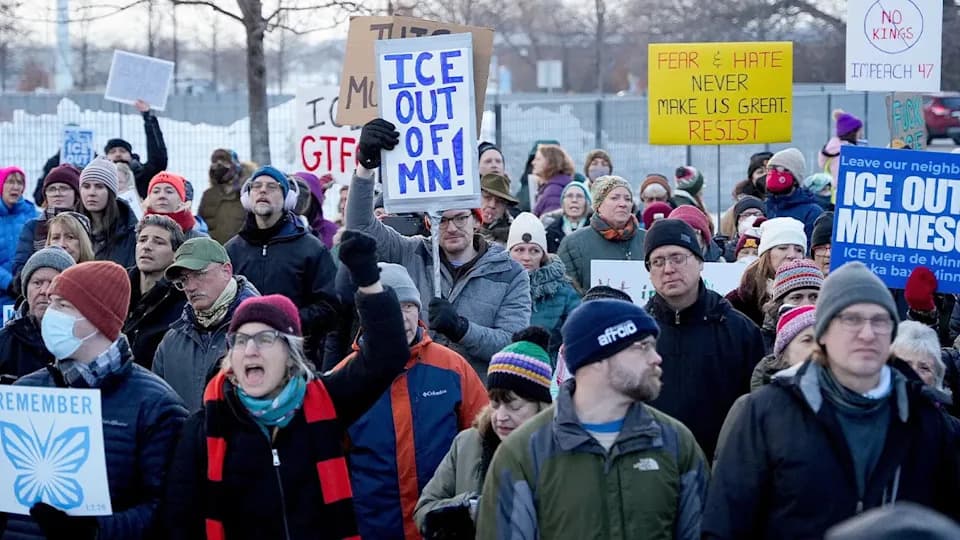
The episode came a week after an Immigration and Customs Enforcement agent fatally shot 37-year-old Renee Good, a U.S. citizen, during an encounter in Minneapolis on Jan. 7. That shooting sparked sustained local protests and intensified scrutiny of the federal deployment. Rather than withdraw agents after the fatal shooting, the Trump administration said it would send hundreds more to supplement roughly 2,000 officers already deployed.
Community Encounters and Allegations
Residents and video footage have documented highly charged encounters between heavily armed federal agents—often wearing camouflage and face coverings—and civilians. Accounts and videos show agents conducting roving operations, smashing car windows and detaining people, sometimes prompting accusations of racial profiling and heavy-handed tactics. DHS has disputed misconduct claims, saying agents have faced increasing assaults while attempting to detain immigration violators and that arrests are based on reasonable suspicion of unlawful status.
Refugee Arrests and Political Response
Nonprofit World Relief reported that dozens of legal refugees, including children, were arrested across Minnesota over the weekend, describing the actions as part of a broader re-screening effort. DHS pointed to fraud allegations involving members of Minnesota's Somali community when asked about those arrests. President Donald Trump has seized on such allegations and said large-scale operations in some Democratic-led cities are necessary when local authorities do not fully cooperate with federal immigration enforcement. Local officials, including Minneapolis Mayor Jacob Frey and Minnesota Governor Tim Walz, have criticized the federal surge and encouraged community documentation of encounters with agents.
What Officials Are Saying
Minneapolis Police Chief Brian O'Hara, speaking alongside Mayor Frey, urged crowds near the scene to disperse, saying, "We do not need this to escalate any further." DHS accused local leaders of encouraging resistance to ICE; Mayor Frey rejected that characterization, warning against escalating chaos.
Reporting: Seth Herald in Minneapolis, Jonathan Allen and Joseph Ax in New York and Ted Hesson in Washington. Writing by Joseph Ax and Steve Gorman; additional reporting by Andrew Hay, Brad Brooks, Ismail Shakil and Kanishka Singh; editing by Donna Bryson, Diane Craft and Clarence Fernandez.
Help us improve.