Donald Trump promoted a blue‑collar image during his 2024 campaign and framed his policies as a remedy for declining working‑class jobs. Economists and reporting indicate the opposite: tariffs and immigration restrictions coincided with losses in manufacturing, construction and other trades. Apricitas Economics, using Bureau of Labor Statistics data, reports a one‑year decline of about 65,000 industrial jobs and a 123,000 drop in total trades employment from the early‑2025 peak. Those trends may be contributing to a fall in Trump’s economic approval in AP‑NORC polling.
Trump’s Blue‑Collar Act Unravels as Policies Coincide With Job Losses
Donald Trump spent large portions of his 2024 campaign cultivating a blue‑collar persona—staging moments as a fry cook or sanitation worker—and promised his agenda would revive working‑class employment. Critics say the reality has not matched the rhetoric: independent economists and reporters point to job losses across manufacturing, construction and other trades that coincided with administration policies such as tariffs and tighter immigration enforcement.
What The Data Shows
Economist Jared Bernstein wrote for MS NOW in November that tariffs implemented under the Trump administration helped contribute to substantial manufacturing job losses last year. Subsequent reporting found that the downturn in blue‑collar employment extended beyond factories: construction, mining, utilities and transportation have all shown weakness in recent months, with industry analysts linking some of the pressure to changes in immigration policy and trade barriers.
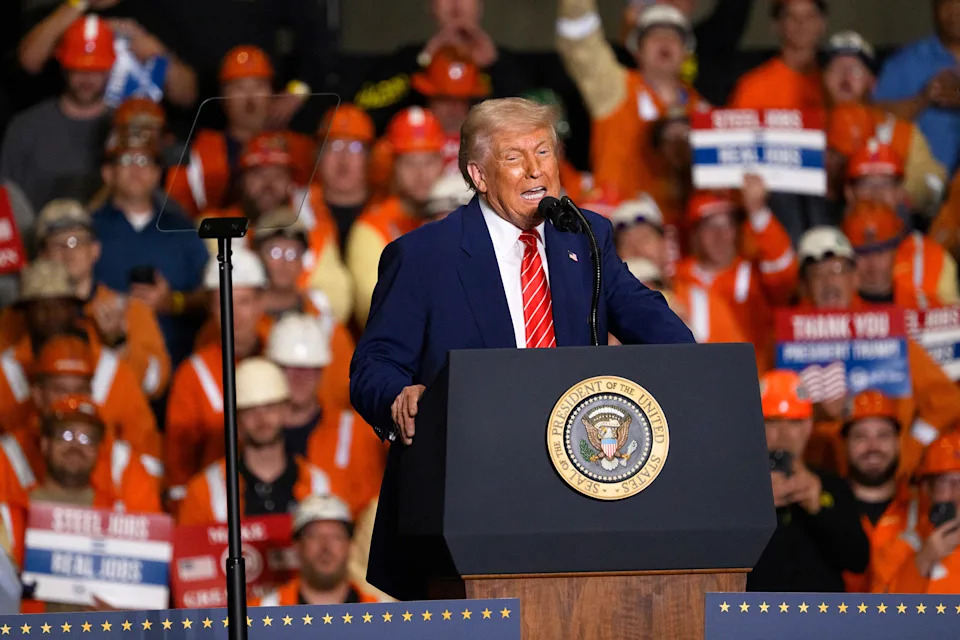
WEST MIFFLIN, PENNSYLVANIA - MAY 30: U.S. President Donald Trump speaks to supporters during a rally at the US Steel-Irvin Works on May 30, 2025 in West Mifflin, Pennsylvania. President Trump visits the steel factory after greenlighting the long-proposed merger between U.S. Steel and Tokyo-based Nippon Steel.(Photo by Jeff Swensen/Getty Images)(Jeff Swensen / Getty Images)
Apricitas Economics Analysis
On the Apricitas Economics blog, economist Joseph Politano used Bureau of Labor Statistics data to document the decline. He wrote that "the administration’s desired 'blue‑collar boom' is not happening; quite the opposite." Politano reported that the country lost roughly 65,000 industrial jobs over the past year, reversing gains seen in 2024, and that total employment across trades and industry is down about 123,000 from the all‑time peak reached in early 2025.
"America is losing jobs in blue‑collar industries, something that last occurred during the initial shock of the early pandemic and the depths of the Great Recession," Politano wrote. "A major slowdown has hit all blue‑collar sectors this year, including construction, mining, and utilities—though manufacturing and transportation are driving the vast majority of US job losses."
Political Consequences
Those labor‑market trends may have political repercussions. Trump’s approval on the economy fell to a personal low in a recent AP‑NORC poll, and some groups his blue‑collar messaging targeted—particularly young men and Black and Hispanic voters—now express weaker support than a year earlier. Analysts caution that multiple factors affect jobs and polling, but the disconnect between campaign promises and federal labor data has become a focal point for critics.
Reporting and analysis from MS NOW and Apricitas Economics, together with Bureau of Labor Statistics figures and AP‑NORC polling, form the basis of these findings.
Help us improve.