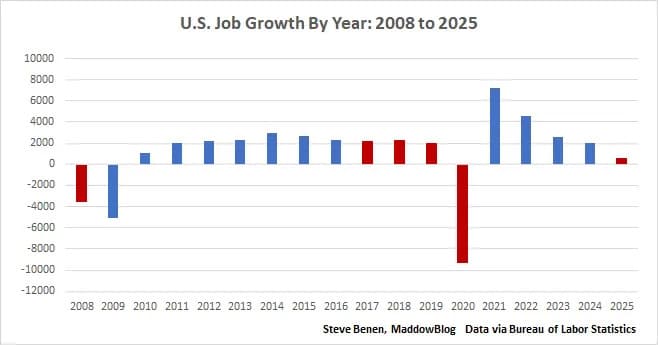
Overview: The Trump White House has repeatedly described the Biden-era economy as a disaster, yet contemporaneous data and major media reporting tell a different story. By late in the Biden presidency the U.S. had low unemployment, roughly 16 million new jobs, inflation near 2%, nearly $4,000 in real income gains, strong union wage settlements and record domestic energy output. These facts contradict recent claims that the economy was the “worst in the world.”
White House Rewriting the Biden-Era Economy: What the Data Actually Show

President Donald Trump and other senior figures in his administration have repeatedly described the economy they inherited as a disaster. Their public statements — from a prime-time address to speeches on the campaign trail — portray the Biden-era economy as broken and failing. A careful look at contemporaneous data and reporting tells a different story.
The Claims
In a recent prime-time address, Mr. Trump opened by saying, “Eleven months ago, I inherited a mess,” and added that “one year ago, our country was dead.” Vice President JD Vance likewise asserted that President Biden had left “the worst economy in the world.” These characterizations have been repeated frequently by senior Republicans.
The Record From the Biden Years
Contemporary accounts and President Biden’s own summary in The American Prospect documented a markedly stronger economy entering 2025 than the administration’s critics claim. Key measures at the end of the Biden presidency included:

Donald Trump shakes hands with Joe Biden at Trump's inauguration on Jan. 20, 2025 in the U.S. Capitol Rotunda.(Kenny Holston-Pool / Getty Images)
- Unemployment averaging at the lowest rate in about 50 years.
- More than 16 million net jobs added, including over 1.5 million in manufacturing and construction.
- Inflation brought down close to 2 percent — roughly the pre-pandemic level.
- Real incomes up roughly $4,000 on average after adjusting for inflation.
- Significant union-led wage gains (25%–60% in several industries) and about 20 million new small-business applications.
- Average GDP growth near 3% per year over four years — faster than other advanced economies — and record domestic energy production with gas prices around $3 per gallon.
Contemporaneous Coverage
Major outlets described the period as unusually strong: The Wall Street Journal called it “remarkable,” Bloomberg reported a “dream combination of strong growth and low inflation,” and The New York Times, The Washington Post and The Economist published similar assessments of robust job growth and economic strength.
What This Means
While political actors commonly frame economic narratives to suit their agendas, the factual record from late in the Biden administration contrasts sharply with claims that the economy was a catastrophe. In the run-up to the 2024 election, even President Trump tried to claim credit for positive indicators he did not help produce. Now, as some measures soften compared with the prior year, the administration’s rhetoric minimizes recent gains and reshapes the public memory of the economic near-term past.
Bottom line: Rhetoric aside, the data and contemporaneous reporting show the U.S. economy entering 2025 with low unemployment, lower inflation and steady growth — facts that contradict the claim that the Biden-era economy was the worst in the world.
For a constructive public debate, policymakers and commentators should base discussions on verifiable economic measures and contemporaneous reporting rather than political talking points. Honest scrutiny of policies and outcomes is essential — but so is an accurate accounting of the record.
Help us improve.