The Pittsburgh Post-Gazette announced it will stop publishing on May 3 after owners John and Allan Block informed staff via a two-minute prerecorded Zoom message with only 45 minutes' notice. The 125-year-old newspaper, a multiple Pulitzer winner with roughly 83,000 paid subscribers, has long experienced tensions between ownership and newsroom staff over editorial control and union disputes. Employees suspect the closure may be retaliatory after a recent court ruling involving bargaining negotiations.
“Shuttered Over Zoom”: Pittsburgh Post-Gazette to Close After 125 Years

Facebook / Facebook
The Pittsburgh Post-Gazette, a 125-year-old newspaper and winner of multiple Pulitzers, was abruptly told it will cease publication on May 3 in a two-minute prerecorded Zoom message delivered by its owners on Wednesday.
Reporters said staff received an email at 12:34 p.m. calling a mandatory meeting for 1:15 p.m.; with roughly 45 minutes' notice, employees watched a short, pre-recorded announcement that the paper would close. One reporter recalled, "There was a blank, black screen the first two minutes of the meeting. Then, this woman who I’ve never seen before came on the screen and told us the [Post-Gazette] was shuttering in May." Several staffers described the message as insulting and dehumanizing and said even managers appeared surprised, suggesting they had not been briefed beforehand.

John Block was criticized for showing off his Trump-loving tendencies during the 2016 election. / Facebook / Facebook
The owners: Billionaire twins John and Allan Block are third-generation owners of Block Communications Inc. (BCI), which also controls the Toledo Blade and a range of regional TV and broadband assets. Each brother holds a 25% stake in BCI; family trusts own the remaining 50%. The brothers, both 71, have been prominent backers of President Donald Trump and have been criticized in the past for actions seen as influencing newsroom coverage.
History of newsroom tensions: Relations between ownership and staff have been contentious for years. In 2018 John Block fired the paper’s longtime cartoonist, Rob Rogers, after cartoons critical of President Trump, a move that drew national attention and accusations that the paper was shifting right. Staffers also say that in 2020 the editorial board was ordered to endorse Trump, forcing a last-minute change to a planned editorial. In 2019, some employees say John Block stormed into the newsroom and threatened to "burn the place down," according to staff accounts.
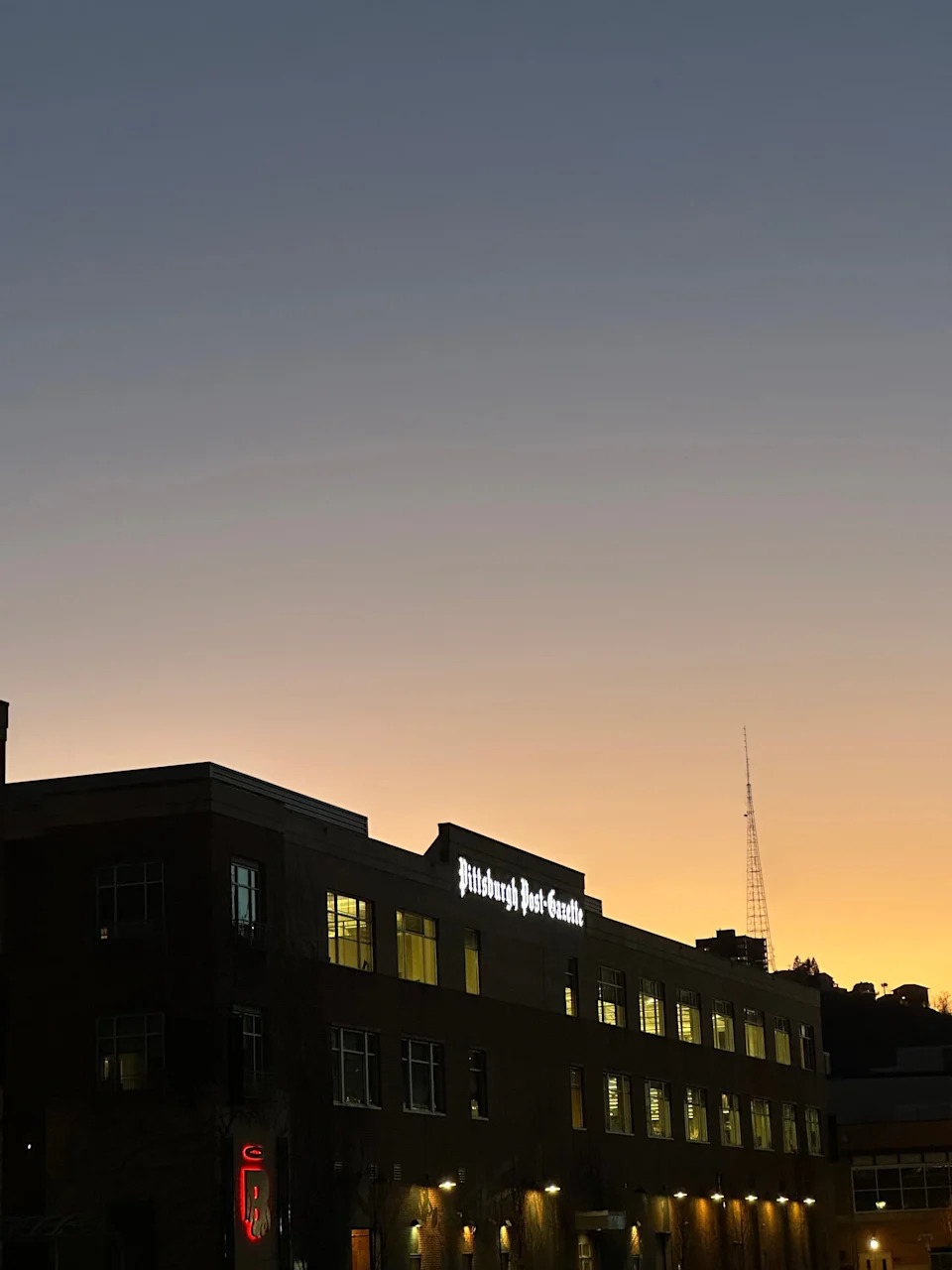
The Pittsburgh Post-Gazette building is on the city's North Shore. / The Daily Beast / Laura Esposito
The Post-Gazette has about 83,000 paid subscribers and has won Pulitzer Prizes in 1983, 1998 and 2019 (for coverage of the Tree of Life Synagogue massacre). It also earned a George Polk Award for a long-running investigation into faulty CPAP machines by electronics firm Phillips, an inquiry that contributed to the company halting U.S. production.
Union dispute and possible motive: Tensions with newsroom unions have been intense. Roughly two dozen members of the Newspaper Guild of Pittsburgh returned to work in November after more than three years on strike — the longest newspaper strike in U.S. history. Employees say that the company recently lost an appeal in a case over whether it illegally declared an impasse in bargaining to impose its terms; several staffers suspect the closure may be retaliatory.

Allan Block was once quoted as saying
"It seems crazy that a city the size of Pittsburgh is losing its largest news outlet, and I can’t believe the company is shutting down instead of selling," one reporter said. Others criticized the decision to announce the shutdown via a remote, prerecorded video rather than in person.
BCI’s holdings include regional television franchises and cable/broadband services, and some stations were sold to Gray Television last August. Observers note the company owns several properties near the newsroom, including John Block’s Squirrel Hill home, which staff mentioned when criticizing the impersonal announcement.
"Not to have the guts or decency to tell people in person and using a pre-recorded message is pretty insulting. If not dehumanizing. We deserved better." — Post-Gazette staffer
The Daily Beast and other outlets have contacted Block Communications for comment. For Pittsburgh readers and the paper’s staff, the sudden closure marks the end of a long-standing civic institution and raises questions about the future of local journalism in the region.
Help us improve.