Researchers detected suspended clouds of microplastics and nanoplastics above Guangzhou and Xi’an using a method sensitive to particles down to 200 nm. Measurements revealed MP and NP fluxes that vary by two to five orders of magnitude across atmospheric compartments, with road dust and rain-driven deposition as major contributors. Many particles can stay airborne long enough to seed clouds and be transported far from their sources, highlighting potential implications for climate, ecosystems and human health while underscoring major remaining uncertainties.
Hidden Clouds Of Micro‑ And Nanoplastics Hover Over Guangzhou And Xi’an — Tiny Particles Can Seed Clouds And Travel Far
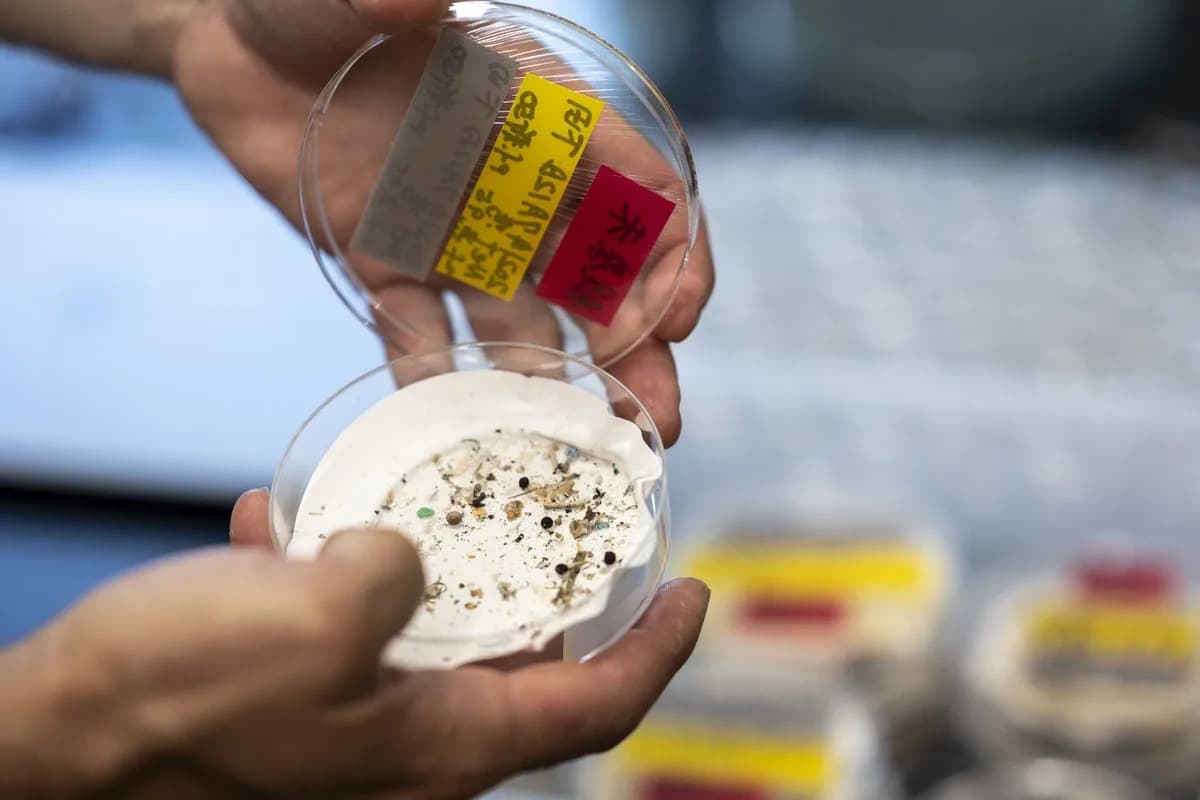
Scientists detect hidden plastic clouds hovering over Chinese cities
Chinese researchers report that clouds of microscopic plastic particles are suspended in the air above two major cities, Guangzhou and Xi’an, suggesting atmospheric plastics are far more abundant and mobile than earlier work indicated.
Study Overview
The team used an innovative detection method that resolves plastic particles as small as 200 nanometres to measure microplastics (MPs) and nanoplastics (NPs) in aerosols, dry and wet deposition, and in resuspension processes across urban atmospheric compartments.
Key Findings
Measurements showed extremely wide variation in plastic fluxes — from two to five orders of magnitude across different atmospheric compartments — and identified road dust and rainfall-driven deposition as the dominant contributors to observed changes. Many particles are small enough to remain suspended for long periods and can act as nuclei that promote cloud formation.
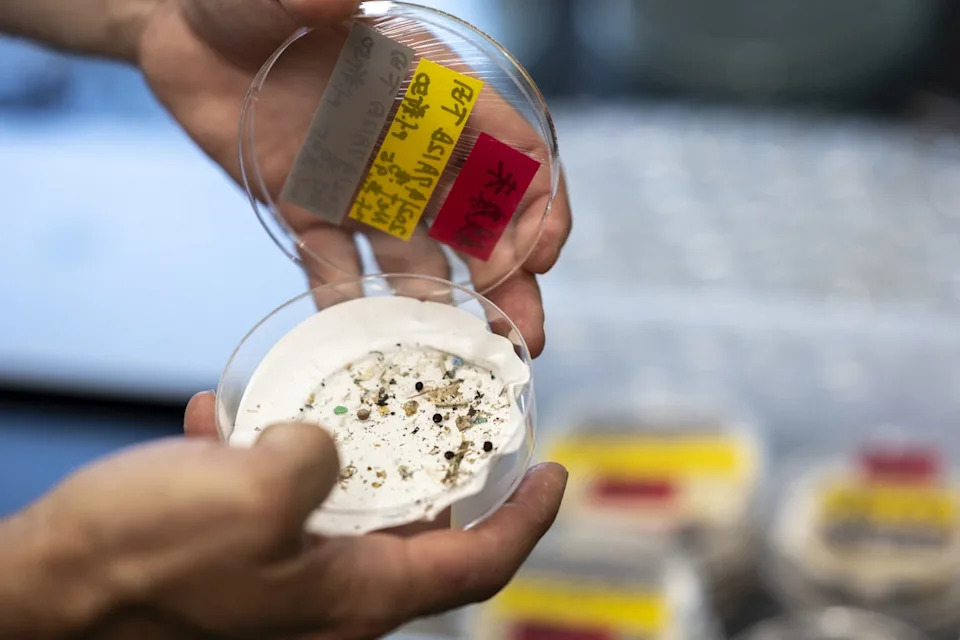
Microplastics in sediment samples collected by a grab machine in the sea near Japan (AFP via Getty Images)
Using a method capable of detecting particles down to 200 nm, the authors quantified MPs and NPs in aerosols, deposition, and resuspension in two Chinese megacities.
Transport And Fate
By serving as cloud condensation or ice-nucleating particles, MPs and NPs can be lofted into clouds, transported long distances, and redeposited by rain at locations far from their original sources. This links atmospheric plastic pollution to broader environmental compartments, including terrestrial and aquatic systems via the water cycle.
Implications And Uncertainties
The study provides the most detailed atmospheric plastic measurements to date and highlights potential implications for climate processes, ecosystems, and human health. However, the authors do not claim a measurable, direct effect on global climate; substantial uncertainties remain about sources, transformation pathways, toxicity, and long-term impacts.
What Remains Unknown
Key open questions include the global abundance and distribution of airborne MPs and NPs, their chemical and physical transformations in the atmosphere, their specific roles in cloud microphysics, and the scale of risks to human health and ecosystems.
Bottom line: The atmosphere is an underappreciated reservoir and transport pathway for micro- and nanoplastics. Improved detection and wider monitoring are needed to understand their environmental cycling and potential impacts.
Help us improve.