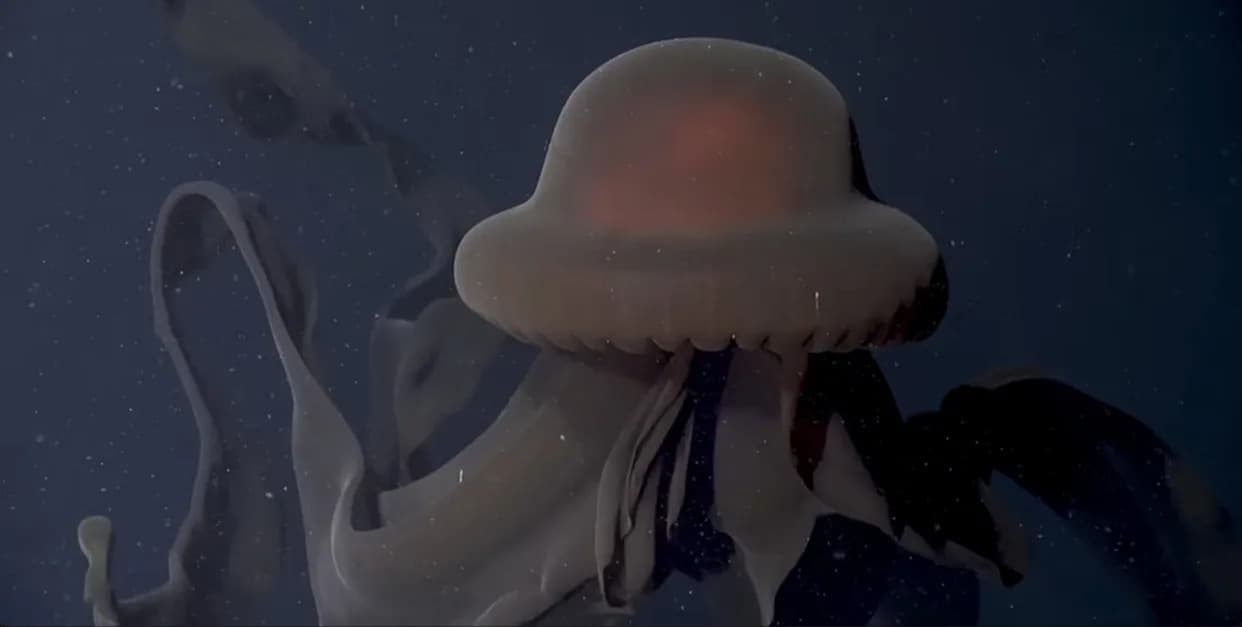
Kolossal, a nonprofit ocean research group, released a short video that may show a juvenile colossal squid (Mesonychoteuthis hamiltoni) recorded from a deep-sea camera mounted on the polar tourism vessel Ocean Endeavour during Dec 2022–Mar 2023. Experts warn the identification is unconfirmed: the animal could instead be a glass squid (Galiteuthis glacialis) or an undescribed species, and the clip is under peer review. Regardless, the recording is rare and valuable for Southern Ocean research, and it demonstrates the potential of tourism–research partnerships to broaden scientific access to remote waters.
Did Researchers Just Film a Colossal Squid? Kolossal’s Antarctic Footage Could Be the First
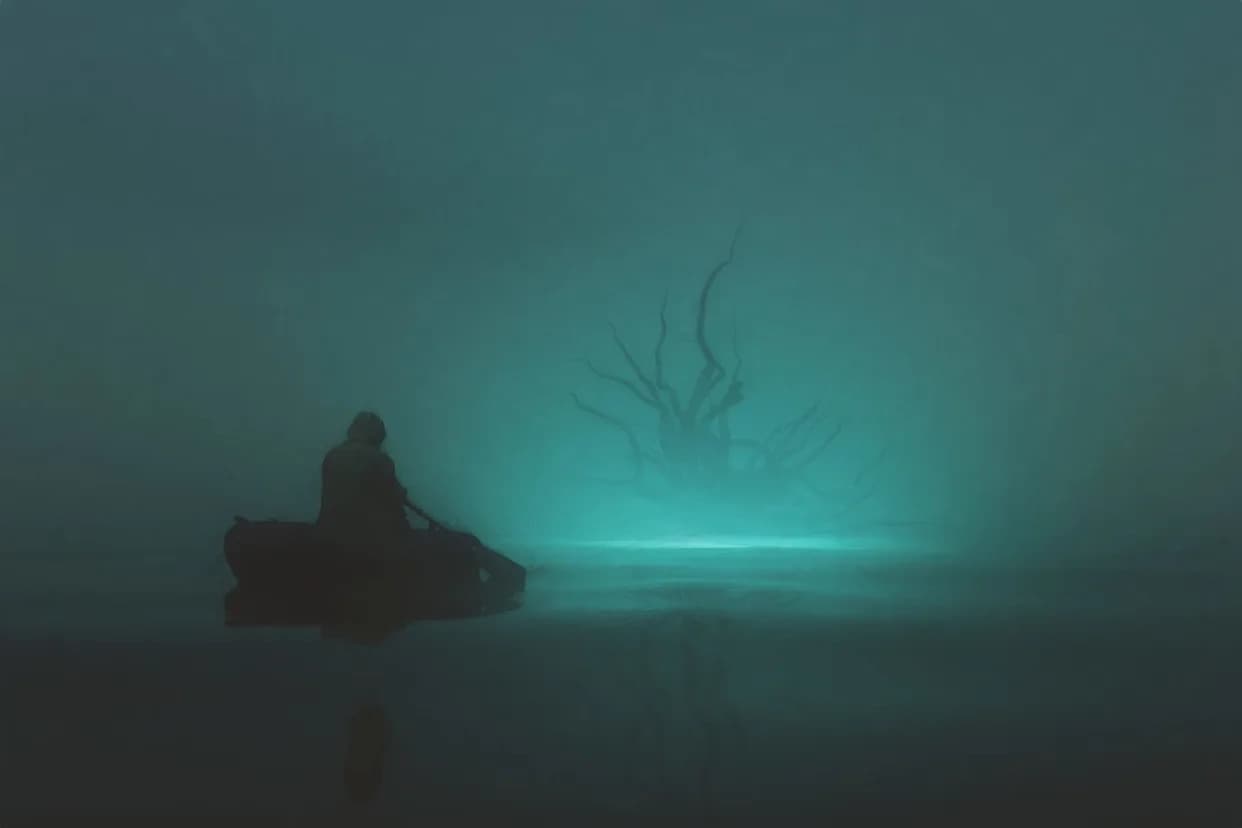
A Colossal Squid Might Have Shown Its Secret Facegremlin - Getty Images
For the first time, a research team may have captured video of a colossal squid (Mesonychoteuthis hamiltoni) moving through Antarctic waters. The nonprofit Kolossal attached a deep-sea camera to a polar tourism ship and released a short clip that could show a juvenile colossal squid — though experts caution the identification remains unconfirmed.
The footage was recorded during one of Kolossal’s four voyages to Antarctica between December 2022 and March 2023. To expand observational capacity without the expense of dedicated research vessels, the team rigged the deep camera to the polar tourism vessel Ocean Endeavour and later shared the clip publicly; the science outlet IFLScience posted it to YouTube.
Why This Matters
Our oceans cover roughly 71% of Earth’s surface, and many deep-sea animals remain poorly documented. The colossal squid is among the most mysterious: when fully grown it can reach lengths comparable to a bus and weigh nearly 1,100 pounds. Until now, nearly all knowledge of the species has come from specimens recovered in fishing nets, not from observations in their natural habitat.
'Antarctica is experiencing rapid and complex change, and it is critical to have a better understanding of these changes for the region’s ocean ecosystems,' Kolossal wrote in a 2024 methods paper. 'The costs and logistical challenges to operate scientific research vessels prohibit the scaling of crucial science and discovery in the region. Yet, the tourism industry in Antarctica is growing rapidly, and collaboration between tourism companies and researchers provides important access to the region.'
Identification Remains Uncertain
Although the clip is exciting, scientists urge caution. The animal in the video might be a juvenile Mesonychoteuthis hamiltoni, an adult glass squid such as Galiteuthis glacialis, or potentially an undescribed species. The footage is currently undergoing peer review, and many experts note it may be impossible to reach a definitive species identification from short video alone.
Aaron Evans, a reviewer of the footage, told IFLScience that 'The two known Cranchiidae taxa seen in the Antarctic are Galiteuthis glacialis and Mesonychoteuthis hamiltoni. The squid seen here could belong to different life stages of either of those taxa — and is an exciting example of wild cranchiid behavior, as I cannot think of existing video footage of either of those squid in their natural environment.'
More Than One Discovery
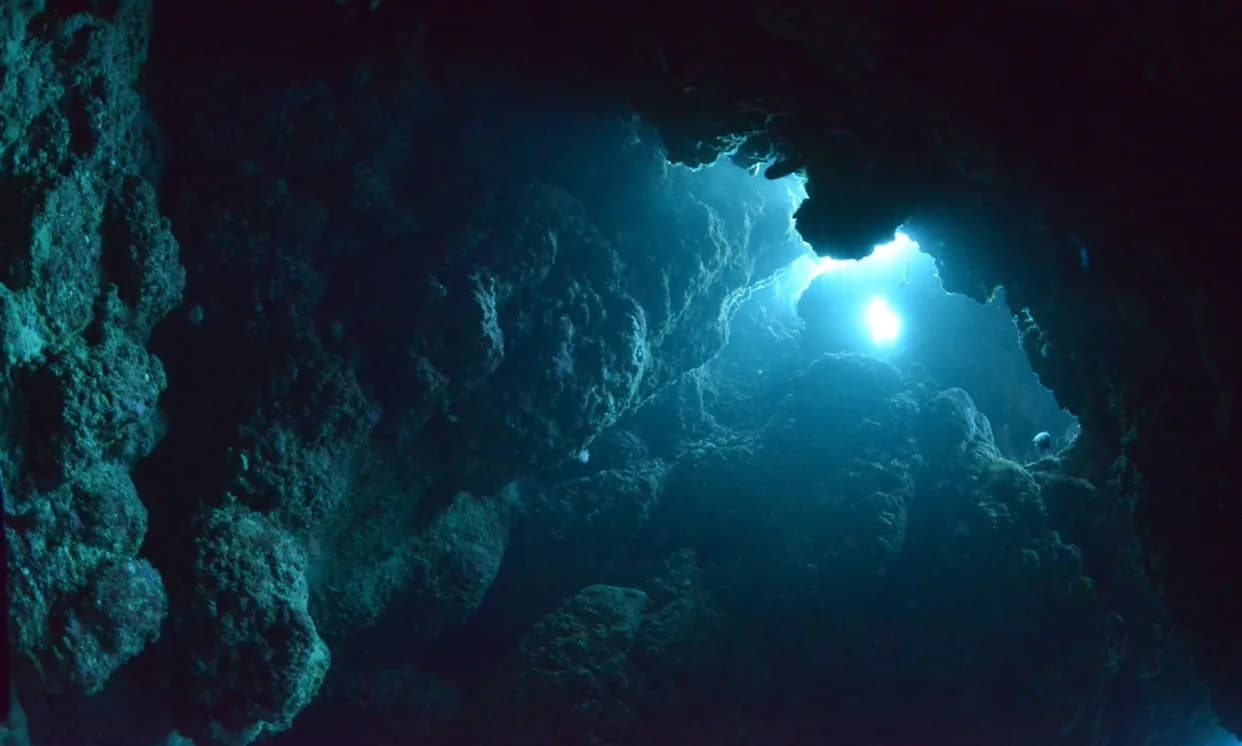
Beyond the potential squid sighting, the camera system recorded nearly 80 species over the campaign, documenting life that included giant volcano sponges, Antarctic sunflower stars, and many other benthic and pelagic invertebrates. Regardless of the final identification, the footage provides rare observational data from a region that is difficult and costly to study.
As researchers increasingly partner with tourism operators and deploy creative imaging methods, the scientific community hopes to fill long-standing gaps in our understanding of Southern Ocean ecosystems. Whether or not this clip proves to show a colossal squid, the effort highlights how affordable, collaborative approaches can expand access to remote marine environments.
Help us improve.