Newly released UK government files suggest Tony Blair urged officials in 2005 to keep allegations of abuse by British soldiers out of civil and international courts, preferring military jurisdiction. The documents relate to high-profile cases such as the death of Baha Mousa and came amid ICC examinations that opened, closed, reopened and were again closed by 2020. Rights groups and court-martials have documented and punished some abuses, but debate continues over the adequacy of accountability for wartime conduct.
Did Tony Blair Push To Keep UK Soldiers' Iraq Cases Out Of Civil And ICC Courts?
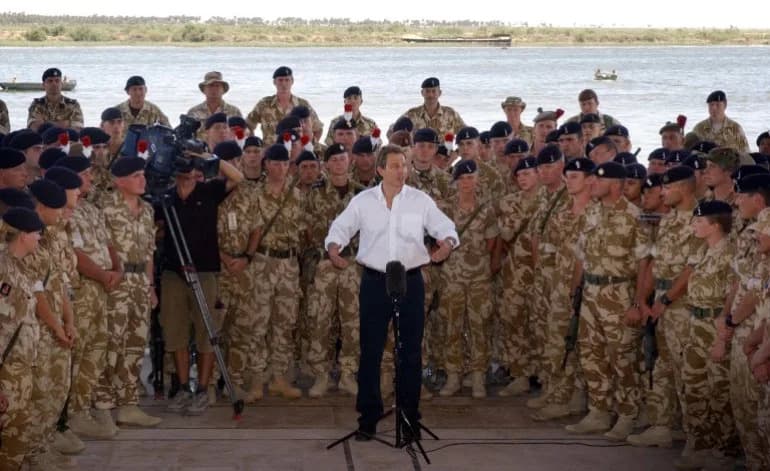
United Kingdom Prime Minister Tony Blair addresses troops in Basra, Iraq, in 2003 [Stefan Rousseau/PA Images via Getty Images]
Newly declassified UK government files have renewed scrutiny of the Blair administration's handling of allegations that British soldiers abused Iraqi detainees during the 2003–2011 Iraq conflict. The documents suggest former prime minister Tony Blair pressed officials in 2005 to ensure such cases were dealt with by military, rather than civil or international, jurisdictions.
What the Documents Show
On 30 December the Cabinet Office deposited more than 600 records at the National Archives under the Public Records Act 1958. Media reporting on those files says a July 2005 memo from Antony Phillipson, Blair's private secretary for foreign affairs, discussed a meeting involving the attorney general and two senior military figures about the case of Baha Mousa — a hotel receptionist who died in British custody in Basra in September 2003.
According to the reporting, Blair wrote that "we have, in effect, to be in a position where the ICC is not involved and neither is CPS (UK Crown Prosecution Service). That is essential."
The memo reportedly said the matter would likely be dealt with by court martial; Blair’s comment, as reported, resisted any move to pursue civil prosecution instead.
Legal And Political Context
Blair had long reassured allies that the International Criminal Court (ICC) would not threaten responsible democracies. In a June 2002 letter to then Australian prime minister John Howard — about a month before the Rome Statute entered into force — Blair wrote that the ICC "acts only in the case of failed states or where judicial processes have broken down." The UK had negotiated language with the ICC and later ratified the Rome Statute with understandings that the court would step in only when national systems were unable or unwilling to act.
Nevertheless, the ICC opened a preliminary examination in 2005, closed it in 2006 for jurisdictional reasons, reopened in 2014 after rights groups submitted further evidence, and ultimately closed its inquiry in December 2020. Prosecutor Fatou Bensouda said her office had a "reasonable basis to believe" war crimes may have been committed by British service personnel, but it could not substantiate allegations that UK investigative and prosecutorial bodies engaged in "shielding" that would bar an ICC probe.
Allegations, Prosecutions And Rights Groups' Findings
Human Rights Watch, Amnesty International and the European Center for Constitutional and Human Rights (ECCHR) have documented widespread allegations of abuse, including violent beatings, sensory deprivation, stress positions, denial of food and water, and sexual and religious humiliation. These reports cite hundreds of alleged victims.
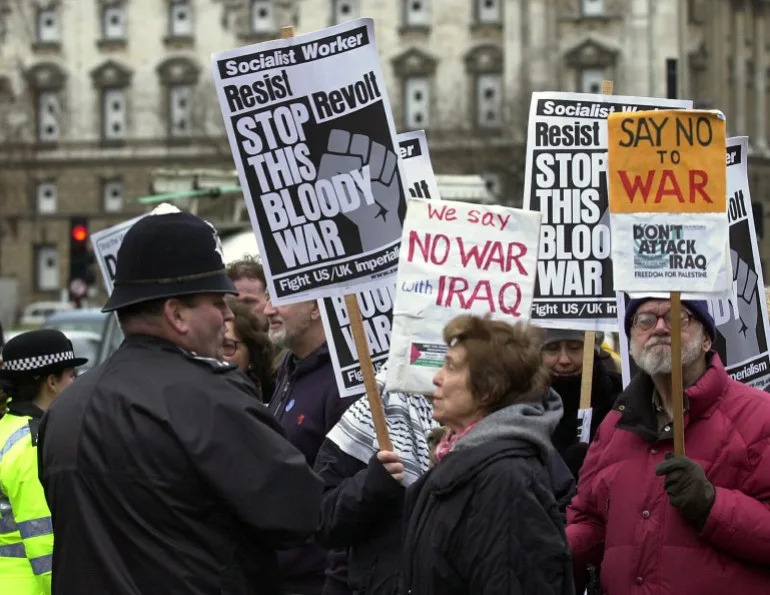
Protesters against the war in Iraq gather outside the Houses of Parliament in London, UK, in January 2003 [File: Michael Stephens/PA Images via Getty Images]
Some British soldiers were tried and convicted by court martial. In 2005 three soldiers were convicted at a British military base in Germany and dismissed from the army. In 2007 Corporal Donald Payne was the first British soldier jailed for abuse of Iraqi detainees after a court-martial; he was linked to the death of Baha Mousa, who reportedly suffered multiple blows while in custody.
Scholarly And Public Reactions
Academic commentators say Blair’s concern was partly political: prosecutions in civil or international courts could amplify opposition to the war and undermine public confidence in the military. Christopher Featherstone of the University of York told reporters that Blair preferred military justice because he viewed it as less punitive and feared the perception that the armed forces could not operate effectively in conflict zones.
Human rights organisations condemned the ICC decision to close the probe in 2020. Clive Baldwin of Human Rights Watch said the outcome risks reinforcing perceptions of double standards in international justice, where powerful states face fewer practical consequences than weaker ones.
Why This Matters
The declassified material renews questions about accountability for wartime conduct, the interplay between political leadership and legal processes, and the ability of domestic systems to investigate and prosecute alleged abuses. The Baha Mousa case and subsequent court-martials show that some accountability occurred, but rights groups and parts of the public remain dissatisfied with the scale and scope of investigations and prosecutions.
Key Facts: The Iraq war (2003–2011) involved large deployments by the US and UK and resulted in substantial civilian and military casualties. The UK government justified intervention on intelligence that later proved flawed; the Chilcot inquiry concluded the intelligence was not justified and found no imminent threat from Saddam Hussein.
All claims in this piece are based on the declassified files released to the National Archives, contemporaneous media reporting, public statements by officials and documented findings from rights organisations and judicial proceedings.
Help us improve.