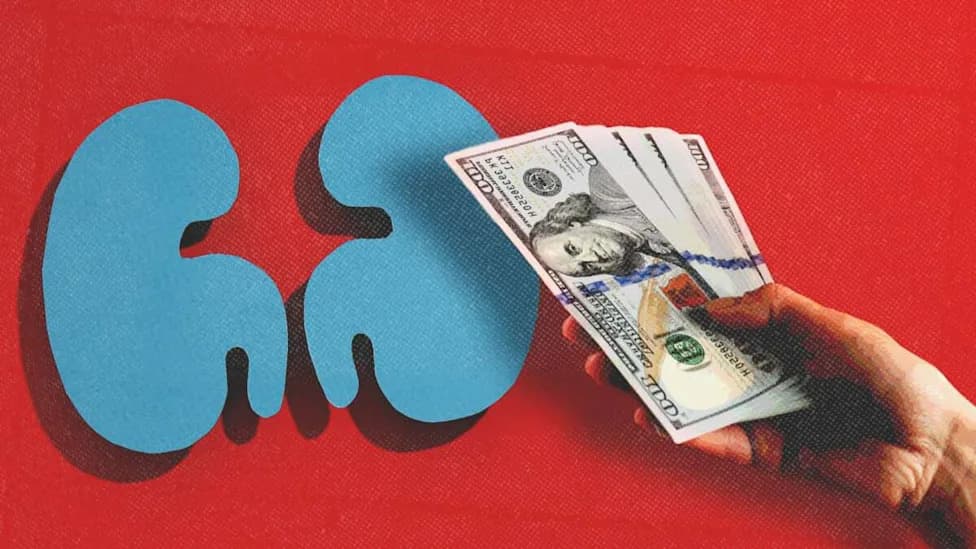
The pilot pairs kidney transplant candidates with volunteer "angel advocates" who use social media to broaden patients' reach and attract living donors. Launched in May at three Pennsylvania hospitals and supported by a >$100,000 Gift of Life grant, the 15-patient trial has already produced several donor matches and one completed transplant. Organizers hope to study results, refine messaging that motivates donors, and scale the model to help patients with limited social networks.
Pilot Program Enlists Volunteer 'Angel Advocates' and Social Media to Find Living Kidney Donors

Ahmad Collins, a city government worker and former Penn State linebacker, prepares for his nightly dialysis at his home in Harrisburg, Pa., Thursday, Dec. 11, 2025. (AP Photo/Matt Rourke)(ASSOCIATED PRESS)
Fernando Moreno has spent roughly two years on dialysis, his small social circle limiting the chances of finding a living kidney donor. Earlier this year, the Philadelphia hospital where Moreno receives treatment enrolled him in a pilot program that pairs transplant candidates with volunteer "angel advocates"—strangers across the country who use their social media networks to amplify a patient's story.

Riley Brubaker, left, Gerald Cameron and David Krissman, right, spread the word about the need for kidney donors on Saturday, Dec. 13, 2025, outside Broad Street Market in Harrisburg, Pa. (AP Photo/Mark Scolforo)(ASSOCIATED PRESS)
How The Pilot Works
Founded by Los Angeles filmmaker David Krissman and backed by a grant from the Gift of Life Donor Program foundation, the pilot launched in May across three Pennsylvania hospitals. Fifteen patients in total are participating. The program trains and pairs motivated volunteers with transplant candidates, creates videos and other digital content, and encourages advocates to spread those stories widely to reach potential living donors beyond a patient’s immediate network.

David Krissman, right, talks about harnessing social media and other efforts help find a kidney for Ahmad Collins, far left, in Harrisburg, Pa., on Saturday, Dec. 13, 2025. (AP Photo/Mark Scolforo)(ASSOCIATED PRESS)
Early Results And Real People
While the effort—dubbed the "Great Social Experiment"—has not yet produced a donor for Moreno, organizers say early signs are encouraging. At Temple University Hospital, two of five patients in the program have found living donors and one of those recipients is preparing for surgery, according to Ryan Ihlenfeldt, director of clinical transplant services. At UPMC-Harrisburg, one of five patients has already undergone transplantation.

Ahmad Collins watches television in his home in Harrisburg, Pa., Thursday, Dec. 11, 2025. A city government worker and former Penn State linebacker, Collins has needed 10 hours a night of dialysis since a medical procedure left him with damaged kidneys late last year. (AP Photo/Matt Rourke)(ASSOCIATED PRESS)
“Most patients are too sick to do this on their own—many don't have the skills to do it,” Krissman said, describing why volunteer advocates can make a difference.
The pilot blends social-media outreach, storytelling and active mobilization of a patient’s existing contacts. Gift of Life's CEO Richard Hasz Jr. called the approach "the first of its kind" and said the foundation hopes to study and publish results to create a replicable blueprint for wider use.

Ahmad Collins, a city government worker and former Penn State linebacker, prepares for his nightly dialysis treatment at his home in Harrisburg, Pa., Thursday, Dec. 11, 2025. (AP Photo/Matt Rourke)(ASSOCIATED PRESS)
Why Living Donors Matter
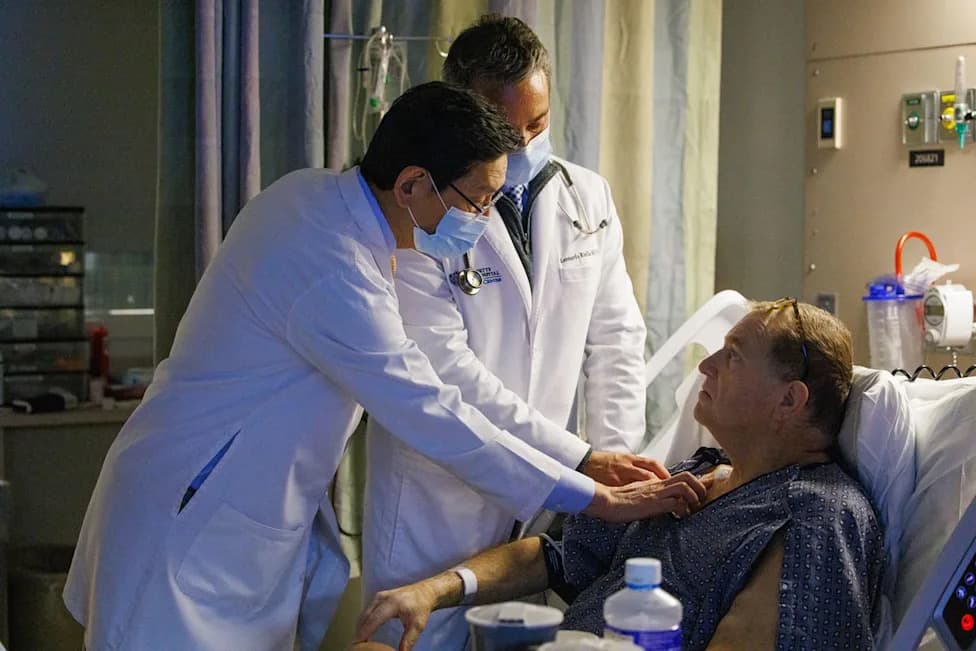
About 90,000 people in the United States are waiting for a kidney transplant. Last year roughly 28,000 kidneys were transplanted, most from deceased donors; approximately 6,400 came from living donors. Living kidney donations can offer better antigen matches, lower rejection risk, and allow procedures to be scheduled at optimal times for both donor and recipient. On average, kidneys from living donors also tend to last longer than those from deceased donors.

Ahmad Collins, watches television along with his wife Nickey Collins at their home in Harrisburg, Pa., Thursday, Dec. 11, 2025. A city government worker and former Penn State linebacker, Collins has needed 10 hours a night of dialysis since a medical procedure left him with damaged kidneys late last year. (AP Photo/Matt Rourke)(ASSOCIATED PRESS)
Safety And Eligibility
The National Kidney Foundation generally requires living donors to be at least 18 (some centers set the minimum at 21). Potential donors undergo health screening and can be excluded for conditions such as uncontrolled high blood pressure, diabetes, active cancer, or tobacco dependence. A recent 30-year review found that fewer than 1 in 10,000 living donors died within three months of donation, reflecting improvements in surgical technique and donor care.

Ahmad Collins watches television accompanied by his wife Nickey at their home in Harrisburg, Pa., Thursday, Dec. 11, 2025. Ahmad Collins works at his office in Harrisburg, Pa., Thursday, Dec. 11, 2025. A city government worker and former Penn State linebacker, Collins has needed 10 hours a night of dialysis since a medical procedure left him with damaged kidneys late last year. (AP Photo/Matt Rourke)(ASSOCIATED PRESS)
Voices From The Program
Francis Beaumier, a 38-year-old IT worker from Green Bay who previously donated a kidney and part of his liver, joined as an advocate and called the program "a great little way for everyone to make a small difference." Holly Armstrong, also a former donor, said sharing a patient’s story on social media can prompt someone to pause and consider donation: "Some people might just keep scrolling. But there might be someone who stops and says, 'This person needs a kidney.'"

Ahmad Collins works at his office in Harrisburg, Pa., Thursday, Dec. 11, 2025. A city government worker and former Penn State linebacker, Collins has needed 10 hours a night of dialysis since a medical procedure left him with damaged kidneys late last year. . (AP Photo/Matt Rourke)(ASSOCIATED PRESS)
At a kickoff meeting for patient Ahmad Collins in Harrisburg, Krissman explained the campaign and the transplant process to friends and family. Collins, a 50-year-old city worker who now spends about 10 hours a night on dialysis, said volunteer advocates could be "superheroes" who have the chance to save lives.

Ahmad Collins heads for his office in Harrisburg, Pa., Thursday, Dec. 11, 2025. A city government worker and former Penn State linebacker, Collins has needed 10 hours a night of dialysis since a medical procedure left him with damaged kidneys late last year. (AP Photo/Matt Rourke)(ASSOCIATED PRESS)
Next Steps
Gift of Life funded the pilot with more than $100,000 and helped recruit patients at Temple, UPMC-Harrisburg and Jefferson University Hospital in Philadelphia. Organizers hope to analyze outcomes, refine messaging that motivates potential donors, and scale the model if it continues to produce matches. Earlier small pilots—such as a North Carolina effort that matched all three participating patients—suggest the approach can work, but larger studies are needed to determine how broadly it can be applied.

Ahmad Collins, a city government worker and former Penn State linebacker, prepares for his nightly dialysis treatment at his home in Harrisburg, Pa., Thursday, Dec. 11, 2025. (AP Photo/Matt Rourke)(ASSOCIATED PRESS)
What This Means: For transplant candidates with limited social networks, coordinated storytelling plus volunteer advocacy can expand reach, attract living-donor interest, and potentially shorten wait times for life-saving kidneys.
Help us improve.