WASHINGTON, Dec 31 — Since returning to the White House in January, President Donald Trump has increasingly affixed his personal brand to federal institutions, government programs and symbolic commemorations — a blending of private-style branding with public authority that has sparked debate across Washington.
A New Kind of Presidential Branding
Long known as a New York developer who placed his name on hotels, golf clubs and consumer products, Trump in his second term has taken that impulse into the federal sphere. The administration has placed the president's name on prominent Washington buildings, proposed a class of Navy warships bearing his name, created new government-backed savings accounts listed on the IRS under his name, and rolled out programs marketed with the Trump brand.
High-Profile Renamings and Rebrandings
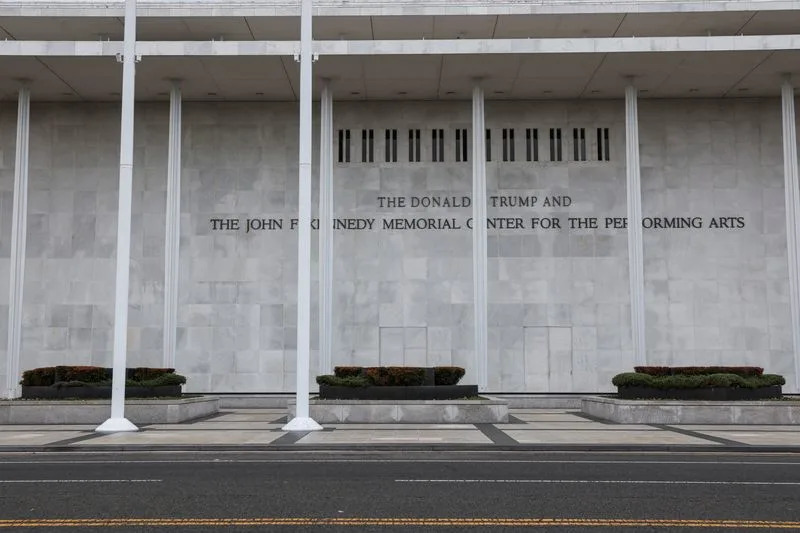
One of the most controversial moves came in December when the Kennedy Center — originally named for President John F. Kennedy by an act of Congress in 1964 — had the name "Donald J. Trump" appended after a decision by its board of trustees, a majority of whom were appointed during Trump's administration. Several performers canceled appearances in protest.
FILE PHOTO: The facade of the recently renamed Donald J. Trump and John F. Kennedy Memorial Center for the Performing Arts, in Washington, D.C., U.S., December 29, 2025. REUTERS/Tyrone Siu/File Photo
On December 3, the State Department directed that the U.S. Institute of Peace, a Congress-established, government-funded think tank focused on conflict prevention, be rebranded as the Donald J. Trump Institute of Peace and mounted Trump's name on the building's exterior. The administration cited the president's claim that he helped end several wars; critics noted continuing conflicts in some of those regions.
Programs, Coins and a Proposed "Trump-Class" Navy
The July tax and spending package created a new kind of tax-advantaged savings vehicle for children that appears on the Internal Revenue Service's website labeled "Trump Accounts." Because those accounts were established by statute, any name change would likely require congressional action.
The administration also unveiled a fast-track immigrant investor program dubbed the "Trump Gold Card," circulated draft designs in October for $1 coins bearing Trump's image for the country’s 250th anniversary, and is developing a government-run prescription drug website expected to launch in 2026 to offer lower prices for medicines.
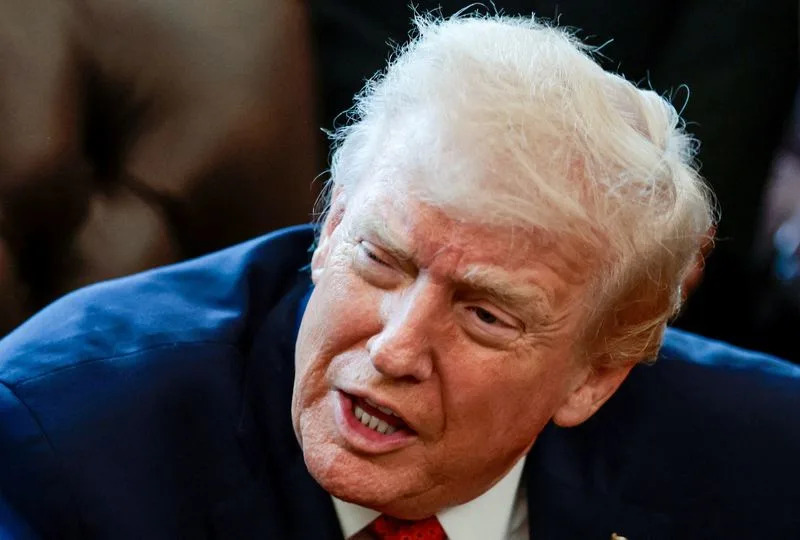
FILE PHOTO: U.S. President Donald Trump speaks in the Oval Office as he signs an executive order, at the White House in Washington, D.C., U.S., December 18, 2025. REUTERS/Evelyn Hockstein/File Photo
Separately, the president has proposed a new generation of Navy vessels he has called "Trump-class" battleships and said he intends to be personally involved in their design. The ships remain in early design phases and would face the long timelines and budgetary scrutiny typical of major shipbuilding programs.
Reactions, Legal Questions and Legacy
"I don't think the naming or renaming guarantees that Trump's name will be affixed to those things until time immemorial," said Austin Sarat, a professor of jurisprudence and political science at Amherst College, noting that names applied by an administration could be reversed by future leaders or Congress.
Presidential historians have cautioned that while it's relatively easy to affix a name to a building or program, creating an enduring legislative legacy is harder. Julian Zelizer of Princeton observed that symbolic namings can be "very thin" as a measure of long-term legacy.
White House spokeswoman Elizabeth Huston said the moves are not about branding but about delivering policy achievements. In an emailed statement she listed drug-pricing agreements, national landmark upgrades, peace deals and wealth-creation accounts for children as examples of historic initiatives tied to the president's leadership.
Across Capitol Hill and civic groups, critics warn that tying public services and institutions closely to a sitting president's personal brand can blur the line between the state and an individual officeholder and raise practical questions about reversal, legal authority and political durability if control of government changes.