The Guardian and the Energy and Policy Institute found a Michigan reporting loophole that allows utility PAC contribution dates to differ from when campaigns report receiving funds. Of 348 utility PAC donations in 2025 through the Oct. 20 filing, 89% had mismatched dates and about 37% were unreported as received. Significant sums tied to votes on carbon sequestration, data centers and a regulatory nomination remain unreported, prompting calls for clearer rules and a ballot initiative to ban utility donations.
Investigation: Michigan Reporting Loophole Obscures Timing Of Utility PAC Donations
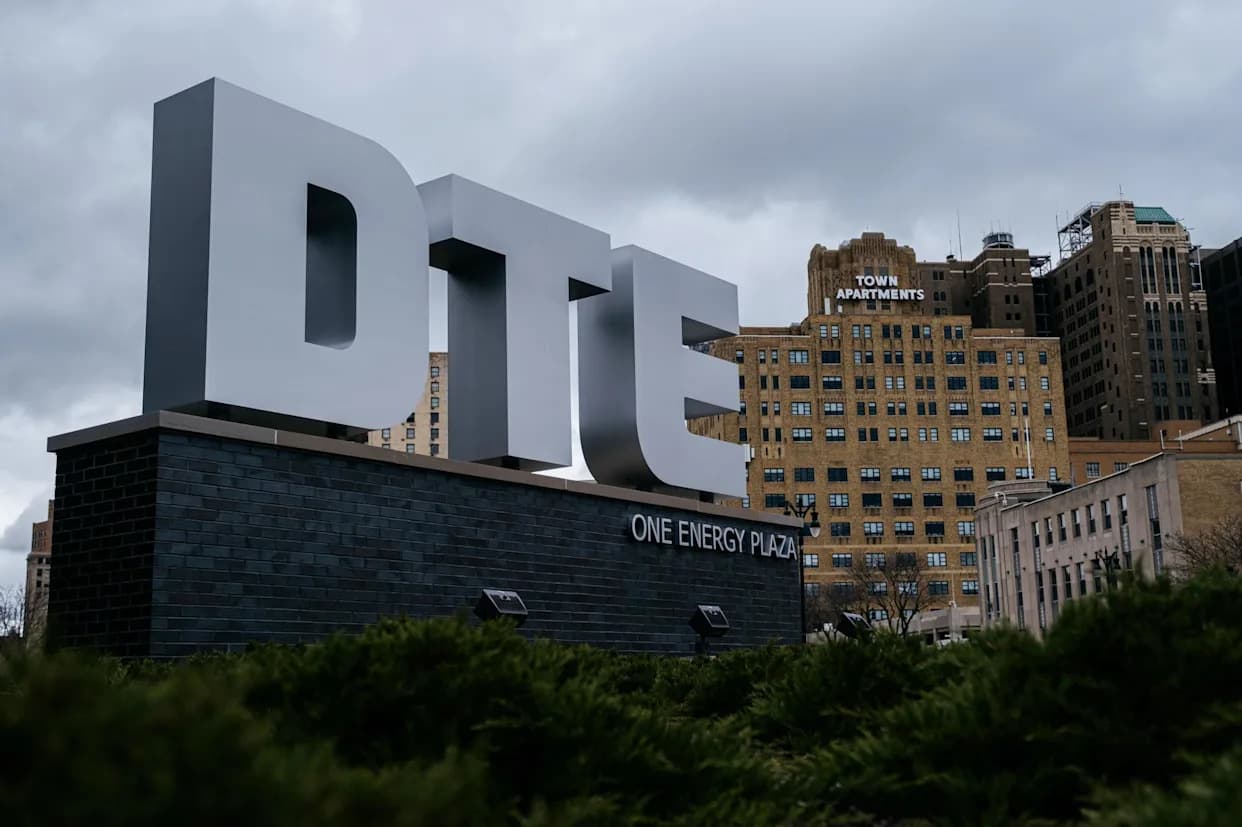
A sign for DTE Energy in Detroit, Michigan.Photograph: Erin Kirkland/Bloomberg via Getty Images
An investigation of Michigan election filings has uncovered a significant reporting loophole that obscures when and how campaign funds flow between the state's largest utilities — DTE Energy and Consumers Energy — and elected officials. In 2025 this gap produced situations where utility political action committees (PACs) issued checks near contentious votes while recipients reported them much later, or not at all.
Key Findings
A review of 348 utility PAC donations recorded in 2025 through the Oct. 20 filing deadline found that reported contribution dates did not match donor records 89% of the time, and roughly 37% of donations had not been reported as received by campaign committees as of the review. Utility giving spiked to about $100,000 in the month before and after the Sept. 5 Senate vote on carbon sequestration; by mid-December nearly $40,000 of that total had not been listed by recipient campaigns.
Examples That Illustrate The Gap
The records show several specific instances tied to controversial legislation and regulatory actions:
- DTE and Consumers PACs reported giving $1,000 and $2,500, respectively, to Senate Majority Leader Sam Singh (a vice-chair of the Senate energy committee). As of mid-December those donations did not appear in Singh’s campaign filings; Singh’s office said the Consumers gift arrived after Oct. 20 and would be reported in the next cycle, while they said the DTE check was never received.
- Consumers’ filings show $2,000 and $1,500 gifts to Senator Sean McCann (an energy committee vice-chair), neither of which appeared in McCann’s public reports; his office said the contributions were not received until November.
- A $1,000 donation to Senator Kevin Hertel and a $2,500 donation to the Senate Republican Campaign Committee similarly were not reflected in recipient reports as of the review.
- Representative Joey Andrews received a $1,000 Consumers gift on Oct. 3; his campaign said the donation arrived after the Oct. 20 deadline and would be included in the February filing. Andrews had sent a letter supporting a utilities request to regulators about data centers roughly a month later.
- Around the July nomination of Shaquila Myers to the Michigan Public Service Commission, about $23,000 of roughly $55,000 in donations made around that period remained unreported by lawmakers.
- Consumers’ PAC made three gifts totaling $1,250 to Representative Luke Meerman (two in February, one in September). One February donation and the September gift were initially unreported; after media inquiries a campaign staffer collected a check that had not been delivered earlier.
Why The Dates Don’t Match
Michigan law does not require the date a contributor records a donation to match the date a campaign committee reports receiving it. The secretary of state candidate handbook instructs committees to "promptly deposit all monies received," and says a committee receives a contribution when its treasurer or a designated agent receives it. But in practice, mailed checks, hand-delivered checks and delays in deposit or recordkeeping can create significant timing gaps. Multiple lawmakers told investigators they sometimes hold checks before depositing them; other accounts include donations never deposited or reported.
"If we can’t understand clearly from the disclosures how money is moving, that compromises transparency, accountability and public understanding of this information," said Karlee Weinmann of the Energy and Policy Institute (EPI), which compiled the records reviewed by the Guardian.
Responses And Implications
State election officials and current and former lawmakers say mismatched dates are common and not a violation of current rules. The mismatch, however, makes it difficult for the public to assess whether donations coincide with votes or regulatory decisions affecting regulated monopolies. Advocates say the gap strengthens support for a first-in-the-nation citizen ballot initiative to ban utility political donations.
A Consumers Energy spokesperson said one February check was voided and provided limited responses about delivery timing; DTE said it would amend disclosures if necessary. The Michigan secretary of state’s office said it will inquire about missing donations it identifies but emphasized that differing dates alone are not violations under current law.
What This Means For Oversight
Because utilities are regulated monopolies whose rates and reliability deeply affect residents, transparency in political spending is a central accountability issue. The reporting loophole leaves voters, advocates and journalists unable to easily link donations to legislative or regulatory actions — complicating public oversight at a time of high-stakes policy debates over carbon sequestration, data centers and utility regulation.
Policymakers and watchdogs suggest clearer rules, faster reporting requirements, or reforms such as the proposed ballot measure to restrict utility political contributions would improve public understanding and trust.
Help us improve.