
PRRI’s annual census finds 28% of U.S. adults now identify as religiously unaffiliated, up from 16% in 2006, with the largest gains among younger adults. The 2024 data — based on a 40,000-person Ipsos sample — show 38% of 18–29-year-olds and 34% of 30–49-year-olds reporting no religion. Analysts cite declining institutional trust, political polarization, and the rise of online communities as drivers. The shift is shifting party coalitions: unaffiliated voters make up roughly 34% of the Democratic coalition while remaining a small share of Republicans.
Record Rise In Americans With No Religious Affiliation, PRRI Census Shows

Mario Tama/Getty Images
The share of U.S. adults saying they have no religious affiliation has reached a record high, according to a large, long-running study by the Public Religion Research Institute (PRRI).
Key findings: PRRI reports that 28% of Americans identified as "religiously unaffiliated" in the latest results, up from 16% in 2006. The increase is strongest among younger adults: 38% of people aged 18–29 and 34% of those aged 30–49 reported no religion in 2024.
About the Study
PRRI’s analysis draws on data reaching back to 2006 and has been conducted as an annual census since 2013. The latest figures are based on a random sample of 40,000 U.S. adults surveyed by Ipsos — a far larger sample than typical election polls. The initial reporting on the new release appeared in Axios.
What Is Driving the Shift?
Analysts point to several overlapping factors: declining trust in institutions, heightened political polarization tied to religious identity, and the growth of online communities and digital media that offer moral frameworks and social belonging outside traditional houses of worship. Social platforms and streaming services have created alternative avenues for identity and meaning that often do not require formal church membership.
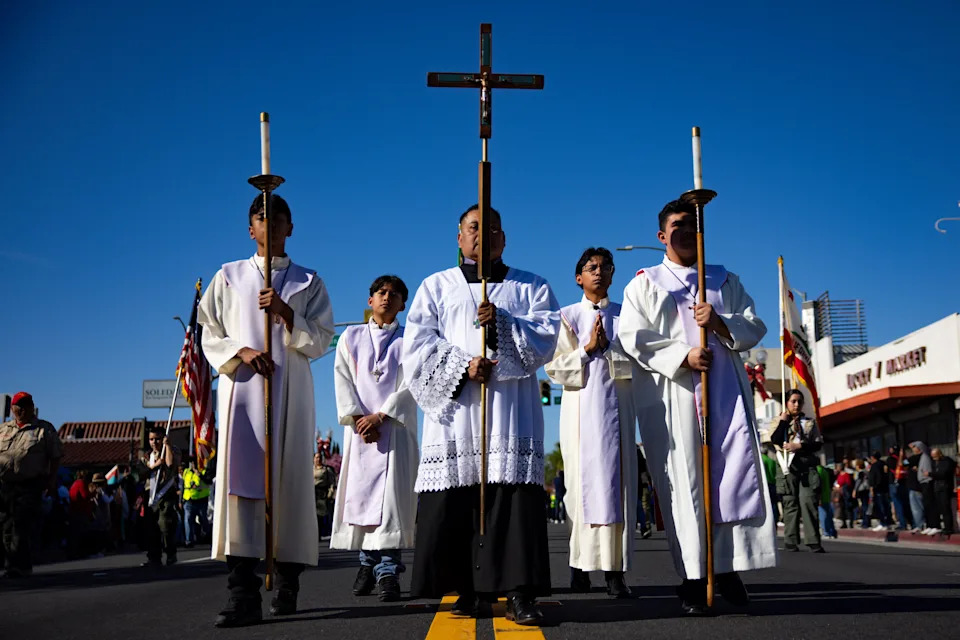
The PIRR's research casts doubt on claims that there is a significant Catholic revival. / Kayla Bartkowski / Kayla Bartkowski /Los Angeles Times/Getty Imag
Political And Social Consequences
The rise in religious unaffiliation is reshaping party coalitions. PRRI finds that religiously unaffiliated voters make up roughly 34% of the Democratic coalition. While this growth could favor Democrats demographically, PRRI and political strategists warn these voters are harder to reach with traditional outreach.
Sisto Abeyta, a Democratic strategist with TriStrategies, told Axios that religiously unaffiliated voters are both harder and more expensive to engage: campaigns, he said, spend about $1.40 per unaffiliated voter versus roughly $0.45 for religiously affiliated voters. "We have to find them, engage them and answer their skeptical questions," Abeyta said.
On the Republican side, PRRI reports that the GOP coalition remains heavily anchored to white Christian voters, who make up about 68% of Republican identifying voters; only about 12% of Republican voters identify as religiously unaffiliated.
Context And Caveats
PRRI also noted that the surge in unaffiliated Americans appears to cut across denominations, suggesting a broad cultural and generational shift rather than a change limited to one tradition. The institute’s findings also cast doubt on viral social-media claims of a recent "Catholic revival," which are not supported by the national census data.
As with any survey-based analysis, PRRI’s results reflect reported affiliation and belief at the time of the survey and can be influenced by question wording and respondents’ willingness to identify with religious labels. Still, the scale and speed of the change mark a notable movement in American religious life.


