
Short Summary: Scientists use structured skepticism and multiple independent observations to test the hypothesis that humans are altering the climate. Early theoretical work and decades of observations — from ocean heat uptake and melting ice to changing disease ranges — have produced consistent signals aligned with greenhouse‑gas driven warming. Public attitudes in the U.S. have shifted: the "alarmed" share rose from 15% in 2014 to 26% in 2024, but a significant minority remains skeptical; local, personal experience with extreme weather helps close that gap.
Understanding Climate Change in America: Skepticism, Dogma, and the Power of Personal Experience

Warmer temperatures can supercharge storms.Joe Raedle/Getty Images
Scientists are trained to be disciplined skeptics: they evaluate claims and findings on the basis of objective, empirical evidence rather than on suspicion or reflexive rejection. Their method is not cynicism but careful questioning — forming hypotheses about what should be observed if a claim is true, then testing those expectations across multiple lines of evidence.
Skepticism vs. Dogmatism
True scientific skepticism demands evidence and replication. Dogmatism, by contrast, asserts conclusions as immutable truths and discounts contrary data. That contrast helps explain why public debates over climate science are often prolonged and emotionally charged.
How Science Built the Case
Early theoretical and laboratory work, such as Svante Arrhenius's 1895 demonstration of the link between rising carbon dioxide and higher temperatures, established the basic physics. But scientists knew laboratory results alone would not settle public policy or public opinion. Researchers therefore sought multiple independent "fingerprints" of human-driven warming that should appear across the climate system if greenhouse gases were altering the planet.
Multiple Independent Lines of Evidence
Over decades, researchers have documented many such signals. Examples include:
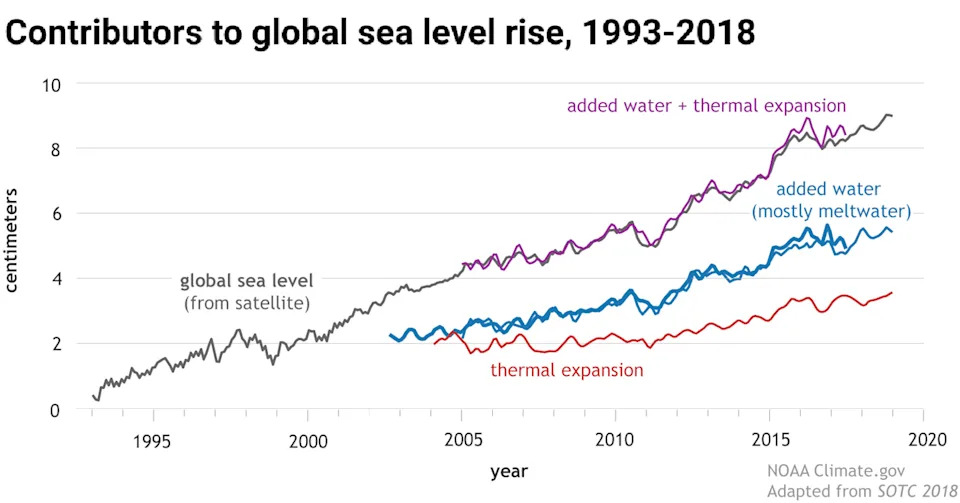
The major contributors to sea level rise.NOAA Climate.gov
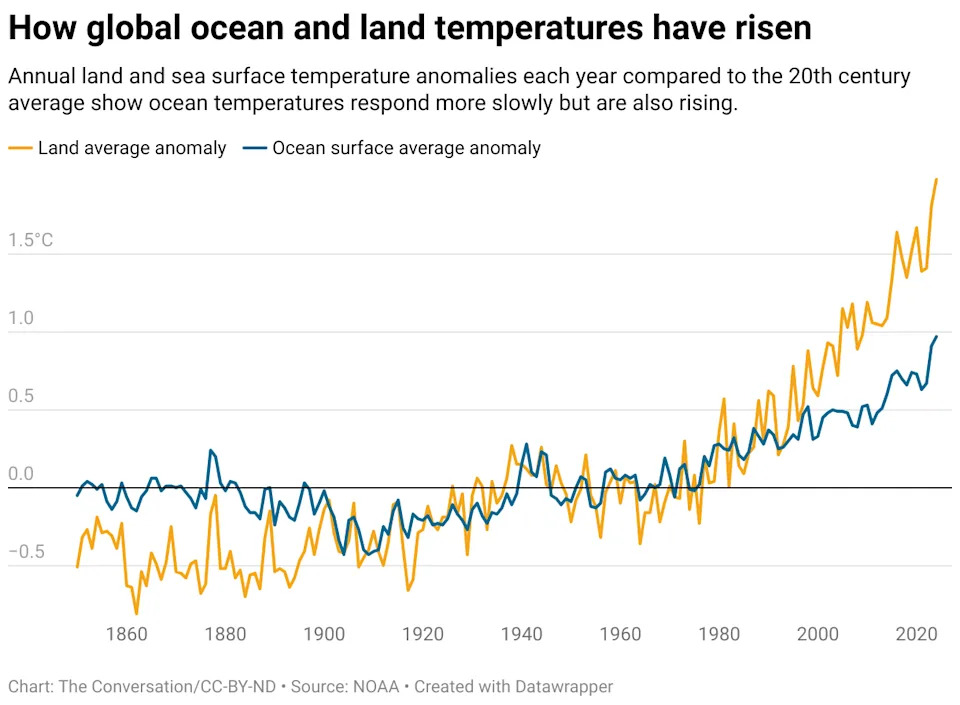
- Ocean Heat Uptake: The upper ocean absorbs about 90 percent of the atmosphere's excess heat and has shown persistent warming consistent with global warming.
- Sea Level Rise: Melting land ice plus thermal expansion have produced sea level rise that exceeds what thermal expansion alone would cause.
- Stratospheric Cooling: Predicted in 1967 by Syukuro Manabe and Richard Wetherald, the cooling of the upper atmosphere alongside surface warming has been observed.
- Shifts In Ecosystems And Diseases: Species ranges and the geographic distribution of vector-borne diseases are shifting as temperatures change.
As these observations accumulated, the Intergovernmental Panel on Climate Change reported in 1995 that there was a discernible human influence on climate, and by 2021 the IPCC's Sixth Assessment concluded that human influence on the climate system is unequivocal.
Organized Opposition And Political Framing
Shortly after the IPCC's 1995 statement, well-funded campaigns emerged to cast doubt on the science. Some funding streams were traced to interests connected to fossil-fuel industries; historians Naomi Oreskes and Erik Conway documented similar playbooks in their book Merchants of Doubt. The ideological frame presented to parts of the public emphasized individual liberty and warned against regulations framed as limiting personal freedom.

The upper atmosphere has been cooling while the lower atosphere, close to Earth’s surface, has warmed over the past two decades. The gray line marks the tropopause, between the lower troposphere and higher stratosphere.IPCC 6th Assessment Report
How Americans View The Evidence
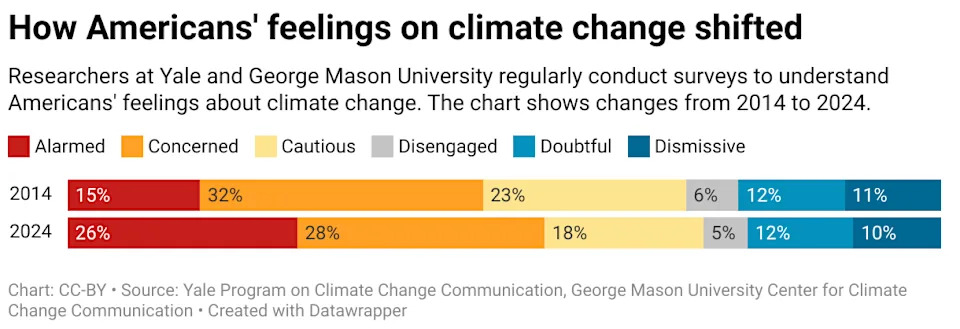
Public acceptance has changed, but unevenly. Annual surveys by the Yale Program on Climate Change Communication show the share of Americans who describe themselves as "alarmed" rose from 15 percent in 2014 to 26 percent in 2024. Meanwhile, people self-identifying as "disengaged," "doubtful," or "dismissive" fell only slightly from 29 percent to 27 percent over the same period.
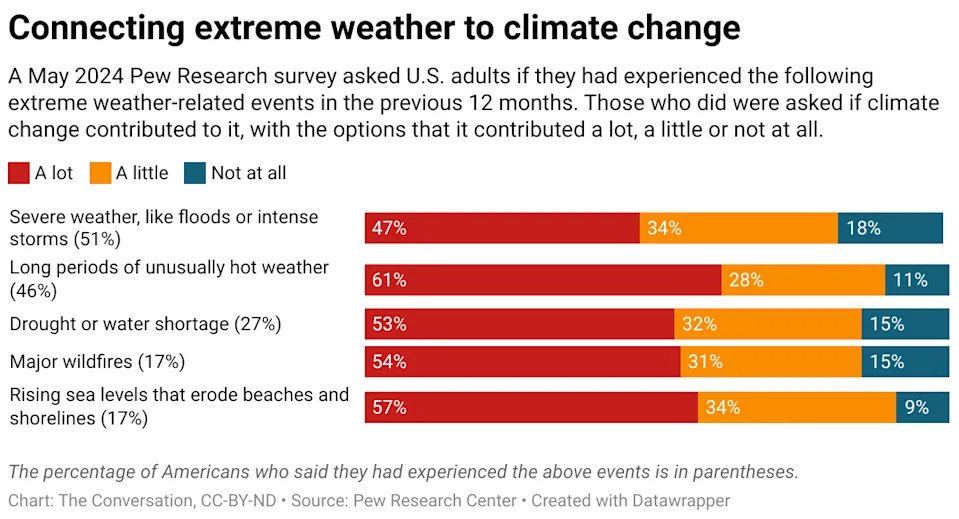
Local experience appears to matter. Media coverage linking climate change to wildfires, floods, droughts, heat waves, and hurricanes — plus personal encounters like rising insurance premiums, shifting fish populations, and changes in local wildlife and disease incidence — can make the abstract scientific case more tangible to individuals.
Talking About Climate Change
Conversations that connect robust scientific findings to personal, local experiences can be effective. Reminding audiences that science has overturned many long-held but incorrect beliefs — for example, that the Earth is flat or that spontaneous generation explains life — can also illustrate the value of evidence-based thinking.
Conclusion
Science advances by testing, questioning, and reexamining findings; over more than a century of theory, modeling, and measurement, the evidence for significant human influence on climate has converged. While a portion of the public remains skeptical, growing numbers of Americans report greater concern, and firsthand experience with climate impacts appears to be an important bridge between scientific consensus and public understanding.
Author: Gary W. Yohe, Wesleyan University
Disclosure: The author reports no employment, consulting, share ownership, or funding from any company or organization that would benefit from this article and has disclosed no relevant affiliations beyond his academic appointment.


